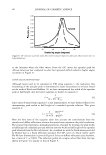
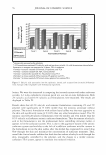
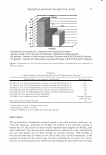
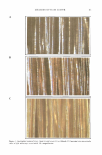
104 JOURNAL OF COSMETIC SCIENCE pigment granules appeared intact. However, when the same pigmented (and previ ously UV-exposed) hair fibers were treated with alkaline hydrogen peroxide, melanin was instantaneously disintegrated, revealing that severe damage was produced by the UV irradiation to both keratin and melanin. 5. Water and humidity are believed to have a very crucial role in the decomposition of the protein structure and in the mechanism of photobleaching. High RH accelerates photochemical oxidation of hair and is the primary contributing factor to accelerated loss in hair color (melanin). The findings in this paper indicate that prolonged UV irradiation can have a devastat ing effect on human hair. Also, it is crucial to introduce high-humidity or better shampoo/cleansing/water immersion cycles into the protocol of exposure of hair to UV /VIS radiation to induce some of the changes that would not otherwise been ob served. In 1993 Pande and Jachowicz published a paper in which the amino acid tryptophan (Trp) is identified as an early indicator of photodamage in human hair (13). Trp is an integral part of keratin and it absorbs UV rays at a maximum wavelength of 280 nm. The study shows that both simulated light (irradiation wavelength 295 nm) and sunlight (summer in Connecticut, total exposure length 72 hr) can damage Trp, resulting in the depletion of its fluorescence emission. The effect of water versus min eral oil was also explored the experimental procedure employed appears to give more accurate results when the fibers are soaked in a medium. While no great differ ence was found between wet or dry fiberse exposed to UV radiation, a big difference was found between water-soaked fibers and fibers soaked in mineral oil. The rate of destruction of Trp was found to be much lower in non-polar media (mineral oil) than in water. The study hypothesizes on the kinetics of photodegradation, proposing that the photo degradation of Trp precedes that of the disulphide bond in keratin, where significant loss in Trp is detected before any increase in photo-oxidation products is detected. UV weathered hair appears to be characterized by a lower Trp, but by a higher cysteic acid concentration. This paper describes a unique approach to the investigation of photodam age, very specific to one amino acid. Some effort was made to correlate natural light to the radiation emitted by the solar simulator however, this comparison was not very comprehensive. More recently, Inoue et al. (14) reported that a type of protein, classified as Sl003A (high cystein content protein) and found predominantly in the cuticular region (endo cuticle), is thought to be intimately involved in the disulphide bond cross-links that determine the structural integrity of hair fibers. This study shows that irradia tion of hair with UV radiation induces damage to the S 1003A disulphide bonds that link the protein to the rest of the hair matrix, resulting in the ability to elute the protein from the hair fiber. UV irradiation was performed using a UVB lamp (100 hr, 10 J cm- 2 hr). A four-stage model was proposed where the elution of S 1 00A3 is the major cause of hair damage. The authors conclude that UV radiation, as e Dry hair fibers gave more background noise and less contact area with the sample holder cell. Possibly because of lesser accuracy, no significant difference was found between irradiated dry and irradiated wet hair fibers, in terms of Trp content.

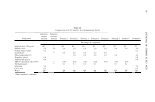
EFFECT OF UV RADIATION ON HAIR STRUCTURE 105 well as daily shampooing and grooming practices, contributes to what is defined as hair damage. Although different irradiation methodologies were used, as well as different analytical tests, the results of the studies herein reviewed indicate very similar findings. All results are summarized in the Conclusion section of this paper. OPTIONS FOR PHOTOPROTECTION ON HUMAN HAIR In the previous section the effect of radiation on the structure of human hair was discussed in detail. It is apparent that there is unanimous consensus on the fact that UV or VIS radiation is capable of altering the chemical composition, morphology, and appearance of human hair. The following discussion will describe a few options for the photoprotection of human hair through the use of UV absorbers formulated in hair care products. Pande and Jachowicz (13) proposed two approaches to photoprotection of hair: (i) reducing the amount of rays reaching the hair structure (via use of UV filters) and (ii) changing the chemical environment that favors the photodegradation of Trp to one that quenches photochemical intermediates or retards the excited-state decomposition. The authors agree with the model according to which Try sensitizes the decomposition of other amino acids. In their studies it was found that a leave-on styling formulation containing 0.2% w/w of octylmethoxycinnamate (OMC) was successful at reducing the extent of Trp photo degradation up to 40%.f Also, the problem of delivering the UV filter to the hair from rinse-off formulations was discussed. The oil-soluble UV filters do not normally have affinity for the hair, and the deposition of oily ingredients or of oil-soluble ingredients from rinse-off products is very formulation-dependent. This paper concluded that in many cases UV filtersg will only deposit in minimum amounts from cleansing or conditioning rinse-off products, mainly due to their poor affinity for the substrate and the short contact time (e.g., hair-to-shampoo). This topic is of much importance since it is one of the determining factors in whether or not a formulation is capable of providing photoprotection to the hair. Other aspects of this discussion will be explored in the next few paragraphs. Bernhard et al. ( 15) described their work that involved five UV absorbers and two cosmetic formulations (hair-setting lotion and hairshine spray). The irradiation ener f y used was up to 29,880 Whm - 2 (Heraeus, Xenon test) (29,880 Whm - 2 = 107 x 10 J m- 2 ), and the total irradiation time was up to 30 days (RH 50%, 25°-45°C). Before these authors tested the efficacy of the sunscreens as applied to hair from a cosmetic formulation, they tested the stability of the sunscreens themselves as they were exposed to the radiation. The results indicate that after ten days of irradiation Benzophenone-3 was the most stable (90%), Benzophenone-4 was less stable (60%), and octyl dimethyl PABA and phenylbenzimidazole sulphonic acid were even less stable. The photostability f The protocol followed for the irradiation was 10 hr, followed by a shampoo. This was repeated three times to give 30 hr total irradiation time. g No cationically modified sunscreens were tested in this study these compounds are now widely available in the market and are designed for hair care, rinse-off application.
Purchased for the exclusive use of nofirst nolast (unknown)
From: SCC Media Library & Resource Center (library.scconline.org)