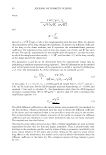
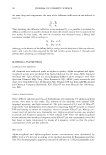
96 JOURNAL OF COSMETIC SCIENCE the same drug and temperature, the ratio of the diffusion coefficients in two solvents is given by D1 11 2 Thus, knowing the diffusion coefficient in one medium D 1, it is possible to estimate the diffusion coefficient in another medium D 2 from the inverse ratio of the viscosities of the two media. In this study, the ratio of viscosities was obtained using a falling ball viscometer method (19) according to 111 (Pa - P 1 )t1 112 (pB - P2 )t2 where p8 is the density of the falling ball, p 1 and p 2 are the densities of the two solvents, and t 1 and t2 are the times required for the ball to fall a given distance L through each solvent after achieving its terminal velocity. MATERIALS AND METHODS CHEMICALS AND REAGENTS All chemicals were analytical grade or higher in quality. Alpha-tocopherol and alpha tocopherol acetate were purchased from Sigma Chemical, Co. (St. Louis, MO). Isopropyl myristate NF, light mineral oil, and phosphate-buffered saline ultrapure were from Spectrum Chemical Mfg. Corp. (New Brunswick, NJ). HPLC grade acetonitrile and water were from EM Science (Gibbstown, NJ). Ethanol USP was from AAPER Alcohol and Chemical Company (Shelbyville, KY). Klucel® was from Hercules Inc. (Wilming ton, DE). TOPICAL FORMULATIONS Three different solutions and two gel formulations, all containing 5 % alpha-tocopherol acetate, were used in this study. The solvents of the solutions were ethanol USP, isopropyl myristate, and light mineral oil. The gels consisted of 1 % and 3% Klucel®, respectively. Gel formulations were prepared by dispersing Klucel® powder in ethanol USP and mixing by means of a magnetic stirrer to prepare Klucel® gel. Mixing con tinued until all particles were thoroughly wet. Alpha-tocopherol acetate was weighed accurately and dissolved separately in 95% ethanol USP. Then the alpha-tocopherol acetate solution was introduced dropwise to the Klucel® gel and continuously stirred for four hours at room temperature by means of a magnetic stirrer so that the proper concentration of the gel was achieved. HPLC ASSAY Alpha-tocopherol and alpha-tocopherol acetate concentrations were determined by HPLC with a UV-detector according to the method described by Rangarajan and Zatz (20). The chromatographic apparatus consisted of a Hitachi 1-7250 programmable auto-

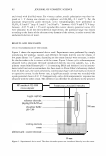
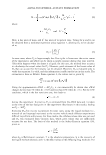
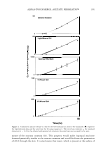
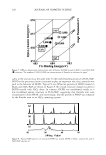
ALPHA-TOCOPHEROL ACETATE PERMEATION 97 sampler, a Hitachi 1-7400 UV detector, and a Hitachi 1-7100 pump. The chromatog raphy was performed on a reverse-phase C 18 (µBondapak™, 3.9 x 300 mm, Milford, MA). The detection wavelength was 285 nm. The mobile phase consisted of acetoni trile:water (96:4). The isocratic flow rate was changed to 2.0 ml/min to reduce the retention time. (The retention times were 10. 3 and 12 .4 minutes for al pha-tocopherol and for alpha-tocopherol acetate, respectively, compared to 13 and 16 minutes in the source paper.) For both analytes, the peak areas vs concentration (µg/ml) curves were linear in the range of 10-1000 µg/ml. The injection volume was 10 µl. DIFFUSION STUDIES USING CELLULOSE MEMBRANES In vitro diffusion studies were carried out using a modified Franz diffusion cell apparatus (Crown Glass Company, Somerville, NJ) with a diameter of 15 mm and a diffusional area of 1.76 cm2 . A Spectra/Por®7 regenerated cellulose membrane (Spectrum, Laguna Hills, CA) was inserted between the donor and the receiving compartment and secured in place by means of a pinch clamp. The membrane had a thickness of 60-65 µm and a molecular weight cutoff point of 1,000. According to the manufacturer's direction, the cellulose membrane was rinsed with distilled water in order to remove traces of the preservative sodium azide before use. The receiving compartment (volume 13.1 ml) was filled with degassed ethanol USP and it was maintained at 37°C by means of a water bath circulator and a jacket surrounding the cell, resulting in a membrane surface temperature of 32°C (18). The receiving medium was continuously stirred by a Teflon™-coated magnetic stirrer, to avoid diffusion layer effects. A 1.00-ml sample of each ATA formulation was accurately measured and placed in the donor compartment and sealed with aluminum foil and parafilm. Aliquots of 0.5 ml were withdrawn from the receiving compartment at 15, 30, and 45 minutes and 1, 2, 3, and 4 hours using a microsyringe, and replaced immediately with an equal volume of degassed ethanol USP. All samples were trans ferred to 1.5-ml vials and diluted with degassed ethanol USP up to 1.0 ml before analysis by HPLC. The experiment was carried out in triplicate for each formulation. This method was applied to the ethanol solution, 1 % Klucel® gel, and 3% Klucel® gel. Where appropriate, the cumulative amount released of ATA vs time data was analyzed and equation 5 was used to calculate the diffusion coefficients of AT A in the formula tion. In cases where the slope of the M-vs-t plots was nearly constant, the diffusion coefficient of AT A in the formulation was not calculated exactly, but lower limits for the value were calculated instead using equation 6 with t = 4 hours. RELATIVE VISCOSITY ESTIMATES The viscosity of ethanol USP, isopropyl myristate, and light mineral oil solvents was determined at 32°C by using the technique of falling ball viscometer. For each solvent measured, 105 ml was poured into a 100-ml graduated cylinder, which was then kept in a water bath for at least 30 minutes before starting the experiment, to ensure that the solvent temperature was 32°C. The plastic sphere (p = 1.0038 g/cm3) was carefully placed into the cylinder and allowed to fall through the liquid without touching the wall. The time of descent between the 100-ml and 10-ml marks was timed by means of a stopwatch. The experiments were repeated ten times for each solvent, and the average values were used for further calculation.
Purchased for the exclusive use of nofirst nolast (unknown)
From: SCC Media Library & Resource Center (library.scconline.org)