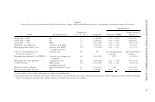
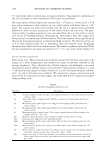
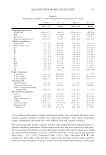
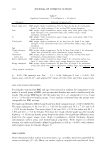
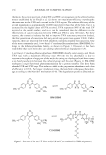
NEW LONG-CHAIN UV ABSORBER 139 (C5 ) 131.2 (C 6 ) 129.5 (C7) 128.8 (C 8 ) 125.9 (C 9 ) 114.2 (C 10 ) 57.7 (C 11 ) 55.7 (C 12) 35.3 (C 13) 32.1-28.6 (Cn) 31.2 (C 14) 29.9 (C 18) 22.9 (C 16) 14.3 (C 15 ). IR (KBr), vcm-l: 2924 1692 1663 1602-1464 1262 1171 844. MS (ES, MeOH, positive mode) m/z = 451 [M + H+]. Anal. Calcd for C30H420 3 : C, 79.96 H, 9.39 0, 10.65%. Found: C, 80.07 H, 9.69 0, 10.87%. PREPARATION OF THE CREAM We used a water-in-oil preparation obtained from Dipta (Aix-en-Provence, France) in which we incorporated 1 % in weight of each molecule: BM-DBM and/or ClO-DBM. The preparation contained dicaprylyl carbonate (10%), beeswax (4%), PEG-30 dipoly hydroxystearate (3%), polyglyceryl-3 diisostearate (1.5%), disodium EDTA (0.2%), sodium chloride (1 %), methylparaben (0.2%), xanthan gum (1 %), butylparaben (0.3%), glycasil L (0.2%), and water (78.6%). PHOTOST ABILITY ASSAYS The method used was inspired by that of Rudolph (21) and Allen et al. (10). Assays for photostability were performed on small, smooth, quartz plates of 16 cm2. The prepa rations were spread on the plates as thin films (1 mg cm-2). The average film thickness was calculated from the sample weight, the sample area, and the specific gravity of the sunscreen preparation. The plates were exposed either to the xenon lamp or natural sunlight irradiation. Irradiance measurements were done with the UV meter at the distance the quartz plates had been irradiated. Irradiation of the samples was done at room temperature. The reference background used for UV spectra measurement was the water-in-oil preparation with no sunscreen. This preparation was irradiated under the same conditions as the samples. Tables I and II show the irradiation characteristics. RESULTS SOL VA TOCHROMISM STUDY ClO-DBM was obtained according to the procedure described by Clark and Miller (18,19). The ClO-DBM isolated at the end of the purification was in its beta-diketone form (Figure 1). No trace of the enol form was detected by NMR, IR, or HPLC analyses. Table I Irradiation Conditions under 150-W Xenon Lamp for Preparations Containing 1 % w/w Absorbers Total concentration UV intensity* Irradiation Absorbers (mmol 1- 1 ) (mW cm- 2 ) experiments r BM-DBM 29 10.6 P2 P3 ClO-DBM 21 10.5 Cl BM-DBM/Cl0-DBM (7:3) 19 10.8 Ml Preparation specific gravity = 0.934 g cm- 3 and irradiated area = 16 cm2. * Radiometer: Oriel Instruments. Film Sample weight thickness (mg cm- 2 ) (µm) 1 11 0.75 8 1 11 1 11 0.9 10

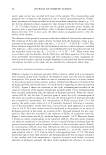
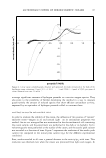
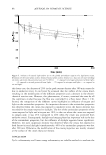
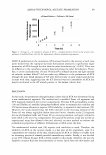
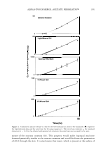
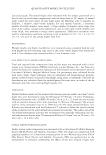
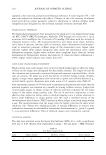
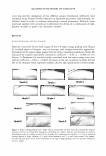
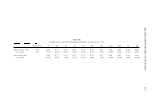
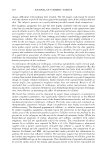
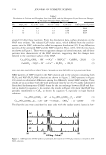
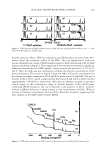
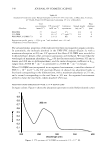
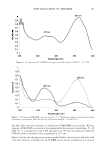
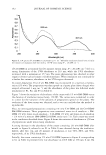
140 JOURNAL OF COSMETIC SCIENCE Table II Irradiation Conditions under Natural Sunlight (12:00 h-15:30 h solar time, in May-June, Toulouse, 43° North, France) for Preparations Containing 1 % w/w of Absorbers Total concentrations UV intensity* Irradiation Absorbers (mmol 1- 1 ) (mW cm-2) experiments BM-DBM 27 3.6-4.7 P'l ClO-DBM 19 3.6-4.7 C'l and C'2 BM-DBM/ClO-DBM (7:3) 19 3.4-4.4 M'l Preparation specific gravity = 0.934 g cm- 3 and irradiated area = 16 cm2. * Radiometer: Oriel Instruments. Film Sample weight thickness (mg cm- 2 ) (µm) 0.9 10 0.8 9 0.9 10 The solvatochromic properties of the molecule were first investigated in organic solvents. In acetonitrile, the molecule absorbed in the UVB-UVC domain (Figure 3), with a maximum absorption at 263 nm. UV spectra of the diketo ClO-DBM were recorded in dichloromethane, hexane, ether, pentanol, isopropanol, and methanol. We noted that the wavelength of maximum absorbance ("-max did not fluctuate much (between 262 nm in hexane and 268 nm in dichloromethane), and the molar absorption coefficient at "-max ranged from 20 000 M- 1 cm - 1 in acetonitrile to 2 5 000 M- 1 cm - l in hexane. When Cl0-DBM was incorporated in an organized environment, a micellar solution of SDS (5 x 10- 2 mol 1- 1 ), the UV spectrum (Figure 4) showed two absorption bands: a first band corresponding to the diketone form, with a maximum absorbance at 271 nm, and a second corresponding to the enol form at 361 nm. An organized environment seemed to favor the enol form, which absorbed UVA rays. BEHAVIOR UNDER IRRADIATION WITH A 150-W XENON LAMP In organic solvents. Figure 5 shows the absorption spectrum recorded before (dotted curve) 1 0,9 0,8 0,7 0,6 Q) 0,5 0,4 0,3 0,2 0,1 0 200 250 300 Wavelength (nm) 350 Figure 3. UV spectrum of ClO-DBM in acetonitrile (2.9 x 10- 5 M). 400
Purchased for the exclusive use of nofirst nolast (unknown)
From: SCC Media Library & Resource Center (library.scconline.org)