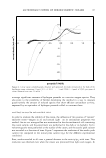
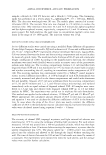
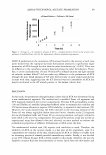
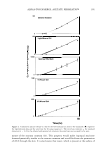
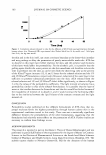
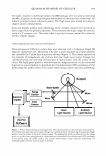
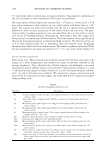
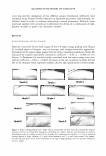
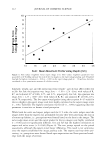
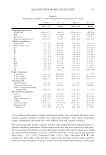
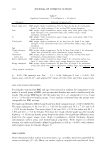
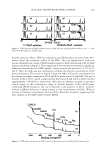
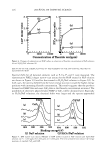
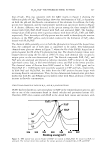
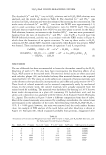
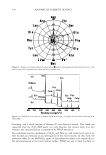
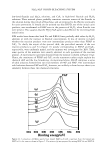
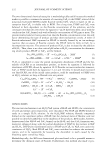
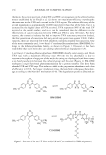
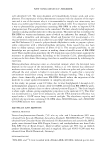
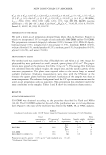
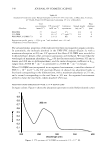
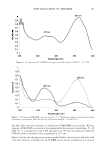
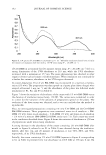
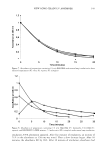
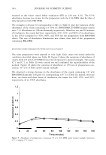
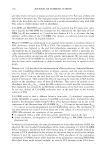
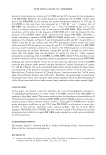
NEW LONG-CHAIN UV ABSORBER 143 1,2 1 E C co 0,8 LO - ca Q,) 0,6 u C ca .c 0 0,4 { 0 5 10 15 20 Time (minutes) Figure 7. Absorbance of preparations containing 1 % w/w BM-DBM under xenon lamp irradiation for three identical experiments (Pl: stars P2: squares P3: triangles). 1,2 1 E C co 0,8 LO - ca � 0,6 C .c � 0,4 .c { 0,2 0 0 5 10 15 20 25 30 Time (minutes) Figure 8. Absorbance of preparations containing 1 % w/w BM-DBM (Pl: diamonds), ClO-DBM (Cl: squares), and BM-DBM/ClO-DBM mixture, 7:3 molar ratio (Ml: triangles) under xenon lamp irradiation. irradiation, UV A absorption appeared. After five minutes of irradiation, an increase of 71 % in the absorbance at 358 nm was noted. Then a slow decrease began. After 10 minutes, the absorbance fell by 16%. After 30 minutes of irradiation, absorbance had

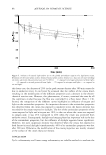
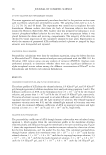
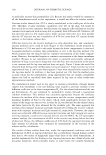
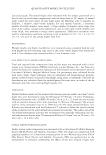
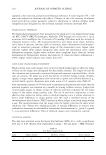
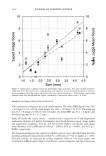
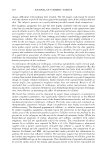
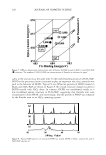
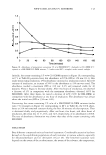
144 JOURNAL OF COSMETIC SCIENCE returned to the values noted before irradiation (OD at 358 nm: 0.15). The UVA absorbance decrease was slower for the preparation with the Cl0-DBM than for that of the preparation with BM-DBM. The triangles in Figure 8 (corresponding to Ml in Table I) plot the variation of the absorbance of the cream containing 1 % w/w of a BM-DBM/ClO-DBM mixture (molar ratio 7:3). Absorbance at 358 nm decreased progressively. After five, ten, and 20 minutes of irradiation, the cream had lost, respectively, 45%, 65%, and 80% of its absorbance in the UVA (compared to 50%, 80%, and 96% for the preparation with BM-DBM alone). The rate of absorbance diminution was slower than that of the preparation containing BM-DBM. BEHAVIOR UNDER IRRADIATION WITH NATURAL SUNLIGHT The same preparations were exposed to solar light. Each cream was tested under the conditions described above (see Table II). Figure 9 shows the variations of absorbance of creams with 1 % w/w Cl0-DBM versus time of exposure to natural sunlight. Two assays (C' 1 and C'2 in Table II) were carried out and confirmed the reproducibility of the method. Figure 10 shows the variation of absorbance at 358 nm of preparations con taining 1 % w/w of filter under natural sunlight. We observed a strong decrease in the absorbance of the cream contarnrng 1 % w/w BM-DBM (diamonds in Figure 10, corresponding to P' 1 in Table II). Indeed, after one hour, two hours and three hours of irradiation, the cream lost 64%, 85%, and 92%, respectively, of its UV A absorbance. 1,2 1 E C: CX) 0,8 � 0,6 C: .0 0,4 .0 0,2 0 0 20 40 60 80 100 120 140 160 180 Time (minutes) Figure 9. Absorbance of preparations containing 1 % w/w ClO-DBM under natural sunlight irradiation (c'l: triangles C'2: stars).
Purchased for the exclusive use of nofirst nolast (unknown)
From: SCC Media Library & Resource Center (library.scconline.org)