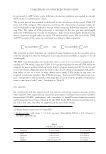
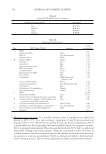
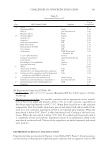
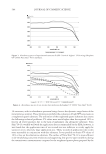
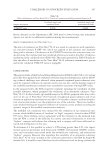
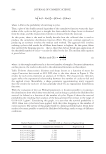
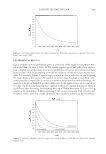
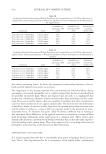
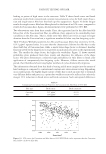
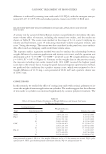
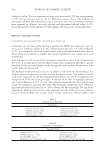
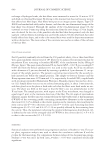
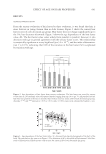
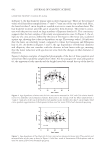
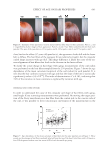
CHALLENGES TO SUNSCREEN EVALUATION 597 Ratios obtained on the Optometrics SPF 290S may be lower because this instrument exposes test articles to additional irradiation during the measurements. EFFECT OF IRRADIATION ON VITRO SKIN® N-19 The effect of irradiation on Vitro Skin® N-19 was tested in conjunction with experimen- tal sunscreen formula P (SPF~30), which was applied to the substrate and irradiated along with a reference. Calculations of the UVAI/UV ratios for this sunscreen were con- ducted using the irradiated and non-irradiated references to analyze the effect of reference irradiation on the calculated ratios (Table VII). The results presented in Table VII indicate that the effect of irradiation on the Vitro Skin® N-19 (reference) transmittance spectra and on the calculated UVAI/UV ratios is negligible. CONCLUSIONS The proposed rules of the Food and Drug Administration (FDA) for the UVA in vitro testing procedure were applied for the evaluation of various sunscreen formulations, and the follow- ing technical challenges were observed: when proposed roughened quartz substrates were used, the required coeffi cient-of-variation criteria were not met, and the dynamic ranges of the available transmittance analyzers were exceeded for sunscreens with high SPF values. In the proposed rules, the FDA requested comment regarding the suitability of other possible substrates, which prompted the evaluation of an alternative substrate, Vitro Skin® N-19. In this research, two modifi cations to the FDA’s proposed rules were evalu- ated: (a) the use of Vitro Skin® N-19 instead of roughened quartz substrate and (2) an increase in application time from ten seconds to 30 seconds to ensure a uniform distribu- tion of sunscreen product over the application area of the substrate. These two modifi ca- tions allowed meeting the required coeffi cient-of-variation criteria without exceeding the dynamic ranges of the available transmittance analyzers. The modifi ed test conditions were utilized for the evaluation of six commercial sun- screens, which fulfi lled criteria of “medium” or “high” categories—based on their UVAI/ UV ratios. These fi ndings were in agreement with the statement in the proposed rules that the FDA is aware of the diffi culty for current sunscreen formulations to meet the “highest” category and believes that allowing such a category will foster additional re- search and development in this area. To determine if it was possible to achieve a UVA rating greater than 0.95, two experi- mental sunscreen prototypes with bisoctrizole (USAN), bemotrizinol (USAN), avoben- zone, and octocrylene were tested under the modifi ed test conditions, and attained the “highest” category. Relevant data regarding the suitability of an alternative substrate, Vitro Skin® N-19, were included in the comments submitted to the FDA by Joseph W. Stanfi eld (6). It should be noted that bisoctrizole and bemotrizinol are being evaluated by Table VII Effect of Irradiation on Vitro Skin® N-19 Tested in Conjunction with Experimental Sunscreen P Sample description Irradiated sample and irradiated blank Irradiated sample and non-irradiated blank UVAI/UV ratio 0.9538 0.9690

JOURNAL OF COSMETIC SCIENCE 598 the FDA under TEA and are not permitted in the US at this time, but they are approved for use in the rest of the world. ACKNOWLEDGMENTS We are grateful for the support of our colleagues at Ciba: Joseph Lupia, B. Scott Jaynes, Gustavo Vazquez, Shawn O’Brian, Shiela Loggins, and Ellen Werner. REFERENCES (1) Food and Drug Administration, 21 CFR Parts 347 and 352, Sunscreen drug products for over-the- counter human use, proposed amendment of fi nal monograph: Proposed rules, Federal Register, §352.1, 72(165), 49070–49122 (2007). (2) Atlas SunSpots®, Material Testing Product and Technology News, 38(81), 14–15 (2008). (3) Q-Glass Company, Inc. www.qglass.com (4) L. Ferrero, M. Pissavini, S. Marguerie, and L. Zastrow, Photochemical behavior assessment of sunscreen preparations by in vitro UV spectroscopy, IFSCC Magazine, 7(3), 197–205 (2004). (5) http://www.ims-usa.com/ittrium/visit?path=A1×66×1y1×a0×1×65y1×c6×1×65y1×cc×1×65 (6) J. W. Stanfi eld, Substrates for UVA in vitro testing. Docket No. 1978N-0038 RIN No. 0910-AF43, December 26, 2007, Suncare Research Laboratories, LLC.
Purchased for the exclusive use of nofirst nolast (unknown)
From: SCC Media Library & Resource Center (library.scconline.org)