J. Cosmet. Sci., 60, 637–648 (November/December 2009) 637 Changes in structure and geometric properties of human hair by aging SHINOBU NAGASE, YOSHIO KAJIURA, AKIRA MAMADA, HIROKO ABE, SATOSHI SHIBUICHI, NAOKI SATOH, TAKASHI ITOU, YUYA SHINOHARA, and YOSHIYUKI AMEMIYA, Beauty Research Center, Kao Corporation, 2-1-3 Bunka, Sumida-ku, Tokyo 131-8501 (S.N., Y.K., A.M., H.A., S.S., N.S., T.I.), and Department of Advanced Materials Science, Graduate School of Frontier Sciences, The University of Tokyo, 5-1-5 Kashiwanoha, Kashiwa, Chiba 277-8561 (Y.S., Y.A.), Japan. Accepted for publication May 12, 2009. Synopsis To clarify hair changes by aging, the effect of age on hair properties was investigated from macro- to microscopic viewpoints. Sensory hair luster tests were performed on 230 Japanese females from 10 to 70 years of age, revealing that hair luster decreases with age. The age dependence of the hair diameter and the ellipticity of the hair cross section could not explain luster reduction by aging. It has been determined that an irregular increase in fi ber curvature occurs with age and is a cause of luster reduction with aging. A detailed structural analysis by synchrotron radiation microbeam X-ray diffraction revealed that the inhomogeneity in the lateral distribution of the hair microstructure increased with age and relates to the irregular increase in curvature. Such an increase in curvature is one of the important factors that leads to a poor alignment of hairs and luster reduction, and is related to the appearance of aging hair. INTRODUCTION Human hair undertakes important roles, such as protection of the head and displaying an attractive personal appearance. People, especially women, care for their hair day-to-day and have a deep interest in their hair. Most consumers are aware of, and try to minimize, undesirable changes in hair properties. One of the causes of the critical effects on hair properties is aging. The symptoms of aging appear everywhere in the body. Remarkably, they appear not only within the body, as in the decline in strength, but also in the skin. In the world of health care and cosmetics, a lot of research is aimed at anti-aging. However, studies of hair aging are relatively sparse. It is well known that hair grays and decreases in the number of fi bers, and the fi bers become fi ner with age (1–5). Several examinations reported that hair lipids are age-dependent and that some are related to the change from pre- to postmenopause (6–8). However, little is known about hair aging beyond these effects.

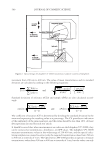
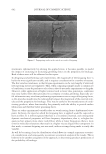
JOURNAL OF COSMETIC SCIENCE 638 It is important to clarify actual hair changes by aging in terms of the physical properties and the structure of hair fi bers. It is very diffi cult to continue research on the same individual for a long period of time. Thus, investigations on a large number of panelists are necessary for statistically signifi cant results. For example, Ootsuka and Nemoto (3) showed the age dependence of hair diameter from research on a large number (18,262) of Japanese females and males even though the individual deviation was large. According to them, the diameter of female hair increased up to the age of 35 and decreased gradually past the age of 40. On the other hand, for males, it decreased with age after puberty. Recently, Nagase et al. (9) presented a study of the variation in hair curvature in Japanese women. According to that study, about 47% of Japanese women have curved hair, from slightly wavy to frizzy, and their curl radius varies widely from 0.6 cm to 16 cm. By TEM observations and amino acid analyses on the convex and concave sides of curls, it was shown that the internal structure and amino acid composition in each side were different and that the trend of the difference had some similarities to highly crimped wool. The changes in hair shape and internal structure with age was, however, not reported. In this current paper, through investigations on a large number of panelists, changes in hair appearance and macroscopic form, such as hair shape, are shown as they vary with age. To examine the cause of this hair-aging phenomena, the microstructural morphology in hair fi bers has also been investigated. Recently, Kajiura et al. (10) analyzed the internal nanostructure in micro-areas of curly and nearly straight single human hair fi bers of sev- eral races by small-angle scattering with an X-ray microbeam of synchrotron radiation. As a result, it was shown that the macroscopic curl shape of human hair is consistent with the inhomogeneous distribution of the internal microstructure. By applying this method, the microstructure of a number of hair fi bers of various ages is examined in this study. EXPERIMENTAL PANELISTS Two hundred thirty Japanese female panelists, ranging in age from 10 to 70, and with no permanent wave treatment in the last six months, were selected. The breakdown was: 21 panelists for each fi ve-year period from the age of 10, except for the ranges of ages 20 to 24 (20 panelists) and 60 to 70 (21 panelists for the eleven years). Informed consent was obtained from all of the panelists. EVALUATION OF HAIR LUSTER Before the evaluation, a hair stylist shampooed and rinsed the panelists’ hair with the same shampoo and conditioner, a simple formula without silicone and cationic polymers, and dried the hair with a hot dryer so as not to impose any tension on the hair. The sen- sory evaluations of hair luster were performed by a professional hair stylist and two hair researchers. The hair luster was evaluated in fi ve grades from 1 (lusterless) to 5 (lustrous). Photographs of hair on the back of the head were taken with a digital camera (1632 × 2464 pixels) for each panelist to evaluate hair luster quantitatively. In order to take photos under the same lighting conditions, the two light sources (artifi cial sunlight, 100 W), the
Purchased for the exclusive use of nofirst nolast (unknown)
From: SCC Media Library & Resource Center (library.scconline.org)