J. Cosmet. Sci., 60, 617–625 (November/December 2009) 617 The effect of cationic polymer treatment on adhesion of iron oxide to eyelashes S. KO, Y. H. ROH, J. H. CHOO, S. H. JANG, S. H. HAN, and H. G. JANG, Korea University, Seoul 136-701 (S.K., H.G.J), and AMOREPACIFIC R&D Center, Yongin 446-729 (S.K., Y.H.R., J.H.C., S.H.J., S.H.H.), Republic of Korea. Accepted for publication June 15, 2009. Synopsis The aim of this study was to investigate the effect of iron oxide application on improving the volume of eyelashes. Iron oxide, having a negative surface charge in its natural form, was coated with commercial cat- ionic polymers to increase its adhesion. The iron oxides coated with different types and concentrations of these polymers were incorporated into a basic mascara formula to test their volume effects by means of the weight difference of eyelashes. The results indicated that the type and concentration of coating materials affect the surface zeta potential and particle cluster size of iron oxides. The type of cationic polymer, especially, was shown to modify both factors of iron oxide. The obtained results also suggested that the volume effect of mascara increases with a higher positive surface zeta potential and a smaller particle cluster size of the coated iron oxides. INTRODUCTION Iron oxides are a class of coloring matter used in cosmetics for application on skin or keratin fi bers. In the past few decades, they have become an increasingly important com- ponent of color cosmetics, especially as a primary ingredient in eye makeup. Much research on iron oxides, in surface treatment, material hybridization, and morphology control, has been conducted to improve the long-lasting effect, skin adhesiveness, and smooth texture of the fi nal cosmetic product (1). Pigments treated with methicone, dimethicone, or alkyl silane are known to present waterproof effects due to the hydrophobicity of these silicone materials. Perfl uoro compounds, especially polytetrafl uoroethylene (PTFE), have a lower surface energy than any oil, thus granting stronger long-lasting effects against hydrophobic solvents. Skin adhesion can be improved by coating pigments with keratin or silanyl glutamate. Keratin, being the basic component of skin, demonstrates higher affi nity, and silanyl Address all correspondence to H. G. Jang.

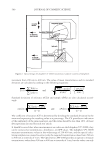
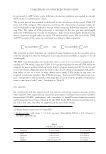
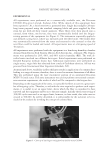
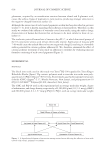
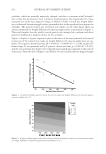
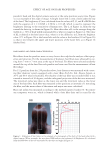
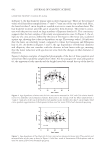
JOURNAL OF COSMETIC SCIENCE 618 glutamate, acquired by an esterifi cation reaction between silanol and L-glutamic acid, causes the surface charge of pigments to turn positive, producing stronger attraction to the negative-charged keratinous surface (2). Although the interaction of such treated pigments on skin has been described in previous studies (3–6), little is known regarding their adhesion to keratin fi bers. Therefore, in this study, we evaluated the infl uence of variously coated iron oxides, using the surface charge characteristics of human hair keratin that are known to be most similar to those of eye- lashes (7). The isoelectric point of human hair is known to be pH 3.7, at which functional groups of the 18 constitutive amino acids remain electrically neutral. Application of mascara (pH 7–8) would cause the eyelash fi bers to become negatively charged, resulting in a favorable surface potential for cationic polymer adhesion (8). We, therefore, examined the effect of cationic polymer treatment of iron oxide on adhesion to eyelashes by evaluating mascara formulae consisting of such coated pigments (Figure 1). EXPERIMENTAL MATERIALS The black iron oxide used in this study was Tarox® BL-100 supplied by Titan Kogyo Kabushiki Kaisha (Japan). The cationic polymers used to treat the iron oxide were poly- quaternium-6 (PQ-6) (Salcare® SC30 Ciba, Switzerland), guar hydroxypropyl trimonium chloride (GHC) ( Jaguar® C 17 Rhodia Novecare, New Jersey), and polyquaternium-10 (PQ-10) (UCARETM Polymer JR 400 Amerchol, New Jersey). The GHC and PQ-10 used in this experiment had an average molecular weight, degree of substitution, and charge density, respectively, of 2,200,000 g/mol, 0.2, 1.1 meq/g (GHC) and 600,000 g/mol, 0.4, 1.57 meq/g (PQ-10). PQ-6, with an average molecular weight Figure 1. A hypothesized diagram of interaction among various factors affecting the adhesion of iron oxide treated with cationic polymers to eyelashes.
Purchased for the exclusive use of nofirst nolast (unknown)
From: SCC Media Library & Resource Center (library.scconline.org)