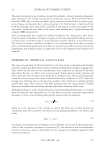
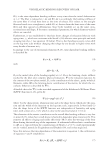
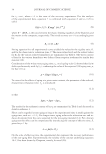
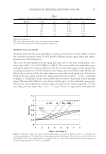
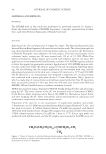
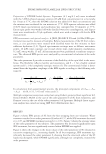
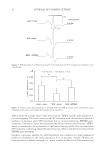
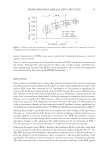
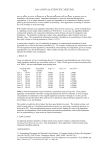
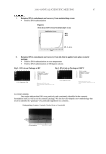
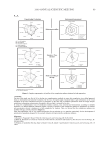
JOURNAL OF COSMETIC SCIENCE 12 CONCLUSIONS Microfl uorometric scanning, single-fi ber wettability scanning, and XPS analysis show rather similar results, in spite of their greatly varied applications. These techniques are highly sensitive to measuring changes in the surface chemistry of the scale faces. Short- term, rapid adsorption of the cationic fl uorochrome and changed wetting properties are good indicators of changes in the chemical nature and surface wettability. Since XPS analysis is able to detect atomic species at the very surface of the scale faces, receiving signals from an escape depth as shallow as 25 Å, it appeared ideal to use this technique to characterize treatment-induced changes of the hair surface. Assuming that the upper β-layer is ~50 Å-thick, XPS detects the 18-MEA domains on the scale faces prior to oxi- dation or reduction, and the newly formed sulfur entities after removal of the fatty acid 18-MEA from the scale faces. The results of these analyses clearly indicate reduction- induced delipidation and acidifi cation of the scale faces. The reduced hair fi bers show only very low concentrations of sulfur present as −SH. Sulfur present in the mixed disulfi de is not registered because of its blockage with the −CH2−COOH group. ACKNOWLEDGMENTS This work was carried out with support from TRI sponsors of the international hair-care industry. The authors thank Ms. C. J. Dansizer for wettability measurements. REFERENCES (1) S. B. Ruetsch and Y. K. Kamath, Change in surface chemistry of the cuticle of human hair by chemical and photochemical oxidation, IFSCC Magazine, 7(4) (October–December 2004). (2) S. B. Ruetsch, Y. K. Kamath, and H.-D. Weigmann, Photodegradation of human hair: An SEM study, J. Cosmet. Sci., 51, 103–125 (2000). (3) J. D. Leeder and J. A. Rippon, Changes induced in the properties of wool by specifi c epicuticle modifi - cation, J. Soc. Dyers Colour., 101, 11–16 (1985). (4) D. J. Evans, J. D. Leeder, J. A. Rippon, and D. E. Rivett, Separation and analysis of the surface lipids of wool fi ber, Proc. 7th Int. Wool Text. Res. Conf., Tokyo, 1, 135–142 (1985). (5) U. Kalkbrenner, H. Korner, H. Hocker, and D. E. Rivett, Studies on the lipids of the wool cuticle, Proc. 8th Int. Wool Text. Res. Conf., Christchurch, 1, 398–407 (1990). (6) A. P. Negri, H. J. Cornell, and D. E. Rivett, Effects of processing on the bound and free fatty acid levels in wool, Textile Res. J., 62, 381–387 (1992). (7) P. W. Wertz and D. T. Downing, Integral lipids of human hair, Lipids, 23, 878–881 (1988). (8) Y. K. Kamath, C. J. Dansizer, and H.-D. Weigmann, Wetting behavior of human hair fi bers, J. Appl. Poly. Sci., 22, 2295–2306, (1978). (9) S. B. Ruetsch and Y. K. Kamath, Fluorescence and scanning electron microscopic characterization of cuticle erosion in human hair, IFSCC Magazine, 9(1) ( January/February 2006).

J. Cosmet. Sci., 61, 13–22 (January/February 2010) 13 Natural moisturizing factors (NMF) in the stratum corneum (SC). I. Effects of lipid extraction and soaking MARISA ROBINSON, MARTY VISSCHER, ANGELA LaRUFFA, and RANDY WICKETT, The James L. Winkle College of Pharmacy, University of Cincinnati, 3225 Eden Avenue, Cincinnati, OH 45267 (M.R., R.W.), and Skin Sciences Institute, Cincinnati Children’s Hospital Medical Center, 3333 Burnet Avenue, Cincinnati, OH 45229 (M.V., A.L.R). Accepted for publication June 22, 2009. Presented as a p odium l ecture at the SCC Annual Meeting and Technical Showcase, New York, December 2003. Synopsis Natural moisturizing factor (NMF) is essential for appropriate stratum corneum hydration, barrier homeosta- sis, desquamation, and plasticity. It is formed from fi laggrin proteolysis to small, hygroscopic molecules in- cluding amino acids. We hypothesized that common lipid extraction and soaking in water would alter the level of NMF in the upper SC and its biophysical properties. A novel method of measuring and quantifying the amino acid components of NMF is presented. Adhesive tapes were used to collect samples of the stratum corneum (SC) and were extracted with 6mM perchloric acid for analysis by reverse-phase HPLC. HPLC re- sults were standardized to the amount of protein removed by the tapes. An increase in NMF was found with increased SC depth. Also, the combination of extraction and soaking was found to increase NMF loss relative to control or to extraction or soaking alone. Our results indicate that common skin care practices signifi cantly infl uence the water binding materials in the upper SC. The fi ndings have implications for the evaluation and formulation of skin care products. INTRODUCTION Natural moisturizing factor (NMF) is important for maintaining proper moisture levels in the stratum corneum. It is a degradation product of fi laggrin, a histidine-rich protein found in the upper layers of the epidermis. Filaggrin aggregates keratin fi laments in the cells of the stratum granulosum to form the keratin bundles responsible for the rigid structure of the cells of the stratum corneum (SC). In the stratum corneum, fi laggrin is degraded into a number of low-molecular-weight, hygroscopic molecules such as urea, pyrrolidone carboxylic acid (1,2), glutamic acid, and other individual amino acids, which are collectively referred to as the natural moisturizing factor of the skin (NMF). Filaggrin degradation to NMF has been shown to relate to ambient humidity levels, with an opti- mum humidity range for NMF production of 80–95% (3). The role of NMF and its optimum levels in vivo are not well known, although it has been observed experimen- tally that fi laggrin levels are lower in the skin of patients with atopic dermatitis, even in non-lesional areas (1,2,4-6).
Purchased for the exclusive use of nofirst nolast (unknown)
From: SCC Media Library & Resource Center (library.scconline.org)