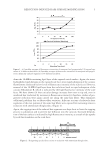
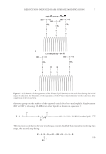
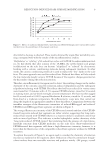
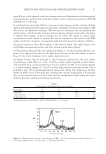
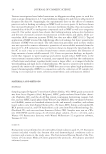
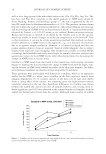
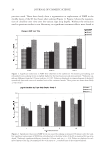
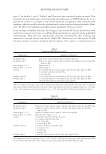
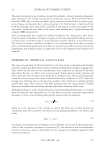
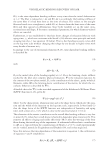
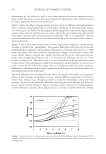
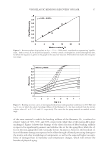
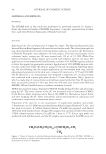
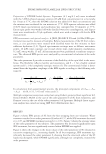
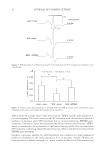
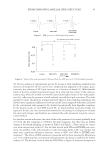
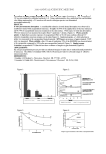
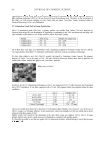
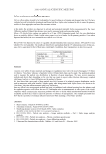
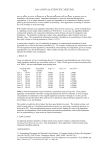
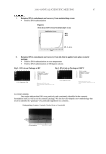
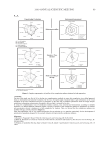
JOURNAL OF COSMETIC SCIENCE 10 amount of x - SO groups from air-oxidized -SH groups, and the mixed disulfi de with -C-S-S-CH2-COO- groups. It is shown again that the concentration of the mixed disulfi de is highest at short reaction times (equation 1), and decreases progressively with reaction time. This is clearly seen in Figure 6. When treated with CETAB, the cationic molecules will adsorb by salt links at the (air- oxidized -SH) - 3 SO and −C−S−S−CH 2 −COO- groups of the reduced hair surface. The schematic representation in Figure 7 shows that what we envision might occur to the Figure 6. Interfi ber averages of fl uorescence intensities of “reduced” and “reduced and then CETAB-treated” hair segments, subsequently tagged with the cationic RB. The lower fl uorescence intensity of “reduced (de- lipidized),” then CETAB-treated scale faces indicates a decrease in available sulfonic acid groups due to “re- lipidation reaction/refatting” with the cationic CETAB molecule. Figure 7. Schematic of what might occur to the outer β-layer of the exposed scale faces during reduction (delipidation) and subsequently during a “relipidation/refatting” treatment with the cationic conditioning molecule CETAB.

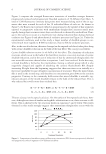
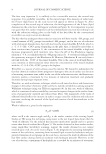
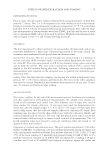
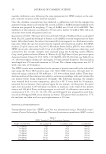
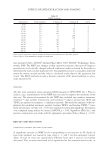
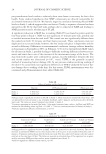
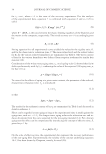
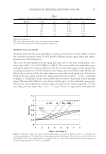
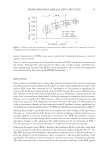
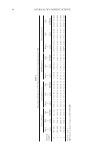
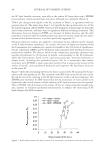
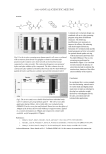
REDUCTION-INDUCED HAIR SURFACE MODIFICATION 11 outer β-layer of the exposed scale faces during reduction (delipidation) and subsequently during treatment with the low-molecular-weight cationic conditioning molecule CETAB (relipidation or refatting). X-ray photoelectron spectroscopy (XPS) as a measure of surface damage caused by reduction. To help explain and understand the changes in the surface chemistry of reduced hair samples, XPS was used as an additional technique. XPS was used to determine the concentration and chemical state of all detectable elements. In investigating changes in the surface chemistry of reduced hair samples, of special interest was, of course, the change in surface sulfur concentrations from sample to sample. For ease of comparison, the results of the XPS analysis of the hair categories investigated (unaltered and reduced) are shown in Table I. Of special interest in these XPS analyses is the element sulfur. The sulfur listed is the total sulfur concentration on the scale faces of each specifi c hair category: (a) The untreated hair had the least amount of sulfur (~0.3 atom%) among the hair cate- gories. It is expected that most of the lipid layer (F-layer) on the hair surface is intact however, low levels of damage to the surface lipids pre-exist. (b) Figure 8 shows that for both the 5- and 30-minute reduced hair, the scale surface concentration of SOx - 3 (SO ) at ~168 - 169 eV is rather small (compared to photochemi- cally oxidized hair), arising mainly from the air-oxidation of -SH. A tiny bump appears at a lower binding energy of ~164 eV on both light-exposed and reduced hair, and is probably a trace of C-S stemming from the amino acid cystine. For comparison, we have shown an XPS scan of UV-treated hair, showing the extreme delipidation UV radiation does to the exposed scale faces. It is clear that the mechanism of lipid removal is quite different between oxidative and reductive processes. Figure 8. High-resolution spectra of the changes in - x SO and C-S concentrations on the surface of (-) 200-h light-exposed, and (-) 5-min- and (…) 30-min-reduced hair. Table 1 Concentration† of Elements Detected (in atom%) Hair sample O N C S Unaltered 10.0 1.5 83.9 0.3 5-min reduced 14.3 0.8 77.6 0.6 30-min reduced 15.0 1.1 77.2 0.4 † Concentrations are normalized to 100%. XPS detection is ~0.1 atom%.
Purchased for the exclusive use of nofirst nolast (unknown)
From: SCC Media Library & Resource Center (library.scconline.org)