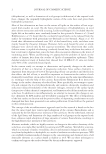
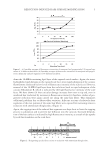
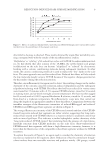
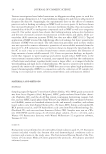
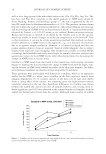
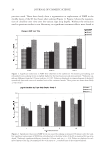
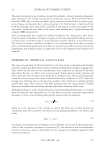
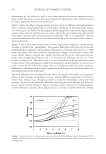
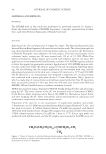
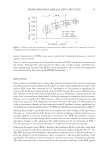
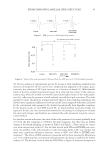
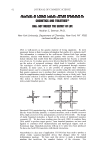
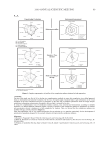
JOURNAL OF COSMETIC SCIENCE 18 well as for a large group of the individual amino acids: Glu, Gly, His, Arg, Cit, Thr, Lys, Leu, and Phe. This correlates to the depth gradient in NMF levels shown by Scott, Harding, Bowser, and Rawlings’ group (17,18) and is supported by the iso- lated SC work done by Hashimotokumasaka et al. (19). The gradient increase shown here fi ts within the scale of resolution offered by confocal laser Raman spectroscopy, and the leveling off of NMF levels at deeper layers of the SC is consistent with results obtained by Caspers et al. (20–22) using in vivo confocal Raman microspectroscopy. Raman spectroscopy is limited in its depth by the models used to fi t the spectra, which are unable to match changes in molecular composition in the lower SC. Due to this limitation, it can not be a truly quantitative method. Our method can detect smaller differences in NMF levels in the upper SC, e.g., as a function of treatment, due to its greater sample resolution. However, it is limited in depth and does not permit analysis down to Caspers’ reported “band of stable fi laggrin” due to subject trauma from repetitive tape stripping. Our method uses readily accessible HPLC technology and affordable and easily stored tapes for sample collection, and provides quantitative values for local NMF levels, rather than being limited to measuring the change in NMF levels at various strata. Gradients in NMF levels were also found in the treated sites, with varying curvatures (Figure 1). Soaking the skin exacerbates the change in NMF levels with SC depth, mak- ing the decrease in NMF levels towards the surface of the skin more dramatic. No differ- ences between treatments are observed at tape strip levels 10 and above. These gradients were particularly well-defi ned for citrulline, which is an important marker for the NMF as a whole, since citrulline in the skin originates entirely from fi laggrin degradation (3). A covariate analysis of the data over all tape strip depths shows a strong effect of the subject, not surprising given the high person-to-person variability observed in the raw data. Signifi cant differences in citrulline were shown between the soaked and control sites over all samples, however, and a strong trend to- wards signifi cance (p=0.053) was observed in the summed amino acid samples, with the soaked site having lower levels than the control. Although minor sources of soluble Figure 1. Citrulline levels increased signifi cantly with depth in the SC, and varied with treatment, with the extracted and soaked site showing the greatest loss of NMF.

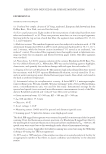
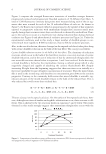
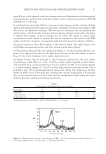
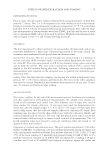
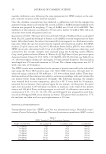
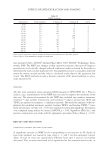
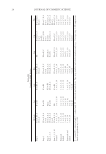
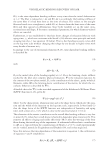
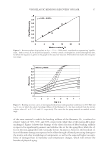
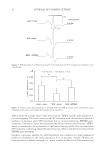
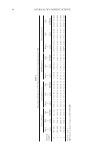
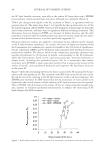
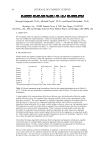
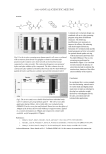
EFFECTS OF LIPID EXTRACTION AND SOAKING 19 amino acids other than those from fi laggrin proteolysis are likely, we believe that the present method measures NMF, since citrulline is not generated in SC other than from fi laggrin proteolysis, which is the source of the bulk of the free amino acids found in SC (23–25). In addition, the other amino acids, as well as the sum, follow the same patterns of signifi cance as citrulline in these studies. TREATMENT EFFECTS Signifi cant differences between the treatments were also observed (Figure 2). For the amino acids of greater prevalence in NMF and the SC, the fi ndings were as follows: (a) for citrulline at tape 1, all treatments were signifi cantly different (b) for the summed AAs at tape1, the control was signifi cantly different from the extracted and soaked (ES) site and (c) the extracted site was different from all others. For tape 3, (a) signifi cant differences between ES and the other three treatments as well as between the extracted (E) and soaked (S) sites were seen for the summed AAs, Cit, His, and Phe (b) for leu- cine, ES was signifi cantly different from C, S, and E, and for serine, ES was signifi cantly different from E. At strip 5, the summed AAs, His, Leu, and Phe all showed a signifi - cant difference between ES and the other three sites for citrulline, all comparisons were signifi cant. Because all treatments converged by tape 10, tapes 1, 3, and 5 were summed to examine treatment effects over the upper portion of the SC. For the summed AAs, the sum of tapes 1, 3, and 5 confi rms the trends shown in the individual tape strips, with site ES differing from all others and E differing from S, but not from C. E and ES are different for serine. ES is different from all for histidine. For citrulline, E is different from all. For both leu- cine and phenylalanine, E is different from all and S and ES are different. Table III pro- vides a summary of the signifi cant differences in NMF. Figure 2. Signifi cant reduction in NMF levels was caused by extraction and soaking, with the combination producing especially low levels of NMF. *Indicates signifi cant difference from control, p 0.001.
Purchased for the exclusive use of nofirst nolast (unknown)
From: SCC Media Library & Resource Center (library.scconline.org)