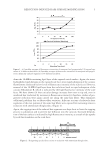
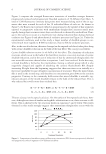
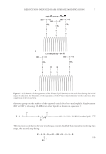
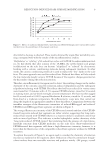
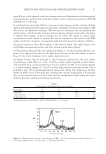
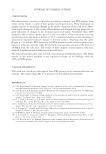
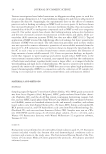
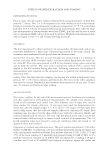
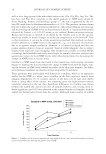
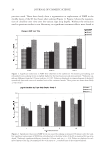
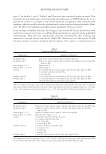
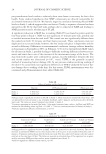
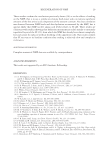
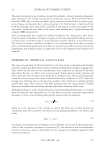
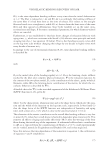
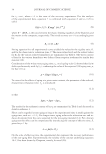
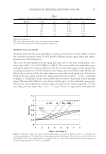
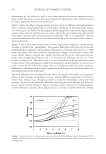
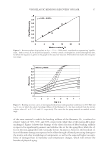
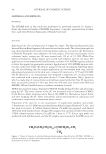
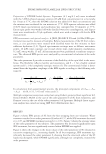
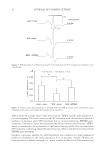
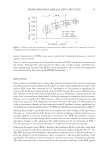
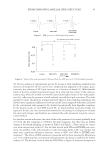
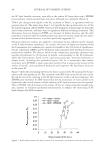
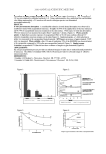
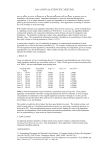
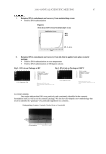
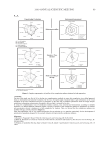
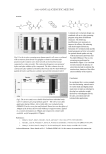
EPDME IMPROVES LAMELLAR LIPID STRUCTURE 43 barrier disruption by TEWL, only water content by Corneometer showed a level of significance of 0.099. Figure 5 shows typical spectra of liposomes treated with SDS, and Figure 6 summarizes the results. Although the order parameter S shows only a slight change, and SDS treat- ment signifi cantly increased the fl uidity of the membranes, this increase was suppressed by treatment of the liposomes with EPDME beforehand. DISCUSSION Skin cleansers are widely used to keep skin clean and sanitized, but excessive cleansing can remove natural moisturizers and SC lipids. It is also well established that surfactants, such as SDS, cause skin irritation (8–11). Imokawa et al. (8) reported a signifi cant de- crease in SC hydration in skin treated with 5% SDS, though there was no infl ammation. The amount of released SC lipid constituents, such as cholesterol, cholesterol ester, and fatty acids, increased time-dependently, leading to disruption of lamellar lipid structure. Ohmori et al. (1) applied 5% SDS solution to the mid-volar forearm for ten minutes and observed a reduction of SC hydration and barrier function. We used 1% SDS solution in order to investigate changes in lipid structure in the SC without causing signifi cant bar- rier disruption, as determined by means of TEWL and SC hydration measurements (Table I). Electron microscopy is a powerful tool to investigate structural changes in SC lipid layers directly, e.g., in skin obtained by biopsy (12), and the stripping technique has been suc- cessfully applied to electron microscopic evaluations (13). EPR measurement using ex vivo SC obtained by surface biopsy with cyanoacryrate is also suitable to examine depth- dependent changes in the ordering profi le of SC lipid layers (2). An advantage of EPR is that the operation is very simple and easy in comparison to electron microscopy. Following the application of EPR to measure the membrane fl uidity of model compounds (14), its use has recently been extended to the structural analysis of human SC (15–17). The EPR spectrum of hydrophobic spin probes incorporated into a lipid membrane re- fl ects the properties of the membrane, and it is sensitive to the rotational mobility of the spin probes, the polarity of the environment, and the orientation of the probe molecules. The order parameter (S) is determined from the hyperfi ne couplings of the EPR signals Figure 4. Values of the order parameter S obtained from the EPR spectrum of SC removed in successive strippings from the forearms of ten volunteers.

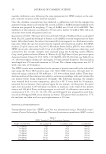
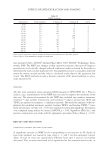
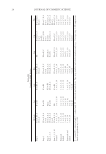
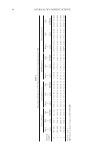
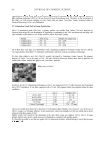
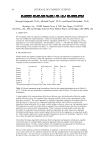
Table I Physiological Parameters of SC Obtained in Successive Strippings (mean ± S.D) Skicon 200 (s) μ Corneometer (a.u.) TEWL (g/m2h) Order parameter S Stripping number Water ↓ water SDS ↓ water SDS ↓ EPDME Water ↓ water SDS ↓ water SDS ↓ EPDME Water ↓ water SDS ↓ water SDS ↓ EPDME Water ↓ water SDS ↓ water SDS ↓ EPDME 1 78* ± 13 39 ± 7 74 + ± 17 39.3 ± 2.5 33.7 ± 1.4 42.0 ± 2.4 7.0 ± 0.6 8.0 ± 0.9 7.0 ± 0.6 0.553* ± 0.004 0.525 ± 0.005 0.546* ± 0.005 2 103 ± 18 58 ± 12 104 ± 26 41.3 ± 2.2 35.4 ± 1.6 45.2 ± 2.9 8.5 ± 0.9 9.7 ± 1.2 8.0 ± 1.0 0.574* ± 0.005 0.552 ± 0.003 0.563* ± 0.004 3 94 ± 14 108 ± 30 146 ± 30 40.0 ± 2.7 37.9 ± 2.4 45.6 ± 3.0 10.9 ± 1.1 12.8 ± 1.3 10.6 ± 1.5 0.584* ± 0.003 0.564 ± 0.004 0.575* ± 0.003 4 174 ± 50 174 ± 57 274 ± 113 44.1 ± 2.8 39.3 ± 2.9 52.2 ± 3.6 14.4 ± 2.3 19.4 ± 3.0 17.8 ± 5.1 0.588* ± 0.002 0.574 ± 0.004 0.584* ± 0.003 *p + p SDS→water vs water→ water or SDS→EPDME. JOURNAL OF COSMETIC SCIENCE 44
Purchased for the exclusive use of nofirst nolast (unknown)
From: SCC Media Library & Resource Center (library.scconline.org)