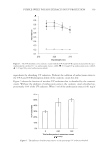
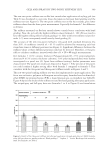
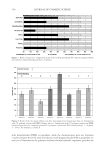
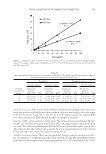
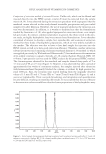
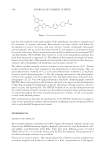
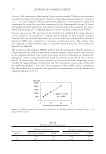
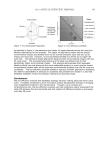
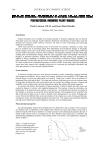
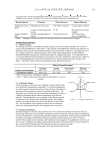
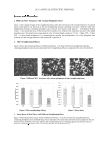
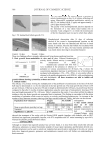
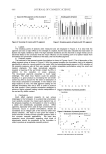
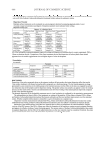
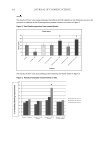
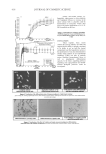
JOURNAL OF COSMETIC SCIENCE 350 with dimethylether (DME) as propellant, while the checkered-grey data sets (formulas 7 and 8 in Figure 8) are the same formulations with propane/butane (P/B) as propellant. In each set of formulations the polymer acrylates/t-butylacrylamide copolymer provides the Figure 8. Result of the two-point stiffness test after spray application (striped-grey data set: formulations with 3% polymer content and DME full-grey data set: formulations with 5% polymer content and DME checkered-grey data set: formulations with 3% polymer content and P/B). Hand grading: 1 = highest, 4 = lowest. For formulas, see Table II. Figure 7. Result of panel test: Comparison of gels based of Polyquaternium-86 with polyvinylpyrrolidone and carbomer with polyvinylpyrrolidone 28 answers.

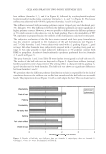
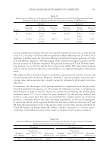
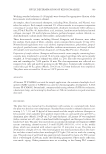
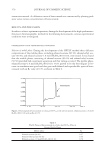
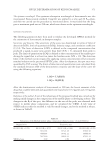
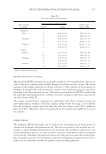
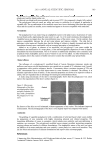
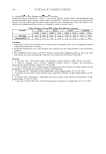
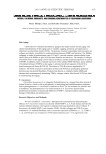
GELS AND SPRAYS IN TWO-POINT STIFFNESS TEST 351 Figure 9. Results of half-side test (full-grey data set: formula 1 striped-grey data set: formula 1). Gradings: 1 = best, 4 = worst. For formulas, see Table II. best stiffness (formulas 2, 5, and 8 in Figure 8), followed by octylacrylamide/acrylates/ butylaminoethyl methacrylate copolymer (formulas 1, 4, and 7 in Figure 8). The lowest stiffness was observed with VP/VA copolymer (formulas 3 and 6 in Figure 8). The stiffness increased with increasing polymer content (striped grey and checkered grey: 3%, full-grey: 5%). The differences between the different polymers are more signifi cant at higher polymer content. However, it was not possible to differentiate the different polymers at 5% solids content in the subjective test by hand grading. Due to the insolubility of VP/ VA copolymer in propane/butane, the stiffness of this formulation could not be measured. The subjective evaluation of the fl at hair strains treated with hair spray formulations was less sensitive compared to the evaluation of the gel formulations (see Figures 5 and 7). Only formulas 1 and 3 were subjectively rated with a 2 grading (Figure 7, good setting). All other formulas were subjectively assessed with a 1 grading (very good set- ting). It was only possible to fi nd subjective differences at 3% polymer content with DME as propellant. Acrylates/t-butylacrylamide copolymer performed best (see formulas 2, 5, and 8 in Figure 7). The spray formulas 1 and 2 (see Table II) were further investigated in a half-side test (5). The results of the half-side test are depicted in Figure 9. Apart from stiffness (setting), further parameters were characterized. The setting effect is characterized by grading 3+ (good–satisfactory) for both formulas. The half-side test shows no signifi cant differences between formulas 1 and 2. We postulate that the different polymer distribution on hair is responsible for the lack of correlation between the stiffness test on fl at hair strands and the half-side test on model heads. The preparation device (Figure 1) with a comb aligns the hair. This was found out to
Purchased for the exclusive use of nofirst nolast (unknown)
From: SCC Media Library & Resource Center (library.scconline.org)