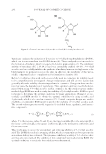
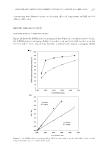
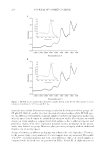
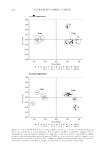
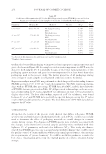
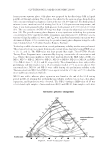
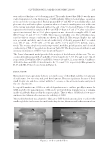
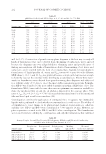
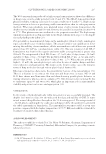
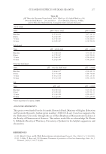
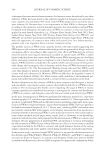
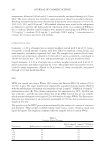
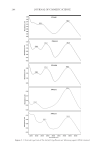
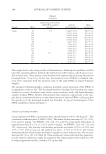
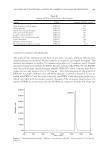
JOURNAL OF COSMETIC SCIENCE 250 materials were similar. Four-month storage resulted in the formation of four groups: Al/ PP plus PP, SAN, Ac, and G. As it was observed after direct analysis of the FT-NIR spec- tra, the differences between fresh cream and samples stored at room temperature in glass jars were the most clear. It cannot be excluded that the most visible effect of glass on overall changes in cream samples as compared with fresh samples is due to different structure and properties of glass from those of polymer materials used as packagings in the present study they formed one group. Moreover, glass jars were packaging without additional thermos or a protecting spacer. Storage of cosmetics in different packagings may infl uence the color of products. Therefore, in the present study, color parameters of stored samples were also measured. The results of L*a*b* color measurements and total color differences (ΔE*ab) of stored samples as compared with the fresh ones are presented in Tables II and III. A slight increase in Figure 1. FT-NIR spectra and their fi rst derivatives (inside) of fresh cream (F) and other samples stored in refrigerated conditions for (A) 2 mo and (B) 4 mo.

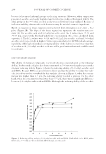
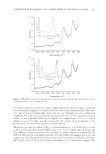
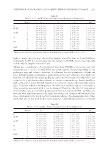
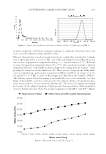
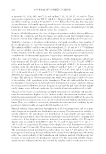
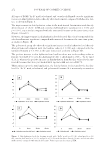
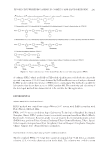
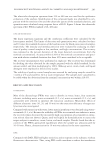
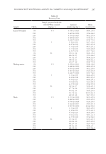
INFLUENCE OF PACKAGING ON COSMETIC EMULSION DURING STORAGE 251 L* values of samples stored in the cold as compared with that of fresh cosmetic cream was observed, whereas lightness of samples stored at room temperature decreased. The value of a* and b* was not signifi cantly changed in the case of samples stored in refrigerated conditions. For samples stored at room temperature for 4 mo, a* value slightly shifted to redness. It was especially visible for G samples (a* changed from -2.73 to -1.98). A slight increase in b* values was also observed for all samples in all packagings (cream became more yellow) with an exception of SAN samples. Taking into account the values of ΔE*ab, no visual changes in color of all samples stored in the cold for 2 mo were detected (ΔE*ab from 0.05 to 0.16). After 4 mo of storage, the color difference between fresh and stored samples could be defi ned as unnoticeable (for Al/PP Ac/PP, and G) or slightly noticeable (PP and SAN). For samples stored at room temperature, the color difference between fresh and stored sample was slightly noticeable (ΔE*ab from 0.86 to 1.19 for 2-mo storage, and from 1.02 to 1.46 for 4-mo storage). The Figure 2. FT-NIR spectra and their fi rst derivatives (inside) of fresh cream (F) and other samples stored at room temperature for (A) 2 mo and (B) 4 mo.
Purchased for the exclusive use of nofirst nolast (unknown)
From: SCC Media Library & Resource Center (library.scconline.org)