JOURNAL OF COSMETIC SCIENCE 258 demand from consumers, the formulators have certain problems regarding the optimum equilibrium between active compound concentration and the formulation base for skin structure regarding the ideal penetration of the active compound into the natural skin barrier (1). Glutathione is a resilient antioxidant often called the mother of all the antioxidants. It is a tripeptide antioxidant based on three amino acids cysteine, glycine, and glutamine (2,3). Glutathione transpires in both reduced (GSH) and oxidized (GSSG) states. The GSH is a biologically active sulfhydryl group which allows for interactions with a variety of biochemical systems. It is the most crucial molecule needed to stay healthy and prevents diseases. Apart from its several natural purposes, it is thought to be a contributory in generating skin lightening because of its tyrosinase-inhibitory activity (2). Many lightening compounds are melanocyte-toxic (2). These melanocyte-toxic compounds are oxidized in the cell to harvest extremely deleterious intermediates such as quinones. These quinones retract melanocytes, ultimately triggering spanking of pigment. But GSH is purported to shield the melanocytes from oxidation through its antioxidant pro- tective effects (4,5). GSH is extremely exposed to oxidation in the solution form. GSH is hydrolyzed by intestinal and hepatic gamma-glutamyl transferase, resulting in abridged bioavailability when directed orally. Most of the absorbed GSH sustains within the gut luminal cells and could be found in the general circulation (6). So, it produces pronounced stability and absorption complications (7) which restrain their persistence for new formu- lations. The submicron or nano-size of active molecules is enough to cross the skin barriers during penetration into the skin (8,9). The drug molecules sized in nanometer range offer some exclusive features which can lead to sustained circulation, upgraded drug localiza- tion, enhanced drug effi cacy, etc., and by means of the variety of dosage forms these better performances can be accomplished. Chemically unstable drugs can be supplied to the skin by means of nanosystems (10). A nanoemulsion can resolve these issues because it has the ability to protect GSH as the GSH will be in the oil globule of a O/W nanoemulsion. It has been shown that the smaller the particle size the greater the absorption into skin Stratum corneum (1). The S. corneum is the fi rst-line barrier of the skin because of its lipo- philicity and high cohesion between cells (11). Hence, good stability and penetration effi cacy could be attained. That is why a GSH-loaded nanoemulsion was formulated to achieve the desired stability. MATERIALS AND METHODS MATERIALS Glutathione reduced 98% (GSH) was purchased from Acros organics (Fair Lawn, NJ). Liquid paraffi n oil was purchased from Merck (KGaA, Darmstadt, Germany). Polyethyl- ene glycol sorbitan monooleate (Tween 80) and sorbitan monooleate (Span 80) were pur- chased from Merck. All other chemicals were of analytical grades. METHODS A modifi ed method was adopted to prepare the GSH-loaded nanoemulsion (1). Surfactant mixture (Smix) was dissolved in distilled water with continuous agitation to prepare a

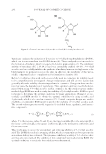
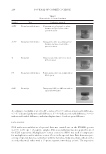
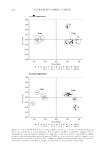
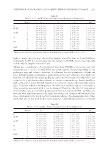
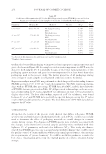
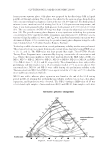
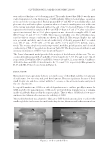
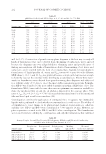
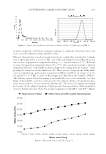
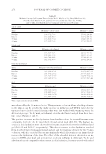
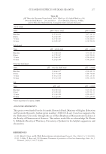
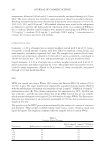
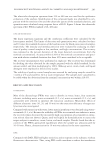
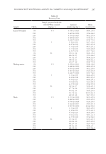
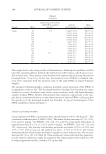
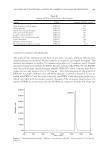
GLUTATHIONE-LOADED NANOEMULSION 259 homogeneous aqueous phase. Oily phase was prepared by the dissolving GSH in liquid paraffi n oil through stirring. The oil phase was added to the aqueous phase drop-by-drop with constant stirring by a magnetic stirrer at the rate of 1,100 rpm (12). The homogenized mixture (coarse emulsion) was left stirring for 2 h, at 1,100 rpm at room temperature, and then, it was homogenized with a high-pressure homogenizer at 15,000 rpm for 10 min (13). The concentration of GSH (450 mg) was kept constant by adjusting each formula- tion (14). The pseudo-ternary phase diagram is very signifi cant in fi nding the optimum concentrations of the ingredients while preparing a nanoemulsion (15). Different concen- trations of liquid paraffi n oil, water, and Smix were mixed and nanoemulsion regions were determined (Figure 1) by constructing the pseudo-ternary phase diagram using the soft- ware Chemix School 3.60 (Arne Standes, Burgen, Norway). To develop a stable o/w nanoemulsion, several preliminary stability studies were performed. These nanoemulsions were made from pseudo-ternary phase diagrams having HLB values 9, 10, 11, and 12. The HLB value was kept greater than eight. Three PTPDs (Pseudo Ternary Phase Diagrams) were constructed by keeping constant the oil concentration and Smix. Thirty-three nanoemulsions (w/w) were made in which the HLB values of NE-1 to NE-6, NE-7 to NE-12, NE-19 to NE-23, NE-13 to NE-18, NE-24 to NE-28, and NE- 29 to NE-33 were 9, 10, 11, and 12, respectively. These formulations were subjected to preliminary stability studies over a 28-d testing period at 25°C in an incubator. Two nanoemulsions, NE-18 and NE-19 were stable during this preliminary stability study. The nanoemulsions NE-18 and NE-19 were again tested for a 90 days at 25°C to fi nd the most stable nanoemulsion (Table I). NE-19 was stable, whereas phase separation was found at the end of the 90-d testing period in NE-18. During this preformulation stability study factors such as color, phase separation, and liquefaction were observed. The NE-19 having a HLB value of 10 was selected and eight samples of nanoemulsions (B-19 and NE-19, four samples each) were Figure 1. Pseu do-ternary phase diagram.
Purchased for the exclusive use of nofirst nolast (unknown)
From: SCC Media Library & Resource Center (library.scconline.org)