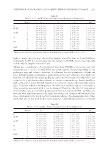
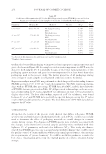
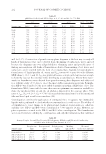
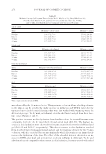
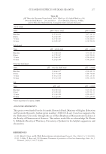
JOURNAL OF COSMETIC SCIENCE 260 repeated and prepared to evaluate the stability studies according to ICH (International Council for Harmonisation) guidelines (16). B-19 was without GSH. Four samples each of B-19 and NE-19 were kept at four different storage conditions which were 4, 25, 40, and 40°C ± 75% RH (Relative humidity) (16) and observed at intervals of 0 h, 24 h, 48 h, 72 h, 7 d, 14 d, 21 d, 28 d, 45 d, 60 d, and 90 d. Color, odor, and liquefaction of B-19 and NE-19 were clarifi ed by means of visual appearance (17). The pH measurements were taken by means of a pH meter (model Zubehorbox pH InoLab, Weilheim, Ger- many). Phase separation analysis was performed by centrifugation of B-19 and NE-19 at 5,000 rpm for 10 min in a centrifugation machine (model: 5810R Eppendorf, Hamburg, Germany). The turbidity of NE-19 and B-19 was noted visually. Flow characteristics were measured with a cone-plate rheometer, using CP41 spindle and operated with the software Rheocalc 1.01 (Brookfi eld Digital Rheometer, Model DV-III, Brookfi eld Engineering Laboratories, Middleborough, MA). The viscosities of fresh NE- 19 and B-19 were measured at 100–200 rpm speed (with 50 increments). All the measure- ments (n = 3) were taken at 25°C on a rheometer For evaluation of fl ow characteristics (16), Power’s Law was applied as follows: IJ = , kDn where, τ = shear stress, D = yield stress (stress at zero shear rate), k = plastic viscosity, and n = shear rate. Analysis of the average diameter is very signifi cant for the confi rmation of nanoemulsion droplet size. The NE-19 was evaluated for mean droplet size, zeta potential, mobility, elec- trical conductivity, and polydispersity by using dynamic light scattering (Zetasizer, model ZS Malvern Instruments, Worcestershire, UK). Measurements were performed at 25°C using a scattering angle of 90° (10). The average droplet size, zeta potential, mobility, electrical conductivity, and polydispersity were recorded for samples of NE-19 (0 d, 30 d, 60 d, and 90 d). STATISTICAL ANALYSIS Statistical analysis was performed using SPSS software by applying two-way ANOVA (Analysis of variance) (16). RESULTS The two nanoemulsions NE-18 and NE-19 were stable after the 28-d testing period, whereas other formulations showed instability at different time intervals (Table I), which Table I Preliminary Stability Study of NE-18 and NE-19 for the 90-d Testing Period Formulations S/No Nanoemulsion code Effects at 25°C, after 30 d 60 d 90 d 1 NE-18 Stable Stable Phase separation 2 NE-19 Stable Stable Stable

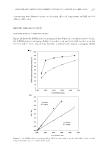
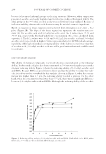
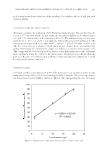
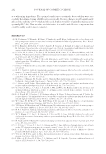
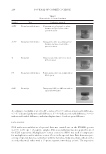
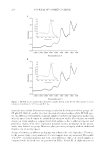
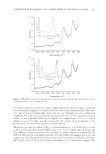
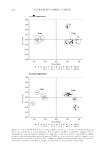
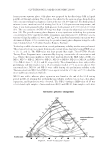
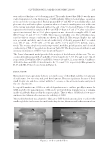
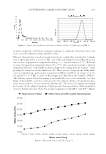
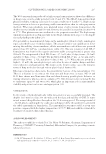
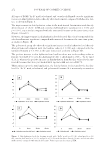
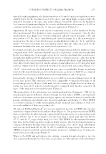
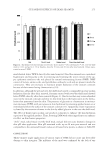
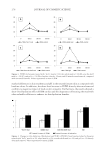
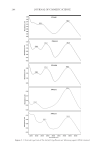
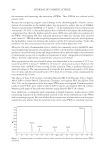
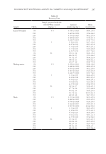
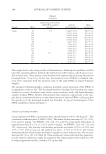
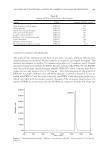
GLUTATHIONE-LOADED NANOEMULSION 261 were subjected further to a 90-d testing period. The results showed that NE-19 was the most stable formulation for the fabrication of GSH stability. NE-18 showed phase separation at the end of the testing period. Freshly prepared B-19 and NE-19 were milky white, had pleasant odor, and had no phase separation after accelerated centrifugation test at the start of the testing period and remained stable at the end of the 90-d period (Figure 2). No phase separation was found in samples of B-19 and NE-19 kept at 4 and 25°C after each subse- quent time interval, but at 90 d, phase separation was observed in samples of B-19 and NE-19 kept 40 and 40°C ± 75 RH. There was no turbidity seen. The pH values mea- sured at various storage conditions are shown in Table II. The average droplet size and zeta potential, mobility, and electrical conductivity of freshly prepared B-19 recorded were 184.25 nm, -30.85 mV, -2.911 μm cm/Vs, 0.254, and 0.0236 mS/cm, respec- tively. The average droplet size and zeta potential, mobility, polydispersity, and electrical conductivity of NE-19 recorded are shown in Table III. The droplet size distribution and intensity distribution of NE-19 are shown in Figure 3. The Power’s law math model provided the analysis of the behavior of data sets. The vis- cosities of freshly prepared B-19 and NE-19 were found to be 3,363.492 and 4,425.712 cP, respectively. Flow index of B-19 and NE-19 were 0.28 and 0.21, respectively. Confi dence of fi t of the base and NE-19 were found to be 99.6 and 99.8, respectively. Rheograms for B-19 and NE-19 have been shown in Figure 4. DISCUSSION Nanoemulsions are appealing delivery systems because of their high stability, low amount of surfactants, low viscosity, and good development. They are signifi cant because of their small droplet size and close contact with the S. corneum, so the active molecules easily reach the site of action (1). In topical formulations, GSH is at risk of degradation as it oxidizes quickly in water. In GSH-loaded (o/w) nanoemulsion, GSH can be prevented from degradation as it remains inside oil globules dispersed in the aqueous phase. That is why a GSH-loaded o/w nano- emulsion was fabricated to increase the stability of GSH. The modifi ed method was adopted to fabricate a GSH-loaded nanoemulsion to achieve the smallest globule size because the smaller the droplet size, the more stable the nanoemulsion Figure 2. (A) B -19 and (B) NE-19.
Purchased for the exclusive use of nofirst nolast (unknown)
From: SCC Media Library & Resource Center (library.scconline.org)