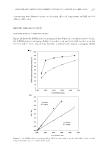
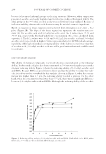
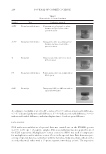
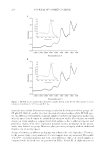
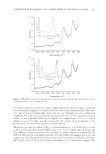
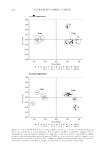
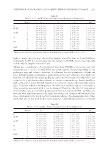
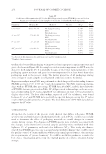
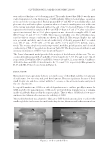
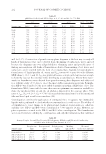
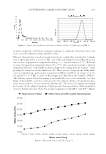
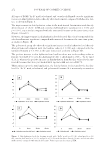
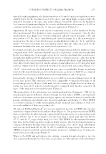
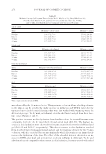
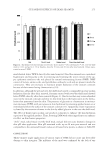
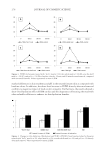
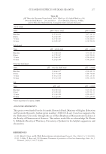
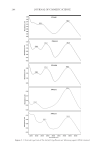
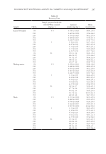
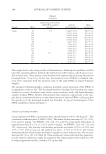
JOURNAL OF COSMETIC SCIENCE 264 at intervals 0 h, 24 h, 48 h, and 72 h, and on days 7, 14, 21, 28, 45, 60, and 90. There was no phase separation in any NE-19 and B-19. However, phase separation occurred in the NE-19 and base stored at 40 and 40°C + 75% RH at the 90th day. This may have occurred because of Ostwald ripening in which molecules move as a monomer, and the formation of larger droplets occurred because of the coalescence of small droplets by dif- fusion processes driven by the gain in surface free energy (6). In most colloidal dispersions, the sizes of dispersed structures and the density difference between the continuous and dispersed phase are small enough that thermal energy can keep the colloids from sedimentation under gravity for an extended period of time (21). Turbidity is haziness or cloudiness or disturbance of a liquid caused by a large number of factors (droplet size, etc.) and the measurement of turbidity is a key test for stability (23). The turbidity of NE-19 and B-19 was checked visually at 4, 25, 40, and 40°C + 75% RH and there was no turbidity seen in them. The variation of the turbidity of a sample as a function of time depends on the fl occulation rate. The turbidity of a nanoemulsion results from the contributions of conventional aggregates, bigger drops, and mixed aggregates (24). pH is the count of total ions present in a formulation. Stable formulations afford very little change in pH. The pH of the skin is normally considered 3–7 (25). The pH of NE-19 tallies with skin pH and there is a little decrease in the pH of NE-19. At the start of the stability study, the pH of fresh samples of NE-19 and B-19 were 5.79 and 5.92. At the end of 90 days of the stability studies, the pH were 4.53, 4.47, 4.43, and 4.37 and 4.41, 4.35, 4.48, and 4.31 at 4, 25, 40, and 40°C + 75% RH, respectively. By applying two-way ANOVA, the change in pH of NE-19 and B-19 was found to be insignifi cant with respect to time. The pH values of both nanoemulsions, which were unchanged could be because of the stability of the ingredients in the formulation. Thus, this indicated that there was no degradation or ionization of chemicals in the formulation at storage conditions during the testing period. However, because the particle size and the pH value did not signifi - cantly change across different conditions, we considered our nanoemulsion to be stable. Changes in the electrical conductivity can imply nanoemulsion variability and may fl uc- tuate the nanoemulsion droplet size (26). In these studies, the increase in electrical conduc- tivity was minor and prediction of emulsion stability in this way was diffi cult because the relationship between an increase in electrical conductivity and emulsion instability is not linear. Thus, we could not conclusively determine the nanoemulsion’s stability by this parameter. Similar results are reported by Bernardi et al. (27). Physical stability of nanoemulsions throughout their life is very important, and no or min- imal changes in the particle size distribution are necessary. The nanoemulsion stability is strictly related to the nanodroplet size distribution. A large droplet size may enhance Ostwald ripening which causes the increase in droplet size and can lead to creaming and coalescence. A fast droplet size increase indicates low system stability (24). The mean droplet sizes recorded for fresh NE-19, after 30, 60, and 90 days were 96.05 nm, 155, 181.3, and 190, respectively. The range of the droplet size of all formulations should be between 30 and 500 nm (28). There was no large increase in the droplet size of NE-19. The nanoemulsions had polydispersity index values less than 0.3 throughout the 90-d testing period, indicating the high fi delity of the system (low polydispersity), which may refl ect the overall stability of this formulation and synthesis method. Polydispersity val- ues near 1.0 are indicative of a polydisperse system (27). The long-term stability of nano- emulsions was evaluated and was also verifi ed by stability studies conducted over 3 mo.

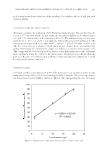
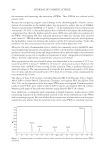
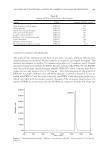
GLUTATHIONE-LOADED NANOEMULSION 265 The W/O nanoemulsion produced by high-energy homogenization showed no difference in droplet size over the study period at both 25 and 4°C. The NE-19 demonstrated high physical stability, verifying our results for storage conditions of 4 and 25°C. High-energy homogenization is better at producing stable nanoemulsions than its other preparation methods. When nanoemulsions were prepared using a high-pressure homogenizer, the droplet size was initially around 100 nm however, the particles increased in size after 30 d at 25°C. This phenomenon was attributed to the preparation method. The high-energy emulsifi cation method used in our study showed high stability with respect to the droplet size and polydispersity index (29). Zeta potential is a measurement of charge on the nanodroplets when it is high, nanodroplets repel each other because of similar charges. The zeta potential is very signifi cant in deter- mining the stability of nanoemulsions, all the nanoemulsions which have zeta potential greater than ±30 mV are considered more stable (30). The zeta potential of all NE-19 formulations was found to be negative and more stable as zeta potential is greater than ±30 mV. The zeta potential of fresh NE-19 was -37.1 mV after 30 days, it was -34.2 mV and after 60 days, it was -34.8 mV. The mobility of fresh NE-19 was -2.726 μm cm/Vs after 30 days, it was -2.911 and after 60 days, it was -2.59. When the zeta potential is high ( -30 mV), the nanodroplets repel each other because of similar charges and there is no coalescence and aggregation. The charge on the droplet surface causes the transpor- tation of drug molecules through various physiological barriers (31). Rheological properties characterize the spreadability features of the nanoemulsion (32). There is a decrease in viscosity as the shear rate and shear stress increases. NE-19 and B-19 have shown non-Newtonian fl ow and shear-thinning pseudo-plastic behavior on varying shear rates, which occurs in cosmetics (33). The decrease in viscosity may be due to surfactants (span 80 and tween 80), which play an important role in nanoemulsion stability and prevent coalescence and aggregation (34). CONCLUSION In this study, a thermodynamically stable nanoemulsion was successfully prepared. The droplet sizes were less than 200 nm with good rheology and stability of GSH. It main- tained normal skin pH values throughout the 90-d testing period. The zeta potential of -34 mV, which could impede the coalescence and deposit of the oil nanodroplets, generated the stable nanoemulsion formulation. The nanoemulsion was most stable at room tem- perature compared with the higher temperature (40°C/75 RH) and could be evaluated for treatment of oxidative skin related diseases. ACKNOWLEDGMENTS The authors would like to thank Prof. Dr. Nisar Ur Rehman, Chairman, Department of Pharmacy, COMSATS University Islamabad, Abbottabad Campus, for providing cosmetic laboratory services. REFERENCES (1) M. N. Yu kuyama, D. D. Ghisleni, T. J. Pinto, and N. A. Bou-Chacra, Nanoemulsion: process selection and application in cosmetics—a review, Int. J. Cosmet. Sci., 38, 13–24 (2016).
Purchased for the exclusive use of nofirst nolast (unknown)
From: SCC Media Library & Resource Center (library.scconline.org)