JOURNAL OF COSMETIC SCIENCE 430 permitted under strict conditions of use, the existence of heavy metals in cosmetics as an ingredient has been banned by legislation of most developed countries because they have been found to be harmful and usage of these cosmetics can be injurious to human health (4). The most signifi cant route of exposure to heavy metals in cosmetics is through the dermal route because cosmetics are mostly applied on the skin surface. Oral exposure can occur when it is used around the mouth, as well as hand to mouth contact after exposure to cosmetics containing those heavy metals (5). Oral exposure can also occur in children who tend to rub their eyes during cosmetics irritation and put contaminated fi nger in the mouth (6). Inhalation exposure to cosmetics is usually considered negligible but may be possible through aerosol cosmetics application (7). Metals are of environmental and public health signifi cance because they can initiate a wide range of toxic and chronic health effects such as cancer, reproductive development and neurological disorders, kidney and liver problem, lungs damage, contact dermatitis, brittle hair, and hair loss. Many are also implicated as endocrine disruptors (3). Despite all the regulations and safety systems in place for cosmetics today, the question still re- mains about the safety of cosmetic ingredients and impurities and the standard associated with them. There seems to be no legislation regarding contaminants in cosmetics in Nigeria (1). Many studies have provided scientifi c data on the level of heavy metals in cosmetics but there is a paucity of data regarding the health risk assessment of heavy met- als in cosmetics to which the population may be exposed to. This study was undertaken to determine the concentrations of lead, cadmium, mercury, arsenic, and nickel in cos- metic products and to evaluate the human health risk involved in the daily usage of these cosmetics. MATERIALS AND METHODS SAMPLE COLLECTIONS In January 2014, 20 brands of cosmetic samples (body cream, facial cream, hand cream, lip balm, and hair cream), were purchased from supermarkets and cosmetic shops in Port Harcourt, Rivers State, Nigeria, and used in the study. METAL ANALYSIS Using our previous method (8), the samples were ashed and digested in Tefl on labware that had been cleaned in a high-effi ciency particulate air-fi ltered (class 100), trace metal– clean laboratory to minimize contamination. This protocol involved sequential cleaning of the labware in a series of baths in solutions (1 wk each) and rinses (fi ve per solution) in a three-step order, namely, a detergent solution bath and deionized water rinses, then 6-NHCl (reagent grade) solution bath and ultrapure water rinses, and fi nally, 7.5 N HNO3 (trace metal grade) solution bath and ultrapure water rinses (8). The labware was air-dried in a polypropylene laminar airfl ow-exhausting hood. A dry ashing method was used by adding 30 ml of each sample into a conical fl ask and heating on a hot plate at 200°C for 45 min, and then in a furnace at 500°C until the volume was drastically re- duced to near dryness. Digestion was performed by an addition of 10 ml concentrated

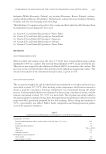
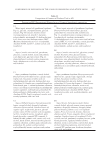
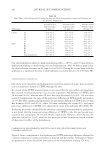
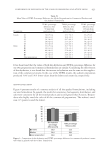
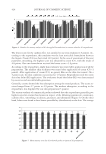
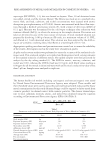
RISK ASSESSMENT OF METALS AND METALLOIDS IN COSMETIC IN NIGERIA 431 aqua regia (HCl:HNO3, 3:1) this was heated to dryness. Then, 20 ml deionized water was added, stirred, and the mixture fi ltered. The fi ltrate was made up in a standard volu- metric fl ask, and lead, cadmium, and nickel concentrations were assayed with atomic absorption spectrophotometry at 205 Å (8). Arsenic was measured with direct fl ow injec- tion through a hydride generation system (9), with a limit of detection (LOD) of 0.11 μg/l. Mercury was determined by the cold vapor technique after reduction with stannous chloride (SnCl2), to release the mercury in the sample solution. Precaution was taken at all times because of the toxic nature of mercury. A stock standard solution was prepared by dissolving 1.080 g of mercury (II) oxide, in a minimum volume of 1:1 HCL, and diluted to 1 l with deionized water. This solution was then analyzed by the AAS us- ing an air-acetylene, oxidizing (lean, blue) fl ame at a wavelength of 253.7 nm. Appropriate quality procedures and precautions were carried out to assure the reliability of the results. All reagents used in the study were of analytical grades. A spike-and-recovery analysis was performed to assess the accuracy of the analytical tech- niques used. Post-analyzed samples were spiked and homogenized with varying amounts of the standard solutions of different metals. The spiked samples were then processed for analysis by the dry ashing method (1). The LOD for arsenic, mercury, cadmium, and nickel was 0.001, whereas the LOD for lead was 0.01 ppm, with blank values reading as 0.00 ppm for all the metals in deionized water with an electrical conductivity value of less than 5 μS/cm. Samples were analyzed in triplicate. HEALTH RISK ASSESSMENT The human health risk models including carcinogenic and noncarcinogenic ones raised by United States Environmental Protection Agency were adopted. These models and their threshold values were used to assess the potential human health risks posed by heavy metal contamination for this study. Human beings could be exposed to heavy metal from cosmetic products via dermal contact with cosmetic particles. The chronic dermal expo- sure to lead, cadmium, mercury, arsenic, and nickel was calculated using the equation according to Environmental Protection Agency (EPA) (10) (Table I). dermal CS×SA×AF×ABS×EF×ED×CF CDE = Bw×AT Table I Parameters used for Calculation of Chronic Daily Exposure of Heavy Metals in Cosmetics (11) Parameters Unit Child Adult Body weight (BW) kg 15 70 Exposure frequency (EF) days/year 350 350 Exposure duration (ED) years 6 30 Skin surface area (SA) cm2 2,100 5,700 Adherence factor (AF) mg/cm2 0.2 0.07 Dermal absorption factor (ABS) none As (0.03) other metals (0.001) As (0.03) other metals (0.001) Conversion factor (CF) kg/mg 10-6 10-6 Average time (AT) days 365 × 70 365 × 70 For carcinogens 350 × ED 350 × ED For noncarcinogens
Purchased for the exclusive use of nofirst nolast (unknown)
From: SCC Media Library & Resource Center (library.scconline.org)