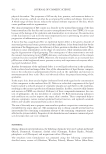
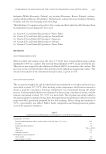
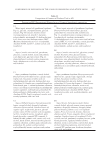
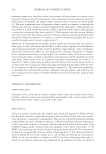
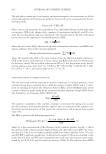
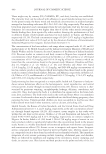
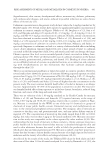
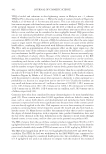
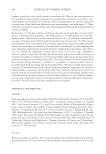
JOURNAL OF COSMETIC SCIENCE 432 The risk effect is made up of carcinogenic and noncarcinogenic risk assessments for all the metals through the dermal exposure pathway. Cancer risk can be evaluated from the fol- lowing formula: Cancer risk =CDE×SF, where cancer risk represents the probability of an individual lifetime health risks from carcinogens, CDE is the chronic daily exposure of carcinogens (mg/kg/d), and SF is the slope factor of hazardous substances (mg/kg/d). The noncarcinogenic risk from individual heavy metal can be expressed as the hazard quotient (HQ): HQ=CDE RfD, where the non-cancer HQ is the ratio of exposure to hazardous substances, and RfD is the chronic reference dose of the toxicant (mg/kg/d). CDE Hazard index due to heavy metals= RfD, where the hazard index (HI) is the sum of more than one HQ for multiple substances, CDE is the chronic daily exposure of heavy metal, and RfD is the chronic reference dose for the heavy metal. The acceptable value for the HI is 1. For the present study, the fol- lowing reference doses were used: As: 3.00E-04, Pb: 5.2E-04, Hg: 3.00E-04, Ni: 5.60E- 03, and Cd: 5.70E-5 and cancer slope for As: 1.5 (12,13). SAFETY EVALUATION OF COSMETIC PRODUCTS The risk associated with the exposure to metallic impurities in cosmetic products can be evaluated using the uncertainty factor called the margin of safety (MoS), and it is calcu- lated by dividing the lowest No Observed Adverse Effect Level (NOAEL) value of the cosmetic substance under study by its estimated systemic exposure dosage (SED) Scien- tifi c Committee on Consumer Safety (SCCS) (14). NOAEL MoS= SED The systemic availability of the cosmetic substance is estimated by taking into account the daily amount of the fi nished product applied, the concentration of the substance un- der study, dermal absorption of that particular contaminant, and a human body weight value (14). The SED is given by the following expression: -1 -1 Cs×AA×SSA×F×RF×BF SED μg kg bw day = ×103 BW where Cs is the concentration of the substance in the cosmetic product (mg kg-1), AA is the amount of the cosmetic product applied, SSA is the skin surface area, RF is the reten- tion factor (1.0 for leave-on cosmetic products), BF is the bioaccessibility factor, 103 is the unit CF, BW is the body weight (kg). A default body weight of 60 kg was assumed in this study. The AA, SSA, and RF values adopted for this study were the standard values estab- lished by the SCCS (14) and the values are shown in Table II. The reference dose (RFD)

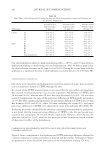
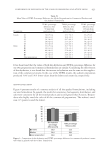
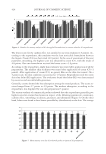
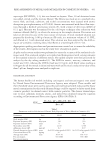
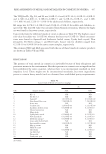
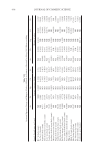
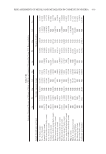
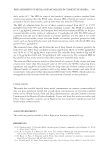
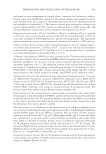
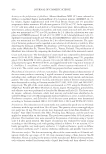
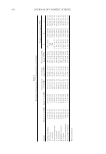
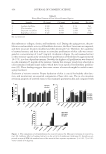
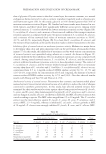
RISK ASSESSMENT OF METALS AND METALLOIDS IN COSMETIC IN NIGERIA 433 for the studied metals was used to derive their respective NOAEL values. The RFD is defi ned as an estimate of the daily exposure to the human population (including sensitive subgroups) that is likely to be without an appreciable risk of deleterious effects during lifetime. Hence, the relation between NOAEL and RFD is NOAEL = RFD × UF × MF, where UF and MF are the uncertainty factors (refl ecting the overall confi dence in the various datasets) and modifying factors (based on the scientifi c judgment used), respec- tively. In this case, the default values of UF and MF are 100 and 1, respectively. The RFDs (in mg/kg/d) used are shown in Table V. The World Health Organization (WHO) pro- posed a minimum value of 100, and it is generally accepted that MoS should at least be 100 to conclude that a substance is safe for use (14). The SCCS also noted the fact that in many convection computations of MoS, the oral bioavailability of the substance is as- sumed to be 100% if oral absorption data are available. However, it is considered appro- priate to assume that not more than 50% of an orally administered dose is systemically available (14). For the purpose of this study, two scenarios were considered, i.e., dermal absorption of the metal not exceeding 50% and 100% of the measured concentrations of the substance in the cosmetic products. RESULTS Table III shows the concentrations of heavy metals, namely, As, Pb, Hg, Cd, and Ni, re- spectively. The concentration of As ranged from 0.001 to 0.016 mg/kg. Least heavy metal concentration of arsenic was found in Authentic herbal cream, Cyndy herb crystal, New Jerusalem, Dr Elechi omega 7, and Heel herbal, whereas the highest concentration of arsenic was found in Aquasulf. Fifty-fi ve percent of samples had concentrations of Arsenic less than the detectable limit, whereas 45% had concentrations between 0.001 and 0.016. Pb concentration was 0.283 mg/kg and 2.873 mg/kg in heel balm and Tee Tee 3 d, re- spectively. Ten percent of the samples, namely Chioral restoration and Lip balm feel, had concentrations of Pb that were in the detectable limit. Thirty percent of the samples had concentrations less than 1.000 mg/kg, whereas 60% of the cream samples had concentra- tions greater than 1.000 mg/kg. The concentration of Hg in the cream samples ranged from 0 to 0.001 mg/kg. Seventy- fi ve percent of the samples had concentrations of Hg less than the detectable limit, whereas 25% of the samples had Hg concentrations of 0.001 mg/kg. Cadmium concentration in the cream samples stood at 0.001–0.334 mg/kg in Candy anti-spot and Chioral restoration. Notably, 45% of the samples had Cd concentration less than the detectable limit, whereas 55% had concentrations less than 1.000 mg/kg. Table II Product Type and Parameters Used for Calculation of Systemic Exposure Dose (14) Product type AA (amount applied in gram) SSA (skin surface area in cm2) F (frequency in day) RF (retention factor) Body cream 7.82 15,670 2.28 1.0 Facial cream 1.54 565 2.14 1.0 Hand cream 2.16 860 2 1.0 Lip balm 0.057 4.8 2 1.0 Hair cream 4.0 1,010 1.14 0.1
Purchased for the exclusive use of nofirst nolast (unknown)
From: SCC Media Library & Resource Center (library.scconline.org)