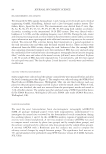
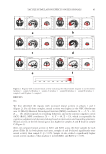
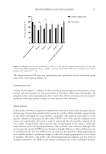
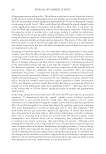
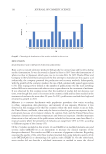
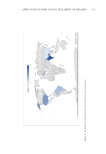
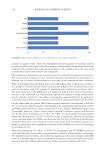
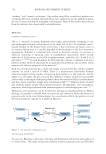
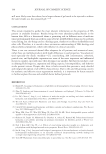
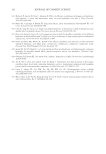
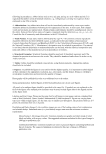
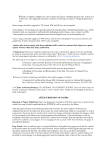
110 JOURNAL OF COSMETIC SCIENCE DISCUSSION MAIN FINDINGS AND COMPARISON WITH THE LITERATURE Kojic acid is a natural substance produced biologically by various fungi and bacteria during aerobic fermentation. It was discovered in Japan by Saito in 1907 from the fermentation of white rice (koji in Japanese), which gave rise to its name KA. In 1955 Charles Pfizer and Company in the United States announced the first attempt to manufacture this organic acid industrially the company patented the production and recovery methods. Subsequently, with the growth of the cosmetics market, the use of KA commercially gained appreciation (7,34). This scoping review looked at the number of publications over the years involving isolated KA or in association with other actives or procedures in the treatment of melasma. It was observed by this scoping review that the number of studies did not decrease over time, even though this asset is not recent in the cosmetics field and has been studied in the treatment of melasma for more than 20 years. In 2013, publications reached their high and returned to growth in 2021. Melasma is a common dyschromia with population prevalence that varies according to ethnic composition, skin phototype, and intensity of sun exposure. However, it was observed in this scoping review that the countries where the most studies occur are Italy, the United States, and India, where only the latter is related to greater sun exposure by the participants because of its tropical climate. In contrast, Italy and the United States have temperate climates with warmer temperatures and lower sun exposure. Another important observation is that only two of the publications included in this review came from Brazil, a tropical country where the prevalence of melasma can range from 5.9% to 9.1%, according to different regions of the country (35). Of the 24 studies included in this review, 14 used MASI (n) or modified melasma area and severity index (mMASI) (n) as an instrument to measure the clinical response of the therapies submitted. Two studies used MI as a measure of pigment evaluation. Regarding assessing the quality of life, only three studies presented data using melasma quality of life scale (MELASQol) (2) or dermatology life quality index (DLQI) (1). On the other hand, seven studies did not describe a validated instrument or method to assess the clinical Graph I. Chronological distribution of the studies included in this review.

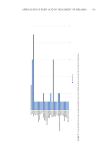
111 Application of Kojic Acid in Treatment of Melasma Figure II. Geographic distribution of the studies included in this scoping review.
Purchased for the exclusive use of nofirst nolast (unknown)
From: SCC Media Library & Resource Center (library.scconline.org)