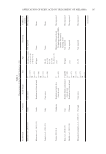
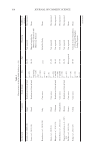
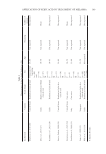
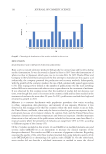
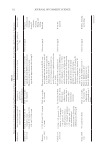
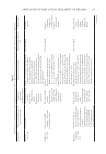
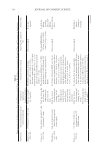
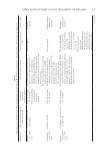
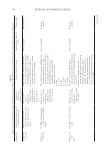
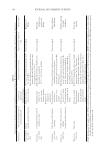
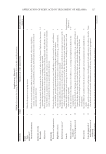
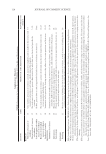
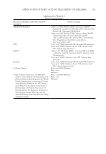
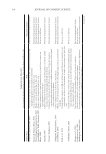
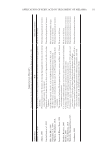
122 JOURNAL OF COSMETIC SCIENCE The highest concentration of KA was 10%. However, it was applied in peeling in association with 50% AG and in a gel formulation. For daily use, the highest concentration was 6%. It presented an adverse effect of mild erythema and mild flaking, expected by the high concentration of the agents used. The duration of treatment was 3 to 6 months, with application every 2 weeks, resulting in 30% of patients with complete reduction of melasma, 60% of patients with partial reduction, and 10% without any reduction of melasma. However, it was not using any validated instrument to evaluate this clinical response, so the results are subjective and cannot be compared to other studies (31). In some studies, the concentrations of KA used were not reported. KA cream was associated with an oral TXA capsule and presented adverse effects such as abdominal cramps and oligomenorrhea, which are indeed related to oral treatment with TXA and unrelated to KA. To corroborate this explanation, in the same study, another group used isolated KA cream and related only erythema and dryness as adverse effects. The outcomes achieved considerably lowered the MASI score for both groups after 3 months of treatment. The improvement in the first group was higher due to the association with TXA. However, the cost-benefit of this association should be assessed due to the risk of systemic adverse effects (16). Erythema was also one of the adverse effects found using KA, arbutin, Sepiwhite™, and Achromaxyl™ cream. The concentrations of the agents used were not reported. In addition to erythema, brushing, burning, and flaking were also reported. As a result of the MASI score and MELASQoL, they had a significant mean reduction during the 90 days of treatment (19). KA, HG, and GA creams were used, also without the concentration reported, and similar adverse effects such as erythema, flaking, burning, and itching were observed. After 12 weeks, a slight reduction in the MASI score occurred (22). Erythema, pruritus, irritation, and skin dryness were reported using KA, HQ, GA, and vitamin E creams. In this case, the DLQI score significantly reduced with each visit from the beginning of treatment until 3 months, which was the end of treatment, indicating an improvement in quality of life (28). When the application of KA gel was studied, adverse effects such as burning and flaking were observed within 3 months of treatment, and only 28% of patients had an improvement (29). Finally, mild irritation was reported with the formulation of KA, azelaic acid, alpha arbutin, Glycyrrhiza glabra extract, and ascorbic acid cream, and had a significant MASI score reduction after 1 month from the beginning of treatment and remained 1 month after the 12 weeks of treatment (24). A similar formulation of KA cream, emblica extract, and GA did not report adverse effects but showed a statistically significant improvement in uniform tone, texture, hyperpigmentation, brightness, size, and intensity (26). In another study using KA cream isolated with unreported concentration, 40% of the patients had a slight improvement, 35% showed a moderate improvement and 20% had a noticeable improvement. There was a very marked improvement in 5% of these (26,33). Daytime use of KA and vitamin A cream, and night cream of KA and AG, showed no adverse effects over the 90 days of treatment and had a significant reduction in the MASI score and a mean mMASI (20). Among the most described associations are GA (50% and 10%), Arbutin (5%, 2%, and 1%), HQ (12% and 2%), and vitamin C (5%, 2.5%, and 2%). Using KA with high concentrations and other substances showed promising results in reducing melasma. On the other hand, a higher occurrence of adverse effects was already predicted because each associated activity has several expected adverse effects.

123 Application of Kojic Acid in Treatment of Melasma Most of the studies described the daily nocturnal application, except for the studies that did not report the frequency of application (15,16,28,30). And when KA was associated with weekly radio frequency or applied as a peeling fortnightly (13,31). The duration of treatment, in general, was 12 weeks 11 studies showed improvement in the reduction of spots by reducing the MASI score at the end of this period. In addition, six studies demonstrated improvement in the MASI score in the first weeks of treatment. Hence, the claims of more significant adverse effects could be directly related to the increase in concentration. Only burning happened when KA was used at 1% reports of redness, burning, and itching occurred when its concentration was increased to 4%. However, it is impossible to confirm this statistically since the included studies have low methodological quality and need to correctly describe the incidence of adverse effects. The improvement of melasma observed by all investigations independent of KA concentration is a crucial feature to take into account. However, more studies should be conducted with more homogeneous or standardized evaluation criteria to establish a proportionality relationship between MASI reduction. STRENGTHS AND LIMITATIONS OF THE STUDY The strengths of this scoping review include the high methodological rigor, the publication of a previous protocol, the use of explicit eligibility criteria, broad and complex research in databases and other records, and the selection and evaluation of studies by independent and standardized reviewers. The studies included are a limiting factor for the results observed due to their methodological quality and heterogeneity in reporting the results of safety and efficacy. It is also worth mentioning that most studies did not consider the patient’s quality of life as an evaluation of the participants, a critical outcome for this clinical condition. The findings related to the safety and efficacy of KA were similar to the previously published studies, suggesting, based on the available emerging evidence, that it may be safe and effective in treating melasma. IMPLICATIONS FOR RESEARCH AND CLINICAL PRACTICE The present scoping review observed the association of KA with several actives, but more was needed concerning its association with aesthetic procedures. Thus, the results gathered in this review can serve as a guide for new publications, generating new research questions and demonstrating where the limitations of studies already published are and, consequently, the knowledge about the clinical application of these formulations in treating melasma. Other reviews available in the literature address the use of KA, but not when specifically used in the in-depth treatment of melasma, or approached through reviews without methodological rigor as a scoping or systematic review (4,7,38,39). This scoping review contributes as a guide to the clinical application of KA by presenting results of several studies published over more than 20 years, which demonstrate that the application of KA alone or in therapeutic association produces significant results in reducing the severity of spots and improving the quality of life associated with melasma. Thus, it can guide the prescription of concentrations, treatment duration, and associations according to the results presented and the adverse effects reported.
Purchased for the exclusive use of nofirst nolast (unknown)
From: SCC Media Library & Resource Center (library.scconline.org)