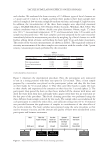
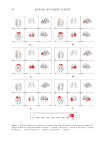
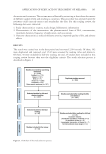
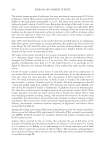
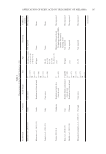
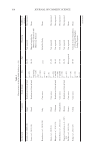
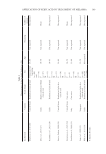
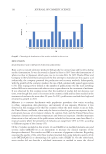
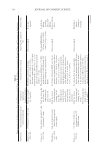
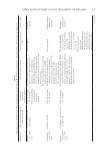
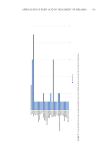
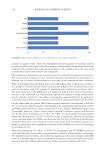
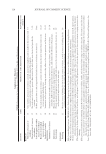
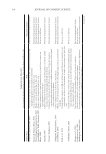
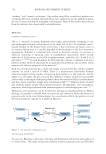
120 JOURNAL OF COSMETIC SCIENCE response or quality of life. These data demonstrate the heterogeneity of scientific research in clinical trials or case reports related to aesthetic dysfunctions or dermatology. Even with validated and recommended evaluation instruments, some authors still need to use them to make their results more reliable and comparable. The evaluation of melasma’s clinical response may be correlated with pharmaceutical form, KA concentration, frequency of use, treatment duration, and therapeutic associations. In addition, the occurrence of adverse effects is also linked to the variation of these conditions. Thus, in the studies that used KA in association with other actives or therapeutic resources, it is possible to observe that the lowest concentration of KA (0.75%) occurred when it was used in association with 2.5% vitamin C, presenting only erythema as an adverse effect. The mean reduction in the MASI score was significant from the first week of treatment to the end, in the 12th week (12). The erythema reported in addition to being related to KA may be related to vitamin C, since they are among the expected effects for its application as described since 1999 as ardor, erythema, and dry skin, easily treated with hydration (36). On the other hand, no adverse effects were reported when the concentration of KA was 1% in association with monopolar radio frequency for transdermal administration of the gel formulation with diverse agents associated (uva-ursi, arbutin, antioxidant agents such as pineapple, green tea, Capparis spinosa extract, vitamin C palmitate, papaya, and aloe) and also by the cream formulation of 1% KA, 3% TXA, 5% niacinamide, 5% hydroxyethyl piperazine ethanerazazine (13,25). In the first study, a significant reduction in melasma can be observed where the MASI score decreases after the first month and 6 months after treatment. The same can be observed in the second study with a treatment period of 12 weeks, in which there was a significant reduction in the mMASI score since the beginning of treatment (13,25). When the formulation of 1% KA, 3% TXA, 5% niacinamide, and 5% HEPES serum was used, the following adverse effects were presented: erythema, itching, redness, or burning. The treatment lasted 12 weeks and resulted in a significant reduction in melanin index (MI) scores. It is observed that the same concentration of previous studies and similar associations was used, but with different demonstrations of the occurrence of adverse effects (2). Graph III. Adverse effects related to the use of KA alone in the treatment of melasma.

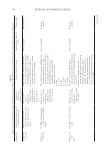
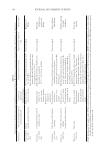
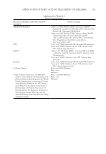
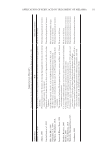
121 Application of Kojic Acid in Treatment of Melasma In another study, 4 groups used 1% KA for 12 weeks. Adverse effects were grouped according to the association used. The 1% KA cream showed burning (Group A) 1% KA and 2% HQ creams showed burning (Group B) 1% KA, 2% HQ, and 0,1% betamethasone creams showed acneiform eruptions (Group C) and finally, 1% KA and 0,1% betamethasone creams were not reported to have an adverse effect (Group D). Group B had the best result in the mean reduction of MASI score, followed by groups A, D, and finally, group C. Thus, it is observed that even at low concentrations, i.e., up to 1%, KA presents significant results in reducing spots and with few mild adverse effects even when in association with other actives (27). Some studies found no adverse effects even when 2% KA was administered and when used isolated could demonstrate the cure of 79% of patients after 3 months (15). Another study reported a significant MASI score reduction in 2 months of treatment with 2% KA and 2% HQ cream. In this last case, it is questionable that there haven’t been any negative HQ-related adverse effects, although this could be observed because of the short treatment. The association of 2% KA with octinoxate and allantoin in the gel for 3 months of treatment described a statistically high and significant reduction in the MASI score (21). Some adverse effects can be observed in other studies using a cream formulation of 2% KA in association with 5% arbutin and 10% AG, reporting effects such as erythema, burning, and irritation. Despite presenting adverse effects, there were satisfactory results in the MASI score and MELASQoL score, with a significant reduction from the beginning of treatment to the end, in 3 months (23). Effects such as redness, burning, and mild exfoliation were reported through a treatment that lasted 12 weeks with the gel formulation of 2% KA, 10% GA, and 2% HQ. It resulted in an improvement in melasma from the fourth week on, and two patients were eliminated. Over half of the melasma was eliminated in 60% of the patients (32). In these cases, clinical response and adverse effects may be linked to the combined actives. GA present in both studies has keratolytic action and can therefore generate more significant irritation and even exfoliation (37). The study that used 3% KA and 2% vitamin C cream (Group A) and 3% KA, 5% arbutin, and 10% GA cream (Group B) experienced erythema and burning, while group B also observed flaking and itching as adverse effects. As an average reduction of the MASI score, group A had a more significant improvement than group B (11). The presence of more effects was observed in the studies conducted also using a cream formulation of 3% KA combined with 10% GA, 2% arbutin, 2% depigmenting factor 174J/276-D, 2% octyl metoxicinamate, 1% butyl metoxydubenzooilmethane, 0,3% titanium dioxide, 0,5% EDTA dianhydride, 0,15% vitamin E, and 0,2% alpha-bisabolol. There were observed adverse effects such as erythema, flaking, itching, local irritation, contact dermatitis, and xerosis. According to this study, the affected areas were significantly reduced from the initial assessment to the end of treatment, which was in the 12th week (17). Once again, adverse effects might be associated with other agents used in therapeutic combinations, including GA (37). Employing a higher concentration of KA such as 6% with 12% HQ and 5% vitamin C, common unfavorable effects such as erythema and flaking were observed, as well as less common ones like telangiectasia and atrophy. Such effects might be expected due to the high concentration of components and the long treatment duration, which lasted about 8 to 36 weeks. The MASI mean was significantly reduced (30). In this situation, it would be crucial to compare the outcomes with those obtained with lower amounts. However, due to heterogeneity, such a comparison is unfeasible.
Purchased for the exclusive use of nofirst nolast (unknown)
From: SCC Media Library & Resource Center (library.scconline.org)