126 JOURNAL OF COSMETIC SCIENCE Accessed March 9, 2023. https://www.researchgate.net/publication/282284632_Efficacy_and_safety_ of_the_combination_of_arbutin_5_glycolic_acid_10_kojic_acid_2_versus_hydroquinone_4_cream_ in_the_management_of_facial_melasma_in_Mexican_women_with_Fitzpatrick_skin_type_III-IV. (24) Tsilika K, Levy JL, Kang HY, et al. American Society for Laser Medicine and Surgery Abstracts. Lasers Surg Med. 2011 985(985):907–1018. Accessed March 9, 2023. DOI: 10.1002/lsm.21034. (25) Xing X, Chen L, Xu Z, Jin S, Zhang C, Xiang L. Efficacy of a topical agent containing tranexamic acid, niacinamide and kojic acid in melasma. J Clin Cosmet Derm. 2021 5(2):1–4. Accessed March 1, 2023. DOI: 10.16966/2576-2826.160. (26) Draelos ZD, Yatskayer M, Bhushan P, Pillai S, Oresajo C. Evaluation of a kojic acid, emblica extract, and glycolic acid formulation compared with hydroquinone 4% for skin lightening. Cutis. 2010 86:153–158. Accessed March 9, 2023. https://pubmed.ncbi.nlm.nih.gov/21049734/. (27) Deo KS, Dash KN, Sharma YK, Virmani NC, Oberai C. Kojic acid vis-a-vis its combinations with hydroquinone and betamethasone valerate in melasma: A randomized, single blind, comparative study of efficacy and safety. Indian J Dermatol. 2013 58(4):281. Accessed March 1, 2023. DOI: 10.4103/0019-5154.113940. (28) Arunnair V, Kumaraswamy G, Ramesh M. Pattern of drug utilisation in the management of hyperpigmentary disorders in a tertiary care hospital—an observational study. J Clin Diagnostic Res. 2021 15(10):FC01–FC06. Accessed March 1, 2023. DOI: 10.7860/JCDR/2021/44461.15532. (29) Garcia A, Fulton JE. The combination of glycolic acid and hydroquinone or kojic acid for the treatment of melasma and related conditions. Dermatologic Surgery. 1996 22(5):443–447. Accessed March 1, 2023. DOI: 10.1111/j.1524-4725.1996.tb00345.x. (30) Srivastava R, John AM, Tam A, Firoz BF. The Tam formula: A pilot study for a new treatment for melasma. J Cosmet Dermatol. 2021 20(7):2168–2171. Accessed March 1, 2023. DOI: 10.1111/jocd.13849. (31) Cotellessa C, Peris K, Onorati MT, Fargnoli MC, Chimenti S. The use of chemical peelings in the treatment of different cutaneous hyperpigmentations. Dermatol Surg. 1999 25:450–454. Accessed March 1, 2023. DOI: 10.1046/j.1524-4725.1999.08217.x. (32) Lim TJ. Treatment of melasma using kojic acid in a gel containing hydroquinone and glycolic acid. Dermatol Surg. 1999 25:282–284. Accessed March 1, 2023. DOI 10.1046/j.1524-4725.1999.08236.x. (33) Wali V, Patil S, Patil SK, Hogade AS, Manthale NS, Sagare PS. Comparative efficacy of Kligman’s regimen over other topical therapies in treatment of melasma. J Evol Med Dent Sci. 2013 2(51):9856–9868. Accessed March 1, 2023. https://go.gale.com/ps/i.do?p=AONE&sw=w&issn= 22784748&v=2.1&it=r&id=GALE%7CA362849847&sid=googleScholar&linkaccess=fulltext. (34) Silva JN. Produção de Ácido Kójico Através Da Fermentação Do Arroz. 2011. Accessed March 1, 2023. https:// cepein.femanet.com.br/BDigital/arqTccs/0711290181.pdf. (35) Handel AC, Miot LDB, Miot HA. Melasma: A clinical and epidemiological review. An Bras Dermatol. 2014 89(5):771–782. Accessed March 1, 2023. DOI: 10.1590/abd1806-4841.20143063. (36) Traikovich SS. Use of topical ascorbic acid and its effects on photodamaged skin topography. Arch Otolaryngol Head Neck Surg. 1999 125:1091–1098. Accessed March 1, 2023. http://archotol.jamanetwork. com/. (37) Narda M, Trullas C, Brown A, Piquero-Casals J, Granger C, Fabbrocini G. Glycolic acid adjusted to pH 4 stimulates collagen production and epidermal renewal without affecting levels of proinflammatory TNF-alpha in human skin explants. J Cosmet Dermatol. 2021 20(2):513–521. Accessed March 1, 2023. DOI: 10.1111/jocd.13570. (38) Saeedi M, Eslamifar M, Khezri K. Kojic acid applications in cosmetic and pharmaceutical preparations. Biomed Pharmacother. 2019 110(November 2018):582–593. Accessed March 1, 2023. DOI: 10.1016/j. biopha.2018.12.006 (39) González-Molina V, Martí-Pineda A, González N. Topical treatments for melasma and their mechanism of action. J Clin Aesthet Dermatol. 2022 15(5):19–28. Accessed March 1, 2023. https://www.ncbi.nlm.nih. gov/pmc/articles/PMC9122278/.

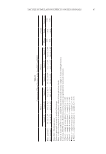
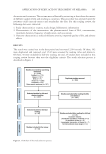
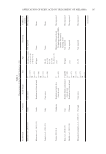
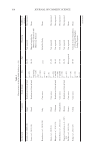
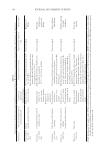
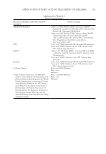
Supplementary Material 1. PRISMA Extension for Scoping Reviews (PRISMA-ScR): Checklist and Explanation. SECTION ITEM PRISMA-ScR CHECKLIST ITEM REPORTED ON PAGE #TITLE Title 1 Identify the report as a scoping review. 1 ABSTRACT Structured summary 2 Provide a structured summary that includes (as applicable): background, objectives, eligibility criteria, sources of evidence, charting methods, results, and conclusions that relate to the review questions and objectives. 1 INTRODUCTION Rationale 3 Describe the rationale for the review in the context of what is already known. Explain why the review questions/objectives lend themselves to a scoping review approach. 2–3 Objectives 4 Provide an explicit statement of the questions and objectives being addressed with reference to their key elements (e.g., population or participants, concepts, and context) or other relevant key elements used to conceptualize the review questions and/or objectives. 3 METHODS Protocol and registration 5 Indicate whether a review protocol exists state if and where it can be accessed (e.g., a web address) and if available, provide registration information, including the registration number. 3 Eligibility criteria 6 Specify characteristics of the sources of evidence used as eligibility criteria (e.g., years considered, language, and publication status), and provide a rationale. 5 Information sources* 7 Describe all information sources in the search (e.g., databases with dates of coverage and contact with authors to identify additional sources), as well as the date the most recent search was executed. 5 Search 8 Present the full electronic search strategy for at least one database, including any limits used, such that it could be repeated. Supplementary material 2 Selection of sources of evidence† 9 State the process for selecting sources of evidence (i.e., screening and eligibility) included in the scoping review. 5–6 Data charting process‡ 10 Describe the methods of charting data from the included sources of evidence (e.g., calibrated forms or forms that have been tested by the team before their use, and whether data charting was done independently or in duplicate) and any processes for obtaining and confirming data from investigators. 6 Data items 11 List and define all variables for which data were sought and any assumptions and simplifications made. 6 Critical appraisal of individual sources of evidence§ 12 If done, provide a rationale for conducting a critical appraisal of included sources of evidence describe the methods used and how this information was used in any data synthesis (if appropriate). None Synthesis of results 13 Describe the methods of handling and summarizing the data that were charted. 6 ()127 Application of Kojic Acid in Treatment of Melasma
Purchased for the exclusive use of nofirst nolast (unknown)
From: SCC Media Library & Resource Center (library.scconline.org)