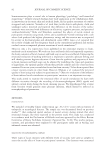
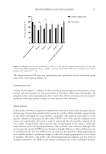
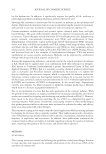
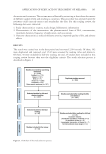
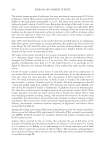
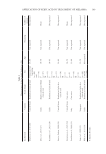
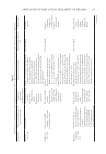
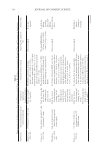
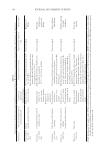
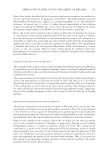
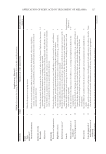
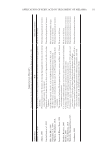
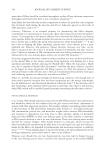
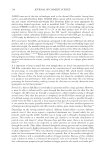
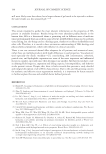
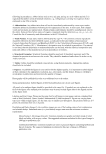
Supplementary Material 3 List of reasons for the exclusion of studies, after reading them in full (=18). Author/Year Title Exclusion reasons Truchuelo Jimenez Jaen, 2014 Assessment of the efficacy and tolerance of a new combination of retinoids and depigmenting agents in the treatment of melasma. Unevaluated intervention of interest. Iurassich Santoro Rossi, 2010 A case of chemical vitiligo due to kojic acid. Unevaluated population of interest. Tejera-Vaquerizo García-Gavín, 2019 Allergic contact dermatitis due to kojic acid. Unevaluated population of interest Serra-Baldrich Tribô Camarasa, 2007 Allergic contact dermatitis from kojic acid. Unevaluated population of interest. Ikeno, 2000 Clinical evaluation of a cream containing kojic acid and licorice extract on hyperpigmentation of the skin. No access to full text. Harada, 2000 Clinical evaluation of whitening cream containing kojic acid and oil-soluble licorice extract for senile pigment fleckle on the face. Unevaluated population of interest. Oresajo Yatskayer, 2009 Comparative evaluation for the efficacy and tolerance of two skin products containing either hydroquinone or emblica extract with kojic acid in female subjects with facial dyschromia. Unevaluated population of interest. Nakagawa Kawai Kawai, 1995 Contact allergy to kojic acid in skin care products. Unevaluated population of interest. Gold Biron, 2011, Efficacy of a novel hydroquinone-free skin-brightening cream in patients with melasma. Unevaluated intervention of interest. Park et al.2021 ,Evaluating the tolerance and efficacy of laser-assisted delivery of tranexamic acid, niacinamide, and kojic acid for melasma: A single center, prospective, split-face trial. No access to full text. Al-Dhalimi Yasser, 2021 Evaluation of the efficacy of fractional erbium-doped yttrium aluminum garnet laser-assisted drug delivery of kojic acid in the treatment of melasma: A split face, comparative clinical study. No access to full text. Burnett et al.2010 ,Final report of the safety assessment of kojic acid as used in cosmetics. Not interventional study design. Cotellessa et al.1999 ,Glycolic acid and kojic acid: A new combined treatment. No access to full text. Madhogaria Ahmed, 2010 Leucoderma after use of a skin-lightening cream containing kojic dipalmitate, liquorice root extract and Mitracarpus scaber extract. Unevaluated intervention of interest. ()130 JOURNAL OF COSMETIC SCIENCE

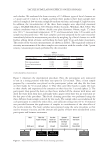
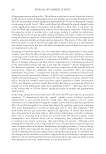
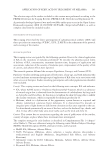
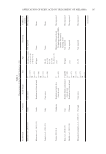
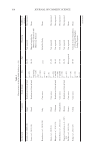
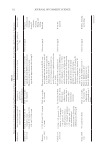
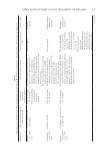
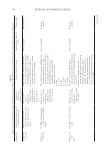
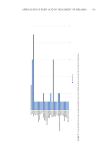
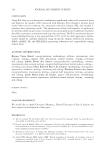
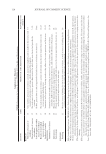
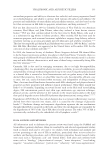
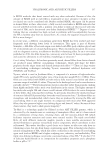
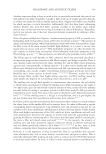
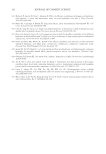
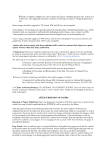
Supplementary Material 3 List of reasons for the exclusion of studies, after reading them in full (=18). Author/Year Title Exclusion reasons Hifuka et al.2015 ,Mixture of kojic acid and liquiritin cream for the treatment of various pigmentary disorders. No access to full text. Adatto, 2003 Photorejuvenation of the forearms by treating hyperpigmented lesions with intense pulsed light source: A case report. Unevaluated population of interest. García-Gavín et al.2010 ,Pigmented contact dermatitis due to kojic acid: A paradoxical side effect of a skin lightener. Unevaluated population of interest. Ellis Tan Ellis, 1995 Superficial micropeels: Glycolic acid and alpha-hydroxy acid with kojic acid. Not interventional study design. Nakayama et al.1994 ,The effect of kojic acid application on various facial pigmentary disorders. No access to full text. Mpofana Abrahamse, 2018, The management of melasma on skin types V and VI using light emitting diode treatment. Unevaluated population of interest. Iurassich Blanco Rossi, 1996 The treatment of melasma: Hydroquinone, liquorice extract and kojic acid. Clinical and colorimetric evaluation. No access to full text. Rendon Bernitez, 2005 Use of a triple-combination agent and various procedures for treatment of melasma.No access to full text. Rendon, 2004 Utilizing combination therapy to optimize melasma outcomes. Unevaluated intervention of interest. Ashi Kothiwhala, 2019 A 36-year-old woman with hyperpigmented macules on face. Unevaluated intervention of interest. Mamatha Hanamanthayya, 2015 Comparative study on combination of microdermabrasion with 35% glycolic acid peel versus 35% glycolic acid peel alone for facial melanoses of Indian. Unevaluated intervention of interest. Sundaram, 2020 Prospective evaluation of efficacy and tolerability in skin phototypes IV to VI of a topical formulation for hyperpigmentation combining tranexamic acid with niacinamide, kojic acid, and hydroxyethylpiperazine ethane. Unevaluated intervention of interest. 131 Application of Kojic Acid in Treatment of Melasma
Purchased for the exclusive use of nofirst nolast (unknown)
From: SCC Media Library & Resource Center (library.scconline.org)