133 HYALURONIC ACID AESTHETIC FILLERS antioxidant properties and ability to eliminate free radicals), and cancer progression (based on its hydrodynamics and ability to interact with tumour cell surfaces and influence the porosity and malleability of extracellular and pericellular matrices, and also based on the fact that an increase in HA links to apoptosis, invasiveness, and drug resistance).5-12 HA was first discovered in 1934 at Colombia University of New York by two American scientists, Karl Meyer and John Palmer, when they isolated it from bovine vitreous humor.1,5 HA was then commercialized for the first time by Endre Balazs, who used it as a substitute for egg whites in bakery products. More recently, HA has been used for numerous purposes, such as wound treatment, ophthalmic surgery, drug delivery, arthritis treatment (serving as an intra-articularly injected lubricant), and aesthetic treatment.1,2,13 The first biocompatible gel (hylan B gel, Hylaform) was created in 1980 by Balaz,5 and the first HA filler (Restylane) was approved in the United States in December 2003 for the correction of deep wrinkles and folds.14-17 In 2006, the American Society of Aesthetic Plastic Surgeons declared HA dermal fillers to be the fastest noninvasive aesthetic procedure in the United States.1 Currently, there is a wide panoply of different HA-based dermal fillers, each of them manufactured in a distinct way and with different characteristics, with none of them being a universally fitting filler for every situation.1,5,15,18 Currently, HA is also used in antiaging treatments, due to its high biocompatibility, volumizing effect, low potential for adverse reactions, reversibility in cases of complications, and possibility of storage without refrigeration for up to two years. Using this polysaccharide as a dermal filler is essential to facial harmonization and can gather many of the desired dermal filler properties. In fact, an ideal filler must be safe, biocompatible, efficient, easy to store, low cost, easily eliminated when necessary, and independent of allergy testing. Thus, clinicians should familiarize themselves with HA’s rheological and physicochemical properties as these properties will influence clinical performance. These fillers usually last from 6 to 18 months, depending on several factors such as the HA itself (cross-linking degree, HA concentration, particle size), skin type, medication, age, injection technique, physical activity, and the presence of free radicals in the tissues (particularly in the skin) that quickly degrade uncross-linked HA polymers (depolymerization), among others.5,14,19-23 Degradation of HA fillers by free radicals happens due to a transient inflammatory reaction derived from their injection into tissues, and it is caused by the cleavage of glycosidic bonds.12,23 Oxidative damage and enzymatic degradation represent the two mechanisms through which HA is separated in the body, and these two mechanisms are responsible for the degradation of 30% of the 15g of HA that is locally present. The other 70% of HA is systematically catabolized by the endothelial cells of lymphatic vessels.12 DATA SOURCES AND METHODS All information used to elaborate the present review was found using the PubMed and ScienceDirect primary databases, where we searched for and selected experimental studies (such as clinical trials and in vitro and in vivo studies, both in humans and animals) and reviews pertaining to the uses of HA in medicine, particularly those reviews related to aesthetic and healing procedures, and to HA’s intrinsic properties. Several research terms were used, such as “hyaluronic acid” and “dermal fillers,” both alone and combined with terms such as “rheology,” “physicochemical concepts,” “water absorption,” “cross-linking reagents,” “viscoelastic substances,” “particle size,” “cohesivity,” “soft tissue augmentation,”

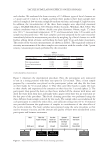
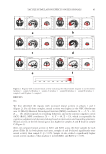
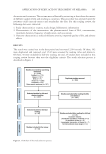
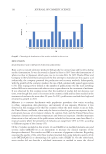
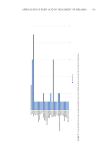
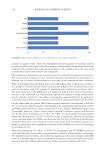
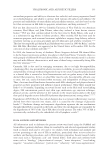
134 JOURNAL OF COSMETIC SCIENCE “aesthetic,” and “cosmetic techniques.” Any studies using fillers or medicinal products not containing HA were excluded. Research filters were applied for articles published within the last 25 years and written in English or Portuguese. Some of the articles were selected from the reference lists of previously read publications. RESULTS INTRINSIC PROPERTIES OF HA HA is a naturally occurring high-molecular-weight polysaccharide belonging to the glycosaminoglycan family and produced in the inner side of the cell membrane, with a natural lifespan in the human body of less than 3 days (24 hours–48 hours), since in its noncross-linked state it is quickly degraded by hyaluronidase in the liver (enzymatic degradation). Whether it is derived from animal or bacterial cultures, its structure is identical, consisting of repeating units of nonsulphated disaccharide, which include molecules of D-glucuronic acid and N-acetylglucosamine, linked by β-(1–4) and β-(1–3) glycosides.1-3,11,13,18,19 In each monomer, the HA molecule contains a carboxylic acid and a primary alcohol, which are important for recognition by hyaladherins, and an amide, which improves the adhesive properties of the molecule.12 Each disaccharide monomer has a molecular weight of around 400 Da, and the complete polymer can reach a total of 10 MDa. There is a proportionate relationship between molecular weight and the number of repeating disaccharides in a HA molecule, and the higher it is, the higher the gel’s viscosity. The difference between animal or bacterial HA resides solely in the length of the final polymer chain: bacterial-based HA is usually shorter and has a lower molecular weight than animal-based HA.14,16,18 Polymer chains of small and medium length usually hold immunostimulant, proangiogenic, and antiapoptotic properties, while larger polymers hold immunosuppressive and antiangiogenic ones.11,12 Hyaluronic acid’s properties can be divided into rheological and physiochemical. Within rheology, it’s possible to identify both viscoelasticity and cohesivity, while physiochemical properties refer to the cross-linking degree, the concentration of HA, the particle size and the water absorption capacity (as is shown in Figure 1). RHEOLOGICAL PROPERTIES Viscoelasticity. Rheology is the study of the flow and deformation of materials when subjected to certain forces. This study incorporates different manufacturing processes and HA filler Figure 1. The properties of hyaluronic acid.
Purchased for the exclusive use of nofirst nolast (unknown)
From: SCC Media Library & Resource Center (library.scconline.org)