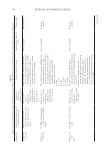
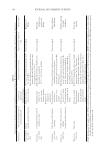
135 HYALURONIC ACID AESTHETIC FILLERS properties.24 HA is a viscoelastic gel, which means it has a viscous component and an elastic one. These components, along with its cohesivity, are responsible for defining the gel’s capacity to flow through a needle (which decreases with the increase of viscosity) or to return to their original shape after deformation. This means HA will define the filler’s properties, such as malleability, extrusion force, lifting capacity, and tissue integration, which in turn will influence its clinical outcomes.14,25 The selection of a filler with appropriate characteristics corresponding to each patient also depends on the anatomical area as each area of the face is subjected to different mechanical forces that modify the shape, distribution, duration, and level of correction obtained. There are essentially two types of forces that will act upon the HA: the lateral shear/torsion, which acts in the horizontal plane that is parallel to the skin and the compressive or stretching force, which acts in a perpendicular plane to that of the skin.16,19,25,26 The filler’s cohesivity, which is responsible for tissue expansion according to a horizontal vector, is determined by the compressive forces. On the other hand, viscoelasticity and the elastic modulus (G’), which are responsible for tissue projection according to a vertical vector, are determined by the lateral shear forces.24,25 There are four essential parameters that define a HA gel’s viscoelasticity17-19,22,25027: • The shear modulus or complex modulus (G*) is the amount of energy it takes to deform the gel in the horizontal plane. This energy amount determines HA’s hardness. It represents the total resistance to deformation. • The viscous modulus (G’’) is the fraction of energy that dissipates after deformation, which confirms that the filler is unable to completely restore its initial shape after deformation. G’’ is clinically related to the filler’s injectability (the higher the G’’, the more difficult the extrusion). • The elastic/storage modulus (G’), on the other hand, is the fraction of energy that the filler retains after deformation (in other words, its capacity to resist deformation). Fillers with higher G’ values are better suited for deeper areas since they are firmer, unlike those with lower G’ values, which are softer and better suited for more superficial zones. Higher G’ values make a gel harder to inject than lower values. • Lastly, tan δ corresponds to the G’’/ G’ ratio and tells us whether a gel is more elastic or more viscous (if G’ is higher and the tan δ 1, then the elastic component is predominant, but if G’’ is higher and the δ 1, then the viscous component is predominant). Most injectable HAs have a lower tan δ, which means they’re usually more elastic than viscous. The less viscous gels show higher tissue integration and a more natural appearance, and are thus better suited for more superficial areas.25,28 Furthermore, these four parameters are influenced by the level of cross-linking shown by the filler. Higher levels of cross-linking usually mean higher levels of G* and G’ and lower levels of G’’.19,25,26,29 Even though free uncross-linked HA is quickly metabolized (therefore not contributing to the final clinical outcome), it does reduce the filler’s viscosity, allowing for an easier injection.14,18 It is the different rheological and chemical properties that make it possible to divide the HA fillers into two big groups. The monophasic/cohesive fillers (such as the Juvéderm line) are more homogenous and made up of cross-linked HA chains with varying molecular weights, which make them less elastic and more viscous, while the biphasic/granular fillers (such as the Restylane line) have reticulated HA particles dispersed in either noncrosslinked or very low cross-linked HA, which makes them more fluid and easier to inject. However, there is still debate among the scientific community regarding this division: some authors

136 JOURNAL OF COSMETIC SCIENCE argue that all fillers should be considered monophasic as they all have the same composition throughout and believe that there is not a real phase separation.16,17 Some fillers also have lidocaine in their composition to reduce the pain that can accompany this treatment, both during the injection and after it. Lidocaine appears to alter some of HA’s properties, such as G’.4,30 Cohesivity. Cohesivity is an essential property for determining the filler’s integrity, contributing to it maintaining its microscopic shape after being injected into the patient’s tissues.24 It corresponds to the internal adhesion forces that bind the different cross-linking units together within the gel and translates the resistance to vertical compression/stretching forces. In this way, it defines the initial vertical projection of the dermal filler.17,19,25 It also has a role in defining the filler’s modeling capacity since a less cohesive gel is a more malleable one. However, this property’s clinical relevance decreases over time. As the filler is integrated into the tissues, it naturally becomes less malleable and more stuck in place. Cohesivity depends on HA concentration and cross-linking technique, but it is not influenced by the cross-linking degree unlike a lot of other HA properties.17,25 It has been suggested that lower cohesivity values contribute to a more uniform distribution of the dermal filler in the tissues, reducing lump formation and allowing for a more superficial placement without inducing the Tyndall effect (when the skin gains a bluish tone due to superficial dermal filler placement),27 and that the more cohesive a product is, the bigger its tissue integration and lifting capacity are. Still, this property’s clinical relevance remains widely debated, due to the lack of standardized measurement techniques and conflicting opinions on cohesivity’s true effects on fillers.16,26 There are currently four known methods for determining cohesivity, even though none of them tend to provide consistent data: the linear compression test, the average drop-weight, the dye diffusion test, and the Gavard-Sundaram Cohesivity Scale.16 It has also been noted that measuring a gel’s cohesivity before injection is irrelevant, since there is still uncross- linked HA, which will be quickly degraded postinjection making the filler more cohesive.31 PHYSICOCHEMICAL PROPERTIES Cross-Linking. Other deeply important characteristics of HA fillers are their clinical persistence and durability, which are also influenced by the gel’s viscous and elastic components in synergy with other important properties. For example, a higher cross-linking degree (which is the percentage of HA disaccharide monomer units bound to a cross-linker molecule), HA concentration, particle size, and molecular weight tend to increase HA’s biostability and resistance to degradation over time. Due to these qualities, adding 1,4-butanediol diglycidyl ether (BDDE) or other cross-linking agents to the filler’s formula is important as HA’s natural duration is one of its main limitations. These cross-linking agents modify the HA by creating “bridges” (ether bonds) between its molecules, which increase the filler’s biostability by transforming the filler from a viscous liquid into a gel and making it harder for the filler to be degraded by hyaluronidase and increasing resistance to oxidative stress.2,3,14,18-21,32 Cross-linking degree is reported by many as the most influential factor for rheological properties, particularly when it comes to gel stiffness.31 However, even though they are rare, hypersensitivity reactions tend to happen because of the cross-linking process that is caused by the epoxide groups in the residual BDDE
Purchased for the exclusive use of nofirst nolast (unknown)
From: SCC Media Library & Resource Center (library.scconline.org)