137 HYALURONIC ACID AESTHETIC FILLERS (a BDDE molecule that hasn’t reacted with any other molecules). Because of this, the amount of BDDE used in each filler is maintained at trace amounts (2 ppm), so that its clinical use can be considered safe. Besides residual BDDE, this agent can be present in dermal fillers in three other states: a fully reacted cross-linker (a BDDE molecule that reacted with HA on both ends), a pendant cross-linker (a molecule that reacted with only one end of HA), and a deactivated cross-linker (hydrolyzed BDDE).3,5,23 Degrees of cross- linking that are considered too high can lead to problems with biocompatibility because the HA is furthest away from its natural form. As a result, the organism may perceive the HA as more foreign.4 In recent years, a different cross-linking agent from BDDE has been studied and more frequently used showing lower levels of cytotoxicity. This agent is part of Neauvia Stimulate, a HA filler of bacterial origin cross-linked with PEG (poly-ethylene-glycol) and 1% of micromolecules of calcium hydroxyapatite. These micromolecules grant the neauvia acid its colagenesis activity, in addition to the filler’s volumizing effect. In an in vitro study published in 2018, this filler showed no cytotoxicity until at least 24 hours postapplication and caused no alterations to cell viability, morphology, or structure.33 Cross-Linking Technologies. As has been previously stated, dermal fillers from distinct brands are produced using different cross-linking technologies, which will shape the filler’s properties for the target tissue and desired postinjection effect.31,34 There is a large variety of cross-linking technologies including Vycross, nonanimal stabilized hyaluronic acid (NASHA), and Tri-Hyal. Vycross, which is used in Juvéderm fillers, is composed of a mixture of high-molecular- weight HA and a significantly higher ratio of low-molecular-weight HA (1 MDa). These fillers are cross-linked with BDDE at both ends (a fully reacted cross-linker) and show a narrower range of available G’ values. They tend to be harder gels and can be noncohesive or partially cohesive.31,34 Their homogeneous matrix is smoother rather than granular, making them highly malleable with a more even distribution in the tissues. The higher amount of low-molecular-weight HA and a lower overall amount of HA reduces the water absorption of these fillers, thus reducing their swelling. As previously described, the small percentage of noncross-linked HA present helps lower the overall extrusion force.30 Juvéderm fillers are monophasic and monodensified, which means they are produced by mixing the HAs and cross-linking them in one single moment. In comparison with most other FDA approved fillers, they also present a higher cross-linking degree and lower G’ values. Because of these characteristics, they tend to show greater longevity.35 Tri-Hyal is a technology applied by Fillmed in their ART FILLER gamma, which is advertised by the manufacturer as consisting of monophasic fillers, and it’s characterized by a combination of long chain, very-long chain, and free noncross-linked HA (which facilitates injection extrusion and creates more natural results). The triple cross-linked HAs, all with different molecular weights, provide a more suitable environment for dermal fibroblasts to produce extracellular matrix components, which contributes to skin self-renewal. This makes the filler a good choice as it derives its effect not only from its volumizing action, but also from being a rejuvenating agent. This technology also shows a natural entanglement of HA, which may allow a reduction in the amount of cross-linking agent used (such as BDDE) and a higher sculpting ease, cohesivity, and malleability. This triple cross-linking technique can provide a sustained release of free HA.36 It also has 0.3% of lidocaine hydrochloride in its composition for anaesthetic properties and a phosphate buffer at pH =7.2.37

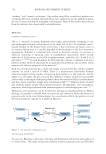
138 JOURNAL OF COSMETIC SCIENCE NASHA was one of the first technologies used in the dermal filler market, having been used to cross-link Restylane fillers. NASHA fillers contain a HA concentration of 20 mg/ mL and consist of low-molecular-weight HA. Restylane fillers are more appropriate for mid-to-deep dermal injections, such as nasolabial folds.38 In this technology, a small amount of BDDE is added to the filler, meaning the degree of cross-linking ends up being a minute percentage, usually from 1% to 2% in the final product (and 10–15% in the original matrix). After the sizing process, the HA “pearls” (microspheres) obtained are suspended in either a phosphate-buffered solution or noncross-linked HA gel. According to a 2016 study by Micheels et al., NASHA fillers are noncohesive and biphasic.34 HA Concentration. Total HA concentration corresponds to the amount of HA per mL of final product, and it is usually expressed in mg/mL.14,18 Other than the cross-linking degree and molecular weight, the manufacturing process and total HA concentration (consisting of the insoluble portion of cross-linked HA and the soluble portion of free HA) also influence the gel’s viscoelastic and rheological properties (namely its hardness) with lower concentrations creating softer fillers.14,19,26,29 Fillers with higher HA concentrations also show higher cross- linking degrees and elastic modulus, meaning they are better able to resist deformation and support and volumize the tissues, usually needing to be placed in a deeper plane within them.24 It is important to keep in mind that even though there are listed concentrations for each HA filler, sometimes there are variations in the concentration of cross-linking agent and the percentage of cross-linked HA versus uncross-linked HA, which doesn’t contribute to the clinical outcome. The same can happen with different batches of the same filler brand. Because of this, the listed concentrations may not always be completely indicative of a product’s true performance. Still, there are some brands that share the cross-linking percentage for distinct batches, making it easier for clinicians to correctly choose the most appropriate one for their patients.32 Particle Size. After a HA filler is cross-linked, it presents itself as a large gel mass. However, it must be able to deform itself to pass through fine-bore needles into the skin. For this to happen, the filler must go through a sizing process, which includes passing it through several sieves. Only after this process is completed, do the HA fillers contain gel particles of a defined average size making it possible for them to flow as easily as possible through a needle. Once the filler is injected, it must regain at least part of its original structure so that it can sustain the tissues (possible thanks to the G’).14,18,22 Fine-bore needles represent an advantage in reducing negative side effects such as edema, pain, tissue trauma or bleeding.18 Depending on the sieving method utilized, different dermal fillers can have different particle sizes if they never surpass a stipulated maximum size, beyond which the gel particles could clog the needle. Another way of sizing a gel is through a homogenization process. This results in a smoother and softer gel, thanks to its broader distribution of particle sizes, and lower G’ values. Because these gels flow easier, there is no maximum particle size that needs to be respected, as softer particles are easily deformed to pass through the needle. Thus, fillers obtained though the sieving process tend to show higher viscosity and to need a higher extrusion force, that is unless they have uncross-linked HA in their composition.14,18,22 Still, even when the average particle size is smaller (which would make for lower extrusion forces), there may be sporadic flow of the product through the needle if there is still a considerable number of bigger particles. Because of this, whether a gel is firmer or softer, it is better for the particles’ sizes to be uniform.18 Particle size is also a determinant property for gel hardness as bigger particles also result in a harder gel.16
Purchased for the exclusive use of nofirst nolast (unknown)
From: SCC Media Library & Resource Center (library.scconline.org)