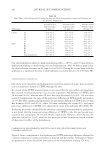
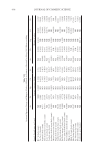
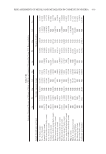
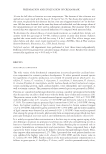
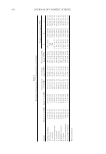
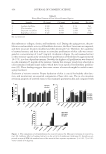
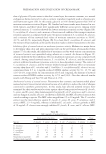
JOURNAL OF COSMETIC SCIENCE 440 These might vary by country (US, CANADA, EU, and Asia), but they are established. The impurity level can be reduced with adherence to good manufacturing practices (4). In the present study, the heavy metal and metalloids concentrations in analyzed samples arranged in descending order were Pb Ni Cd As Hg, respectively. This may have been from impurities and contaminants from the raw materials lead was the most pre- dominant. Its concentration was higher than that of all the other metals investigated. Similar fi ndings have been reported by other workers, showing the predominance of lead in different brands of kohl samples purchased in local markets in Tunisia and Pakistan, respectively (15,16). The lead concentration range of 0.283–2.873 mg/kg is higher than the threshold limit value of 0.05 mg/l set by the American Conference of Governmental Industrial Hygienist for inorganic lead and lead chromate (17). The concentration of lead was within a safe range when compared with 10, 20, and 10 mg/kg limits set by Health Canada and the Indian Government Ministry of Health and Family Welfare and the Cosmetics Section Committee of the Bureau of Indian Standards (18). Previous studies in cosmetics and body creams in Nigeria have reported similar concentrations of lead. Studies carried out by Oyedeji et al. (19) and Sani et al. (20) found concentrations of 0.1–0.9 mg/kg and 0.05–0.14 mg/kg of lead in cosmetics which are lower than the concentrations found in the present study. However, Orisakwe and Otar- aku (1), Iwegbue et al. (2), Nduka et al. (8), and Omenka and Adeyi (21) found 1.2–9.2 mg/kg, 12–24 mg/kg, 0.1–4.12 mg/kg, and ND-468 mg/kg concentrations of lead in cosmetic products in Nigeria which were higher than those found in the present study. In cosmetics from Saudi markets, Pakistan, and Malaysia, respectively, Al-Saleh et al. (4), Ullah et al. (15), and Rusmadi et al. (22) found 0.49–1.793 mg/kg, 1.74–1,071 mg/kg, and 0.002–0.114 mg/kg of lead, respectively. Lead poisoning has been recognized as a major public health risk. Exposure to lead pro- duces various deleterious effects on the hematopoietic, renal, reproductive, and central nervous system, mainly through increased oxidative stress (23). Chronic toxicity is char- acterized by persistent vomiting, encephalopathy, lethargy, delirium, convulsions, and coma (24). Once lead enters the body, it is distributed in organs such as the brain, kid- neys, liver, and bones. The body stores lead in the teeth and bones where it accumulates over time. Lead stored in bone may be remobilized into the blood during pregnancy, thus exposing the fetus. Undernourished children are more susceptible to lead because their bodies absorb more lead if other nutrients, such as calcium, are lacking (25). Health Canada, the Bureau of Indian Standards, and the United States Food and Drug Administration have set 3, 2, and 3 mg/kg, respectively, as the safe concentration of arse- nic through dermal exposure (18,26). All cosmetic cream samples in this study were within this safe limit set for arsenic. Nduka et al. (8) and Nasirudem and Amaechi (27) found 0.002–0.005 mg/kg and 0.11–1.00 mg/kg, respectively, in cosmetic samples in Nigeria. In Sudan, Sabah et al. (28) found 1.504–6.796 mg/kg range of arsenic in cos- metic products which is signifi cantly higher than the concentration found in the present study. Arsenic is a widely distributed environmental pollutant with known carcinogenic and neurotoxicant effects (29). Arsenic occurs in inorganic and organic forms. Inorganic arsenic compounds (such as those found in water) are highly toxic, whereas organic arse- nic compounds (such as those found in seafood) are less harmful to health. The immediate symptoms of acute arsenic poisoning include vomiting, abdominal pain, and diarrhea. These are followed by numbness and tingling of the extremities, muscle cramping, and death, in extreme cases. Skin lesions and hard patches on the palms and soles of the feet

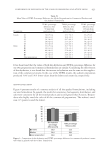
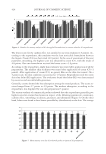
RISK ASSESSMENT OF METALS AND METALLOIDS IN COSMETIC IN NIGERIA 441 (hyperkeratosis), skin cancers, developmental effects, neurotoxicity, diabetes, pulmonary and cardiovascular diseases, and arsenic-induced myocardial infarction are some chronic effects of As toxicity (25). Cadmium concentration in the present study did not violate the 3 mg/kg standard set by Health Canada (19). Several studies have reported a signifi cantly higher concentration of cadmium in cosmetic samples in Nigeria. Nduka et al. (8), Iwegbue et al. (2), Sani et al. (22), and Omenka and Adeyi (21) reported 0.01–1.32 mg/kg, 3.1–8.4 mg/kg, 0.14–1.32 mg/kg, and ND-36.3 mg/kg concentrations of cadmium. Notably, similar concentrations have been obtained in studies outside Nigeria. Ullah et al. (15), Rusmadi et al. (24), and Sabah et al. (28) reported 0.41–0.942 mg/kg, 0.002–0.114 mg/kg, and 0.1559–0.6179 mg/kg concentrations of cadmium in cosmetics from Pakistan, Malaysia, and Sudan, re- spectively. Exposure to cadmium can lead to a variety of adverse health effects including cancer. Acute inhalation exposure (high levels over a short period of time) to cadmium can result in fl u-like symptoms (chills, fever, and muscle pain) and can damage the lungs. Chronic exposure (low level over an extended period of time) can result in kidney, bone, and lung disease (30). There are three possible ways of cadmium resorption in the human body, namely, gastrointestinal, pulmonary, and dermal (31). Binding of a free cadmium ion to sulfhydryl radicals of cysteine in epidermal keratins, or an induction and complex- ing with metallothioneins are two mechanisms that facilitate cadmium absorption through the skin (32). There is no international guidelines or limits for nickel in cosmetic products. However, several studies have shown the presence of irritants following repeated exposure to nickel greater than 10 μg/g (33–35). Concentrations of Ni (18–288 mg/kg, 0.05–17.34 mg/kg, 3.68–11.03 mg/kg, and ND-107 mg/kg) reported by Iwegbue et al. (2), Nduka et al. (8), Sani et al. (20). and Omenka and Adeyi (21) were all higher than the concentration in the present study. The most common harmful health effect of nickel in humans is an allergic reaction. Approximately 10–20% of the population is sensitive to nickel. The most seri- ous harmful health effects from exposure to nickel are chronic bronchitis, reduced lung function, and cancer of the lung and nasal sinus (36). There was no violation of the 1.00 mg/kg standard set by Health Canada for mercury. Nduka et al. (8) and Nasirudem and Amaechi (27) reported mercury at the range of 0.003–0.007 mg/kg and 30.00–90.32 mg/kg, respectively, in cosmetic samples in Nige- ria. Mercury is considered by the WHO as one of the top 10 chemicals or groups of chemicals of major public health concern. Elemental mercury and methylmercury are toxic to the central and peripheral nervous systems. The inorganic salts of mercury are corrosive to the skin, eyes, and gastrointestinal tract, and may induce kidney toxicity if ingested (37). The concentration of mercury in this study ranged from 0.001 to 0.0014 mg/kg this value was less than 3 μg/g set by Canada authority (18). Mercury concentra- tion in this study was comparable to the values reported by other workers (8,38). Not- withstanding the low levels of mercury in these cosmetics, chronic exposure may pose a public health risk. It has been observed that mercury is absorbed through the skin and used in skin whiteners because the metal is able to block the production of melanin, which gives hair and skin pigmentations (39). Mercury is ranked a top three priority pol- lutant that has become a serious health concern because of its high capacity for bioaccu- mulation and the variety of its effects on biological systems (40,41). As refl ected by the results of the study, the THQ and HI values for both adults and chil- dren were all less than 1.0 for all metals analyzed. In a study by Rusmadi et al. (22), the
Purchased for the exclusive use of nofirst nolast (unknown)
From: SCC Media Library & Resource Center (library.scconline.org)