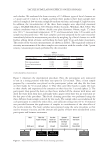
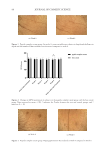
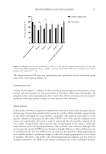
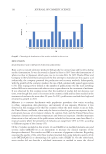
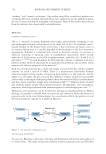
84 JOURNAL OF COSMETIC SCIENCE EEG MEASUREMENT AND ANALYSIS We measured the EEG signals during phases 1 and 2 using active electrodes (g.tec medical engineering GmbH, Schiedlberg, Austria) and a Livo bio-signal analysis system (Tec- Gihan, Kyoto, Japan) for the tests. The measurements were derived from 15 sites (Fpz, Fz, Cz, Pz, Oz, F3, F4, C3, C4, P3, P4, F7, F8, T7, T8) using both earlobes as reference electrodes, according to the international 10-20 EEG system. Data were filtered with a bandpass of 1–30 Hz, and the sampling frequency was 1,000 Hz. During the task, motor and sensory processing neural activities related to hand movement control and facial sensory input information were superimposed with additional emotional responses to the textural stimuli. We extracted EEG activities during hand movements in a period equivalent to the task execution time and when only the hand touched the face. Those activities were subtracted from the EEG activity during the task. Subtracted data (for example, EEG data capturing emotional responses) were then normalized. EEG data were analyzed using the standardized low-resolution brain electromagnetic tomography brain function imaging filter,14 and the areas and values of the neural activity (μA/mm2) were calculated. In phase 1, the 30 seconds of EEG data were separated into 3 second epochs, and the mean signal for each epoch was used. The data for phase 2 (total duration 3 seconds) were used without modification. SALIVARY CORTISOL MEASUREMENT Saliva samples were collected and the salivary cortisol levels were measured before and after the facial cleansing procedure (Figure 1). The samples were collected using the SOMA Oral Fluid Collector (SOMA Bioscience, Wallingford, UK). An oral fluid collector swab was placed on the participant’s tongue and left in place with the mouth closed. When 0.5 mL of saliva was absorbed, the swab was removed from the participant’s mouth and stored in 3 mL of buffer solution. The samples were then analyzed using a SOMA lateral flow device (LFD SOMA Bioscience, Wallingford, UK) and a SOMA cube reader (SOMA Bioscience, Wallingford, UK). STATISTICAL ANALYSIS We used the exact low-resolution brain electromagnetic tomography (eLORETA) SnPM 26 package (multiple paired t-tests with nonparametric randomization15) to investigate the neural sites activated by the foam-induced tactile stimulation during face-washing (phases 1 and 2). In the eLORETA analysis, regions of significant neural activity were colored and plotted. A two-way analysis of variance (ANOVA) was used to compare neural activities by phase (two groups) and by sample (three groups), and the salivary cortisol levels by collection time (two groups) and by sample (three groups). A one-way ANOVA with a Bonferroni post hoc analysis was used to compare the salivary cortisol changes by sample between groups. The significance level was set at 5%, and all analyses were performed using SPSS Statistics version 26.0 (IBM, Armonk, NY, USA).

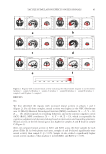
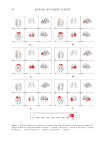
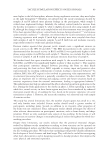
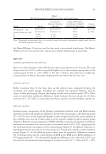
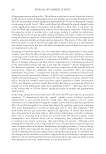
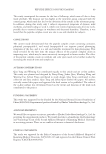
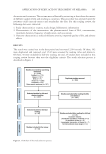
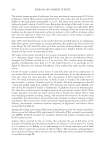
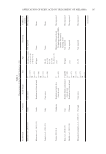
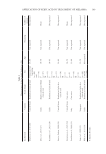
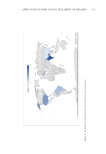
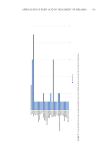
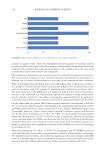
85 Tactile Stimulation Effects on EEG Signals RESULTS EEG We first identified the regions with increased neural activity in phases 1 and 2 (Figure 2). For all three samples, neural activity was higher in the OFC (Brodmann area 11 [BA11] Montreal Neurological Institute [MNI] coordinates: X =−5, Y =60, Z =−10), which responds to rewarding behaviors, and in the anterior cingulate cortex (ACC) (BA32 MNI coordinates: X =−8, Y =40, Z =15), which is responsible for cognitive judgment and decision-making based on motivation and rewarding emotions. Neural activity in the left frontal gyrus was higher for samples A and B than for sample C (Figure 3). Next, we compared neural activity in BA11 and BA32 across the three samples for each phase (Table II). In both phases and areas, samples A and B elicited significantly more neural activity than sample C (p 0.05). Sample A also evoked a significantly higher neural activity in phase 2 than in phase 1 in both BA11 and BA32 (p 0.05). Figure 2. Regions with increased neural activity indicating the reward system response to tactile stimuli: (a) phase 1 – sample A (b) phase 2 – sample A (c) phase 1 – sample B (d) phase 2 – sample B (e) phase 1 – sample C and (f) phase 2 – sample C.
Purchased for the exclusive use of nofirst nolast (unknown)
From: SCC Media Library & Resource Center (library.scconline.org)