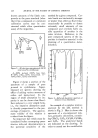
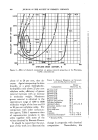
NEW POLYOXYALKYLENE NON-IONICS FOR COSMETICS 307 Again there was no evidence of irritation. ]ntravenous Toxicity. In consid- ering the use of this class of product as solubilizing agents for materials to be injected into the blood stream, the following information may be of particular interest. The data in- dicate that F68 is devoid of toxic effects when injected intravenously. 1. F68 injected intravenously into adult rabbits in doses of 1.0 and 0.1 gm./kg. body weight caused no symptoms of tox- icity. 2. Intravenous doses of solutions of F68 of 0.5 gm./kg. body weight into dogs under anes- thesia did not produce signifi- cant changes in the blood pres- sure, respiration, or electro- cardiogr am. APPLICATIONS The cosmetic chemist, of course, is interested in properties primarily to the extent that they lead to applications. More extensive de- tails on the properties of the system under discussion which may be of interest are available in the litera- ture (9). Although representative products of this chemical system have been available only a short time, rapid progress has been made toward finding extensive use in the cosmetic field. Typical applications include shampoos, oral hygiene products, and deodorants. F68 also shows promise for the solubilization of antibiotics. Grease Removal from Hair. To illustrate the change in properties of this system with chemical com- position, an application of general current interest to cosmetic chemists was selected. This application is the shampooing of hair. The method used is essentially that pre- sented by Barnett and Powers and published in the May, 1951, edition of the JOURNAI. OF THe: SOC•:TY OF Cosx4E•rm CHEMXS•rS (1). One dif- ference is that 100 mi. of petroleum ether was used for extraction instead of 200 mi. Another difference may be the hardness of water used. Wyandotte tap water has a hardness of about 120 ppm. The hardness of the water used by Barnett and Powers is not specified, but assum- ing it is New York City tap water, it is probably less hard, say 25 to 50 ppm. Careful testing showed the precision of the method in terms of standard deviation to be within 2 per cent. Samples of 21 compositions of w•rying molecular weight and hy- drophobic-hydrophilic balance were used to measure the efficiency of these products as grease removal agents by the Barnett-Powers method, although all of these products are not commercially available. The results are shown graphically in Fig..2. Some lines of "constant grease removal" have been drawn to emphasize the data. In general, at constant molecular weight of the hydrophobic base, grease removal properties improve with increase in ethylene oxide content up to

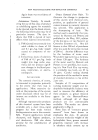
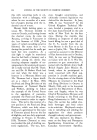
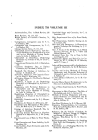
308 JOURNAL OF THE SOCIETY OF COSMETIC CHEMISTS t • ! ß •17..6 .•9.2 4•.•3 ,42.• 2400 / / I ! 2100 18• •o ß I / / I .5.2 / ' •.• I ß • j ß •o 0 25 50 75 •0 ETH•ENE OXIDE CONTENT, Figure 2.--Effect of chemical composition on grease removal properties of the Pluronics, 0.25% concentration about 15 to 20 per cent, then de- crease. Again interpreting the data broadly, at a given hydrophobic- hydrophilic ratio above 25 per cent ethylene oxide, efficiency of grease removal increases with an increase in molecular weight. Maximum grease removal is obtained in the approximate range of 1200 to 1800 molecular weight of the base and 10 to 20 per cent ethylene oxide. For comparison with other surface-ac- tive agents, Table 5 represents data of representative products in this series together with some of the values obtained by Barnett-Powers. It should be noted that the pur- pose of this work is to illustrate the TABLE 5--GREASE REMOVAL or SURFACT- aNTS (0.25% ACTIVE AGENT) Grease Composition Removal, Pluronic L50 49.1 Pluronic L51 93.7 Pluronic L54 58.1 Pluronic L62 83.9 Pluronic L64 74.5 Pluronic F68 39.8 Sodium alkyl sulfate 98.2 Alkylaryl sulfonate 92.2 Alkylaryl ethers 92.3, 69.1, 56.8 Potassium coconut soap 90.3 Fatty ether 57.2 Fatty acid ester 53.0 Water 17.0 Cationics --8.5 to -12.7 Commercial shampoos* -0.8 to +90.0 * Tested at 0.5%. change in properties with chemical composition. Nevertheless, the
Purchased for the exclusive use of nofirst nolast (unknown)
From: SCC Media Library & Resource Center (library.scconline.org)