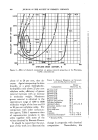
NEW POLYOXYALKYLENE NON-IONICS FOR COSMETICS 309 data do indicate it may be possible to prepare products which would be very suitable shampoos from the standpoint of grease removal, from this chemical system. In fact, it should be possible to prepare a product that leaves any desired percentage of the initial oil on the hair. The relative absence of eye irritation is an important feature. In this range of composition these products are not good foamers, a deficiency which may need to be overcome by formulation tech- niques. SUMMARY To sum up, there is now available to the cosmetic chemist a new series of non-ionic products. These prod- ucts consist of a hydrophobic por- tion of polypropylene glycol of any given molecular weight, preferably over 900, with a hydrophilic portion of ethylene oxide condensed on both ends of the hydrophilic unit. The system is characterized by great flexibility. Four representative products of this type are now offered commercially. Physical and surface-active prop- erties vary with the composition. Of special importance is the com- mercial availability of a freerflowing, relatively non-hygroscopic, flake non-ionic. This product has an unusually low order of toxicity. All products tested in this series have shown very low order of eye irritation and no skin irritating or sensitizing properties. Data on the grease removal properties of representative prod- ucts, as measured by the Barnett- Powers method, have been presented indicating that the flexibility of the system can be utilized to prepare products which may be suitable shampoos. BIBLIOGRAPHY (1) Barnett, G., and Powers, D. H. "A Quantitative Method for the Evalu- ation and Study of Shampoos," J. Soc. Cos•tv. Tm Cx•EmsTs, 2, 219 (1951). (2) Carr, C. J., "Acute Toxicity Studies with Pluronic F68," Report dated June 29,1951. (3) Cart, C. J., "Acute Toxicity Studies with Pluronics L44, L62 and L64," Re- port dated Nov. 30, 1951. (4) Cart, C. J., "Condensed Summary Re- port on F68," April 9, 1952. (5) Draize, J. H., Woodard, G., and Cal- very• H. O.,"Method for Study of Irrita- tion and Toxicity of Substances Applied Topically to the Skin and Mucous Mem- branes," )e. Pharmacal., 82, 377-390 (1944). (6) Hopper, S. H., Hulpieu, H. R., and Cole, V. V., "Some Toxicological Prop- erties of Surface Active Agents," 5 t. Am. Pharm. Assoc., 38, 428-432 (1949). (7) Shelanski, H. A., "Eye Irritation Stud- ies on L44, L62, L64," April 4, 1952. (8) Swartz, L., and Peck, S., "The Patch Test in Contact Dermatitis," Public Health Repts., 59, 546 (1944). (9) Vaughn, T. H., Suter, H. R., Lundsted L., and Kramer, M. G., "Properties of Some Newly Developed Nonionic De- tergents," 5 t. Am. Oil Chem. Soc., 28 (7), 294-299 (1951). (10) Woodard, G., and Calvery, H. O., "Toxicological Properties of Surface Active Agents," Proc. Sci. Sect. Toilet Goods Assoc., No. 3, 1-4 (1945).

UP TO NOW: AN HISTORICAL NOTE By EDW^RD S^G^R•N Sagarin•rntitute for O/factory Research, •rn., New York g$, N.Y. THE VRGENT need for a pro- fessional organization of chemists engaged in the cosmetic and perfume industries had long been felt. In the large and powerful organization of technical men which is the American Chemical Society, the Cosmetic Chemist cannot hope to have focused upon his field of work more than some slight and occa- sional attention. The technical men, welcome as they were in such trade organizations as the Toilet Goods Association, could not feel that the latter could take the place of a professional society, in which the membership would be held by the individual, not by the company that is his employer. As early as May, 1935, an effort was made by Maison G. de- Navarre to call together a group for the purpose of forming an organi- zation, but in vain. Soon after the entry of America into the war, when the industry was making gigantic strides and was facing new and chal- lenging problems, again interest in a society began to manifest itself. Finally, on May 23, 1945, at the Hotel Lexington in New York City, a dozen men gathered and consti- tuted themselves the charter mem- bers of a group which they named the SOCIETY Or COSMETIC CHEMISTS. They were but twelve, and for their pioneering spirit they deserve mention by name: Dr. Philip D. Adams, Maison G. deNavarre, Robert Casely, Emery Emerson, E.' Gundlach, Dr. E.G. Klarmann, Dr. S. A. Karas, Raymond Reed, Marcel J. Surer, Dr. Walter A. Taylor, C. L. Thomas, and James H. Baker. The first meeting adopted a con- stitution and By-laws, which remain more or less, with slight changes, in effect a/t this time. The objec- tive of the SOCIETY was stated to be: "To establish a medium through which scientific knowledge of the toilet goods industry can be dis- seminated, and to improve cosmetic and perfumery technicians' profes- sional standing." There were but two papers given at the initial meeting, one by Maison G. deNavarre on the use of estrogens in cosmetic creams, and the other by a noted endocrinologist, Dr. Bernard Cinberg, on the limits of usefulness, possible dangers, and potential benefits from the use of 310
Purchased for the exclusive use of nofirst nolast (unknown)
From: SCC Media Library & Resource Center (library.scconline.org)