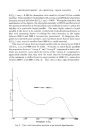
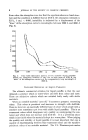
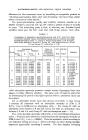
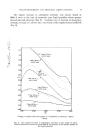
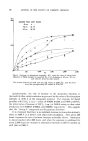
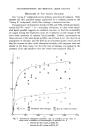
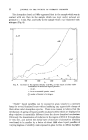
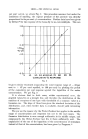
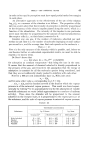
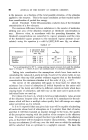
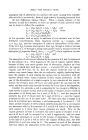
SPECTROPHOTOMETRY AND MEDICINAL LIQUID PARAFFIN 15 compounds. The other two samples contained only very small amounts of the undesirable materials, but when any of these oils are tested by the British Pharmacopceia Acid Test one would expect a very low value of the acid number, since by spectrophotometric evidence the amount of unsaturated hydrocarbons present would be very small indeed. The fact of the matter is, however, that the acid numbers vary between 0.9 Red and 1.7 Red and that in particular Sample Q (Table 3) which has a very low absorption intensity shows the highest acid number. TABLE 8 A½ii) NUMBERS OF EXTREMELY PURE LIQUID PARAFFINS Sample E H M N o P R 96% H•S0• Red Yellow 1-0 2.3 0.9 2.0 1.0 2.3 1-2 3.2 0.9 2.1 1.4 4.5 1.1 3-3 1.7 4-2 1.3 3.2 For a content of approximately 0-1 per cent of hydroaromatics, 0-0022 grammes of sulphuric acid would be needed to complete the sulphonation reaction. The actual xveight of 96 per cent acid used for the B.P. test is 8.83 grammes, and this means that an overwhelming proportion of sulphuric acid is free to act on the naphthene-paraffin molecules of the liquid paraffin after all the hydroaromatic molecules have been sulphonated. It is true that there are samples of liquid paraffin xvhose content of hydroaromatics is five or six times the average figure, but even so the quantity of acid required for the sulphonation would be just below 0.014 grammes, as compared with the 8.83 grammes available. DISCUSSION The ultra-violet absorption spectrum of medicinal liquid paraffin in the wavelength region between 2400 A and 2800 A shows the wide difference in quality of materials which the B.P. Acid Test passes as satisfactory. The B.P. acid number is supposed to indicate the amount of carbonisable bodies present in a medicinal liquid paraffin, and to reject those samples for which the proportion of these carbonisable substances is above an arbitrarily fixed limit. No definition of carbonisable materials is given, but if they are taken to be synonymous with the contaminating compounds whose presence is detected by the band structure appearing in the near ultra-violet absorp-

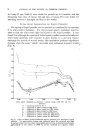
16 JOURNAL OF THE SOCIETY OF COSMETIC CHEMISTS tion spectrum of medicinal liquid paraffin, the B.P. Acid Test appears in a most unsatisfactory light. The ultra-violet absorption spectrum is a measure of the quality and stability of medicinal liquid paraffin, and a combination of ultra-violet and infra-red data is a powerful tool to unravel the constitution of the "impuri- ties" left in the refined product. If in the Acid Test the reaction of the sulphuric acid were only with these minor "impurities," the spectrophotometric and the Acid Test data would directly correlate. No such agreement is found, and any such relation is impossible because of the dehydrogenating action on the naphthene molecules of the acid used [or the test. CONCLUSION The ultra-violet absorption spectrum of medicinal liquid paraffin is a quantitative measure of the unsaturated hydrocarbons, esters, and sulphon- ates of which very small amounts are present. These "impurities" fall into two groups, "A" and "B." The former consists of alkylated symmetrical octahydrophenanthrenes, and the latter of alkylated asymmetrical octa- hydrophenanthrenes, substituted tetrahydrophenanthrene, esters, and sulphonates. There is a significant difference between the evanescent odour of a liquid paraffin which is kept in a warm place and the persistent pungent odour of an unstable material that is noticeable even though the material may be stored in a cool place. Responsible for the development of this persistent odour of unstable materials is their comparatively high content of "Group B" compounds. Owing to the characteristic differences of the spectra of the "Group A and B" compounds, a stability criterion is based on the shape of the ultra- violet absorption spectrum of medicinal liquid paraffin. This relates the absorption intensity at the peak of the band at 2710 2• to the ratio of the absorption intensities at the maximum and minimum and to the wavelength position of the minimum. The latter consideration is particularly important in those cases of so highly purified materials that the spectra show no band structure because the level of the absorption intensity is very low. Comparison of spectrophotometric data with B.P. acid numbers shows that the latter bea• no direct relation to the quality of the material. This is corroborated by the results of daylight exposure tests. In fact, an extremely pure liquid paraffin may be failed by the B.P. Acid Test while on the other hand many unstable materials will easily pass this test, whose results depend on many operational variables and on the hazard that the acid used for the test will also dehydrogenate naphthene molecules and sulphonate the thus created reaction products.
Purchased for the exclusive use of nofirst nolast (unknown)
From: SCC Media Library & Resource Center (library.scconline.org)