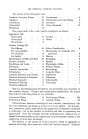
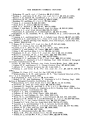
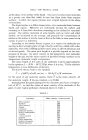
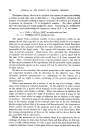
THE EMERGING COSMETIC INDUSTRY 27 The sources of the 170 papers were: Cosmetics Industry Proper .. 47 Government ...... 5 Suppliers ...... 43 Publications and Advertising .. 3 Consultants ...... 32 Attorneys ...... 2 Universities ...... 26 Other Industries .... 22 Physicians ...... 10 The papers dealt with a wide variety of subjects, as follows: Ingredients (43) Surfactants ...... Chlorophyll ...... Bactericides ...... Product Testing (37) For Efficacy ...... 19 For Acceptability .... 7 For Stability ...... 6 For Safety ...... 5 Biochemistry of Skin and Hair 17 Product Analysis .... 9 Dentifrices and Caries .... 8 Perfumery ...... 8 Cosmetic Dermatitis .... 7 Formulation ...... 7 Cosmetic Research and Trends 6 Personal Interests ot Chemists 6 Physical Chemistry .... 5 Permanent Waving .... 5 Statistical Methods .... 3 14 Lanolin ........ 3 4 Others ........ 19 3 Odour Classification .... Monographs on Cosmetic Pre- parations .... History .... Packaging .. Patents .... Physiology of Skin Product Claims . Bacteriology Cosmetic Clinic Legislation Literature Odourimetry Toxicology This is a bewildering array of subjects, but all of them are of interest to the cosmetic chemist. Using a more generalised classification, the papers deal with the following phases of our activities: Commercial Phase .... 8 Technological Phase .... 130 Professional Phase .... 9 Scientific Phase .... 23 Differentiation between technological and scientific contributions calls for some definitions and brings us to the meat of our subject. The formula- tion, production, and to some extent the application of cosmetics constitute a technology, just as the practice of medicine and that of engineering are technologies. Over the centuries scientific principles have replaced rule of thumb in medical practice and in engineering, to an ever greate• extent, as the underlying sciences have developed. The sciences, or the phases of various sciences, useful or applicable in medical technology, have come to be called the "medical sciences." Similarly

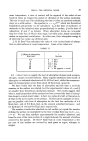
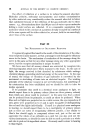
JOURNAL OF THE SOCIETY OF COSMETIC CHEMISTS those applicable in engineering, such as certain phases of mathematics and physics, can be called the "engineering sciences." In either case, the applic- able sciences have become so varied, so involved, and so vast that the amount of material to be included in any compendium is limited only by the ambition, energy, and resources of the author. These analogies may assist us in forming a concept of the "cosmetic sciences." Although we call ourselves "cosmetic chemists," chemistry is by no means the only science which impinges upon cosmetic technology. Chemistry is, however, the science most widely used by us in establishing the theoretical foundations of our profession. More and more of the knowledge used by us is being expressed in chemical terms, as description gives way to analysis. Much of the descriptive material now available for our use is classified under such headings as anatomy, morphology, histology, cytology, physio- logy, pharmacology, dermatology, microbiology, etc. The progress of science is signalised, however, by the definition and explanation of structures, substances, and processes in terms of physical and chemical concepts. Biological concepts acquire greater meaning and usefulness for us when broken down into their chemical components. We are therefore justified in referring to the scientific basis of our technology as cosmetic chemistry. Our industry makes use of a great deal of technological data which is not yet sufficiently organised and explained to be classed as scientific material. It was probably to be expected that in our Society's first ten years techno- logical papers should outnumber scientific by 130 to 23. With the tech- nological phase so well covered, more attention can now be given to the underlying science. Cosmetic chemistry includes all chemical generalisations, theories, and concepts which can be utilised to enhance the safety, effectiveness, and acceptability of cosmetic preparations. Cosmetic theory is at present severely limited because of: A. Incomplete communication, interpretation, and application of data in the literature of chemistry, physiology, pharmacology, etc. B. Incomplete understanding, even among the pioneers in the under- lying sciences, of the mechanisms involved in cosmetic treatment. Many of the papers presented before our Society in the past, especially those designated as dealing with scientific topics, have served to communi- cate to our members data which contribute to their understanding of cosmetic problems. Possibly it will be of interest to mention a few of our current problems, to consider recent advances toward their solution, and to record some of the unanswered questions that we hope can eventually be answered. The panorama thus outlined may assist in delineating the emerging cosmetic chemistry.
Purchased for the exclusive use of nofirst nolast (unknown)
From: SCC Media Library & Resource Center (library.scconline.org)