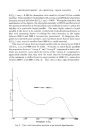
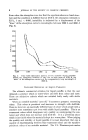
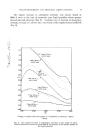
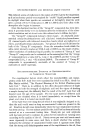
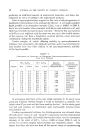
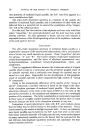
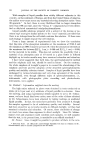
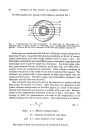
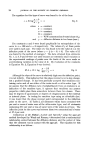
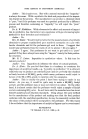
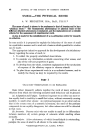
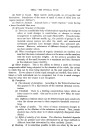
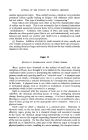
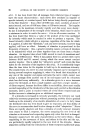
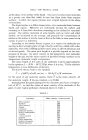
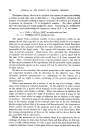
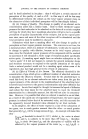
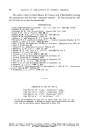
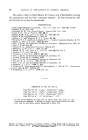
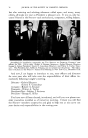
22 JOURNAL OF THE SOCIETY OF COSMETIC CHEMISTS The filter papers were placed in Petri dishes as shown in Fig. 1. Fig. 1. Experimental unit with components: P---Petri dish, F--filter paper, Z--- indicated zone, C•glass cylinder, O--ointment, and I--irregularlity which should be ignored. D and d are the outer diameters of the zone and cylinder respectively. Each paper was moistened with 0.50 mi. of Ehrlich's solution prepared by dissolving 2.0 gm. of paradimethylaminobenzaldehyde in 50 ml. of concen- trated hydrochloric acid with enough distilled water to make a litre. The Petri dish containing the moistened filter paper was placed in a large desiccator containing water to prevent rapid loss of moisture. Ten hollow glass cylin- ders, approximately 25 mm. in diameter, and 6 mm. long, were filled with a portion of the ten sulphathiazole ointments. Each cylinder containing an ointment was placed in the centre of one of the numbered filter papers. The ointment was pressed with a clean spatula to make firm contact with the moistened filter paper. The filter papers were immediately returned to the desiccator and the time was recorded. The ointments were allowed to stay in the desiccator in contact with the filter paper for exactly two hours. After this time, the diameters of the yellow coloured zones formed on the filter papers as a result of the sulpha- thiazole were measured as accurately as possible with a mm. rule. Measure- ments of two perpendicular diameters as shown in Fig. 1 were made. The average of these two measurements was used in the computation of the diffusion distance for the two-hour period. The computation is as follows: D--d Y -- 2 Eq. 1. where and y ---- diffusion distance (mm.), D = diameter of indicated zone (mm.), d = outer diameter of the cylinder. The results of three determinations are tabulated in Table 2.

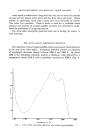
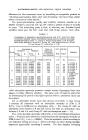
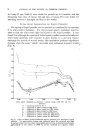
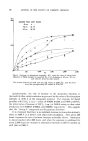
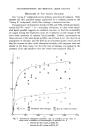
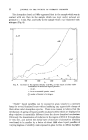
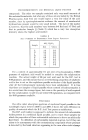
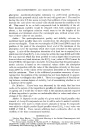
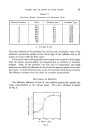
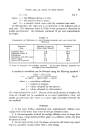
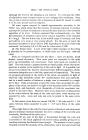
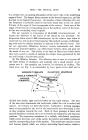
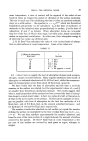
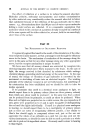
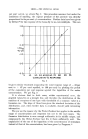
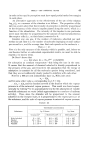
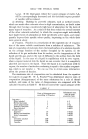
WATER AND OIL RATIO OF COLD CREAM 23 TABLE 2 PER CENT WATER, DIFFUSION AND EMULSION TYPE Ointment Number Water Diffusion (mm.) Emulsion Type __ 1 82-9 a O/W 2 74-6 9.0 O/W 3 66.3 8.8 O/W 4 $8.0 8.5 o/w '5 49-8 8.2 O/W 6 41.4 7.3 O/W 7 33.1 3.8 W/O 8 24.9 3.2 W/O 9 16-5 2.5 W/O 10 8.3 2.5 W/O a. Too thin to test. The outer diameter of the cylinder was used because, invariably, some of the ointment covered the surface of the whole edge of the cylinder wall at all points of contact with the filter paper. It was found that if determinations were made over a period of time longer than two hours, reproducibility was impaired due to variatiov. in moisture content. Some of the moisture was lost due to evaporation and some moisture was added by diffusion of water from the aqueous phase of the oint- ment base. If determinations were made after periods of less than two hours, the diffusion distances were too short for accurate measurement. DISCUSSION OF RESULTS The diffusion distances (Table 2) were plotted graphically against the water concentration in the various bases. The curve obtained is shown in Fig. 2. •v v I i i I I Fig. 2.
Purchased for the exclusive use of nofirst nolast (unknown)
From: SCC Media Library & Resource Center (library.scconline.org)