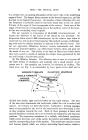
30 JOURNAL OF THE SOCIETY OF COSMETIC CHEMISTS residue may play the same cross-linking role in collagen as cystine plays in keratin. Various "procollagens" have been suggested as possible precursors of collagen. Boedtker and Doty • found in electron micrographs periodicities which suggest that the different collagen fibres have as a common unit rigid, rod-shaped particles of uniform size, with diameter of 14J• (hydrated), length 2,900 A, mol. wt. 300,000. Elastin. Although elastin constitutes only about 2 per cent of dry human skin, it appears to be of great importance in imparting the supple, wrinkle- free quality characteristic of youthful skin. In terms of amino acid composi- tion, elastin differs from collagen principally in its lower content of polar residues. Gross •0 considered this low polarity, with consequent paucity of cross linkages, to be the reason for the rubber-like properties of elastin. Slack n showed, by means of C•4-õlycine fed to rats that elastin of the aorta has a very slow rate of metabolic turnover, as has also most of the collagen. The status of elastin chemistry is illustrated by Hall's TM recent conclusions that (1) all existing methods for freeing so-called elastin from associated proteins are either inadequate or so drastic as to start the degrada- tion of the fundamental unit of elastic tissue itself, and (2) standard elastase preparations contain two enzymes which act on two components of an elastic tissue preparation which of itself is a two-component system. Banga and Balo•* found mucoprotein to be a component common to elastic and collagen fibres, and Lansing, et al.,•4 presented evidence indicating that elastin contains fat. The ground substance of connective tissue is more complex and less understood than the fibrous components. It is undoubtedly involved in maintenance of tone in the superficial tissues. Hartmann and Ziems •* found that connective tissue which contains hyaluronic acid showed changes of elasticity when treated with hyaluronidase. There is every reason for assigning to elastic fibres, and probably to other portions of connective tissue, vital roles in the changes in appearance of skin with increasing age of the individual. Much remains to be done before we can hope to understand or control these processes. CELLULAR FUNCTION Many questions encountered in cosmetic technology are at present unanswerable because so many phases of cellular function are only vaguely' understood. We do not know by what mechanism various applications affect the skin, nor how we smell perfumes, and we shall not know until we learn more about cell permeability, metabolism, and sensitivity. The cell is a complicated mosaic of structural units endowed with specific but interdependent biochemical properties. • A single microscopic cell may

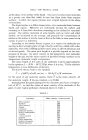
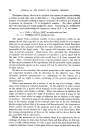
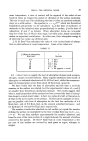
THE EMERGING COSMETIC INDUSTRY 31 contain several thousand different enzymes, each of which promotes a chemi- cal reaction. Lansing and Rosenthal" reached the conclusion that ribonuc- leic acid at the cell surface is involved in the transfer of substances across the cell surface. Promotion of various chemical reactions has been localised in definite cell structures," ,8 and Bracket" has summarised evidence that the nucleus is not the centre of all protein synthesis, although it may control many of the biochemical processes in the cell through its role in nucleotide synthesis. Kopac 2o recently described a micromanipulator used under an ultra-violet microscope, with images made visible through a closed television chain, which allowed sub-cellular particulates to be transplanted to a non- aqueous fluid and observed there. Kirk • reported that instruments he is now developing show promise of being about one hundred times as sensitive as those now in use, and of making possible accurate analyses of single living cells. ENZYME MECHANISMS Since so many biochemical processes depend on the participation of one or more enzymes for their effective functioning, an understanding of enzyme action must be included in our cosmetic chemistry. It has been fairly well established that enzymes, as well as many other catalysts, depend for their activity upon a portion of their surface which contains polar groups in an arrangement closely matching polar groups of the opposite charge in the substrate molecule. 22 The substrate is thereby held closely upon the enzyme, and has its charges so shifted that it is more reactive than a free molecule of the same kind. Leach and Lindley,* reported that a number of enzymes which had been subjected to amino acid analysis showed higher contents of polar residues than did non-enzymic proteins, implying that the enzymes possessed many carboxyl-hydroxyl interchain hydrogen bonds, forming a highly resonating network. Klotz and Loh Ming 04 clarified the role of certain metals as promoters of enzyme reactions by showing that the metals form bridges between enzymes and various organic molecules. Koshland" pre- sented evidence that enzyme mechanisms are analogous to those of simpler catalysts, and held out hope for early elucidation of the nature and behaviour of the active groups on protein surfaces. PROTEIN STRUCTURE AND FORMATION The composition and properties of one protein, keratin, have attracted the interest and study of cosmetic chemists for some years, but there remain many gaps in our knowledge of this and other proteins. Techniques of amino acid analysis have improved to the point where most of these units can be recovered within 3 per cent of theory by means of chromatography on a 4 per cent cross-linked polystyrene resin. 2'
Purchased for the exclusive use of nofirst nolast (unknown)
From: SCC Media Library & Resource Center (library.scconline.org)