SKIN AND HAIR PIGMENTATION 207 pieces of isolated frog skin. Administration of MSH to human subjects brings about generalized hyperpigrnentation resembling that seen in Addison's disease. TM With large doses, darkening may become evident in twenty-four hours. After discontinuing administration of this substance the skin slowly returns to its normal color after several weeks. Studies on the urinary excretion of MSH show that more of this hormone is produced and excreted in Addison's disease and pregnancy than under normal conditions. It appears likely that the melanoses in these conditions are at least partly related to this increased MSH production. The output of MSH by the pituitary is inhibited by hydrocortisone. Although MSH in lower vertebrates primarily causes dispersion of melanin granules in melanocytes, there is some evidence that it also brings about an increased rate of melanin produc- tion. •o It is likely that the latter action predominates in human skin although a slow melanin granule dispersing effect in man is also conceivable. Adrenaline and nor-adrenaline inhibit the action of MSH on melanocytes in lower verte- brates. Clear-cut evidence is not available to show that MSH increases the rate of proliferation of melanocytes, but this is also a likely possibility. The effect of thyroid hormone on pigmentation is not entirely under- stood. Hyperthyroidism in man is often accompanied by some degree of increased pigmentation as well as by an increased incidence of vitiligo. In amphibians and some fowl, thyroxine is essential for normal melanization. •, 82 Steroid sex hormones generally have an augmenting effect on cutaneous pigmentation, although this effect is Sometimes very strikingly restricted to certain regions. The nipples, linea nigra and genital areas in women are especially prone to develop melanosis on exposure to oestrogens, even when locally applied. TM In some species, such as the sparrow •4 and hamster, • specialized melanotic spots in males respond with hyperpigmentation to the local application of testosterone. In man, eunuchoid males given testo- sterone acquire the otherwise deficient ability to tan normally on exposure to sunlight. •' As concerns nutritional influences, trace metals, amino-acids, and some vitamins influence melanin formation. Melanosis often accompanies general starvation. In severe protein deficiency, however, as occurs in Kwashiorkor, deficient production of melanin is observed especially in the hair." Panto- thenic acid and para-aminobenzoic acid are required for normal pigmentation of the hair in some animals, •8 but these vitamins have not been shown to influence human melanogenesis normally. Administration of huge pharmacologic doses of para-aminobenzoic acid to individuals with lympho- blastomatous diseases has, however, on a few exceptional occasions resulted in repigmentation of grey hair. TM An increased tendency to form melanin in the skin is observed in scurvy and pellagra caused, respectively, by ascorbic acid and nicotinic acid deficiencies.

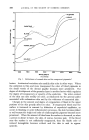
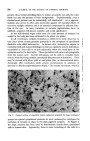
208 JOURNAL OF THE SOCIETY OF COSMETIC CHEMISTS As concerns trace metals, copper deficiency in animals has been most prominently associated with defective melanin formation. 4o,4• Our knowledge about neural factors which may be involved in controlling melanin formation is very incomplete. Clinically, however, disorders of pigmentation such as hyperpigmentation and depigmentation are at times localized along the patterns of distribution of cutaneous nerves. 4-ø Sunlight irradiation brings about darkening of the skin through several mechanisms worthy of comment. An initial darkening effect often appears a few minutes after exposure and reaches a maximum within one hour. 4• This phenomenon is brought about by the relatively long-wave ultra- violet spectrum between 300 and 420 m/• with a maximally effective wave- length of 340 m/•. This pigment darkening effect is believed to result from photo-oxidation of preformed, relatively reduced melanin. It is abolished if the oxygen supply to the skin is cut off. A second effect occurs several days after sunlight exposure, and consists of an upward migration of melanin granules in the epidermis, 44 probably as a result of dispersion of these granules within the dendritic melanocytes. Finally, a third most important factor in sun-tanning is the new formation of melanin. • This begins after two days and reaches a maximum after about 19 days. After one month the amount of newly formed melanin begins to decline, and after 9 to 10 months the melanin content of the skin is almost back to normal. This new formation of melanin is caused by the shorter- wave-length erythema-producing ultraviolet spectrum between 280 and 310 mt•. It is of interest to point out that many sun-screening preparations, especially those based on para-aminobenzoic acid, effectively filter out these erythema wave-lengths of sunlight, yet permit the passage of pigment- darkening rays above 320 m/•. This well explains the failure of such prepara- tions to protect against the darkening effect of sunlight on freckles. It is not correct, however, to claim that such sun-screening preparations permit sun-tanning while eliminating the erythema wave-lengths of sunlight, because such erythema wave-lengths are actually required for the new formation of melanin. Finally, I would like to say a few words about the pigment of red hair. In the past it was believed that hair color, whether brown, red, blond or black depended only on the number, size, and dispersion or state of oxidation of ordinary melanin granules in which pigment derived only from tyrosine. Very recently Fitzpatrick has found evidence that tryptophane may repre- sent an important precursor of human red hair pigment. 45 The pigment granules in human red hair differ morphologically from the granules in dark hair in being smaller and more finely granulated in structure. Also, a special, iron-containing pigment, trichosiderin, 40 has been extracted only from red hair. Furthermore, a peculiar chloroquine induced loss of hair pigment which is sometimes observed clinically seems to occur exclusively
Purchased for the exclusive use of nofirst nolast (unknown)
From: SCC Media Library & Resource Center (library.scconline.org)