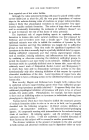
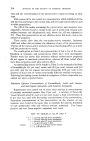
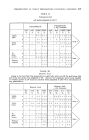
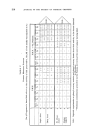
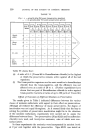
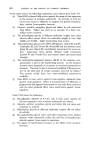
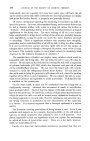
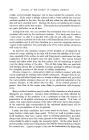
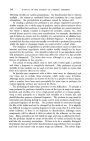
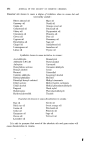
224 JOURNAL OF THE SOCIETY OF COSMETIC CHEMISTS (f) Benzalkonium chloride is more active against Gram-positive organ- isms than Gram-negatives when inactivation occurs, the Gram- negatives are allowed to grow. , At the ratios of nonionic to preservative used in this experiment, none of the nonionics affected the activity of benzalkonium chloride against Gram-positive organisms. Effect of Nonionics on Resistance of Bacteria to Preservatives During the course of this work it has often been observed that when bacteria have grown in media containing nonionics their staining character- istics change. This change is sometimes reversible. Gram-positive organisms have, on occasion, become Gram-negative after a period of contact with non- ionics and, on subculture, have reverted to Gram-positive. A change has also been observed with Gram-negative organisms which become Gram- positive for a period and, when transferred to media without nonionic, once again become Gram-negative. This phenomenon has also been observed by N. and A. Delmotte. • It was thought that these observations indicated some change at the cell wall. The change in staining characteristics might indicate some protective effect at the cell wall whereby effective contact between the germicide and the cell is hindered. This phenomenon has been studied with a view to determining whether it influences the resistance of bacteria to preservatives. Two types of experiment have been carried out: one in which the bacteria were grown in nonionic media before transfer to a bacteriostatic agar medium, and the other where the organisms were suspended in a saline/nonionic mixture prior to exposure to the preservative. (a) Organisms Grown in Media containing Nonionics Four test organisms were grown for a period of 72 hours in broths con- taining various nonionics at 2 per cent. The organisms were also grown in plain nutrient broth as a control. After the incubation period, the organisms were spun down and transferred to nutrient agar containing 0.1 per cent Nipa 82121. These plates were incubated for four days at 37 ø C. Results are shown in Table IX. KEY TO TABLES IX and X -- no growth after 4 days. + = growth after 3 days. + + -• growth after 48 hours. + + = growth after 24 hours.

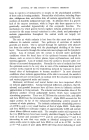
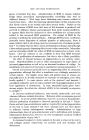
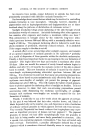
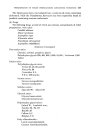
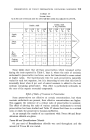
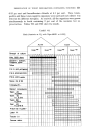
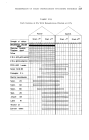
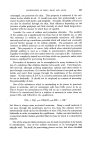
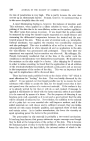
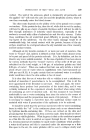
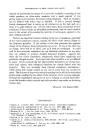
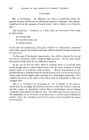
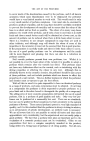
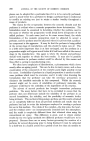
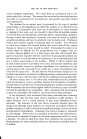
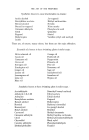
PRESERVATION OF TOILET PREPARATIONS CONTAINING NONIONICS 225 TABLE IX Growth in agar Organism Nonionic used containing 0.1% Nipa 82121 -- Staph. albus I Nutrient broth control -- (no nonionic) P.E.G. 400 -- P.E.G. 400 laurate -- Tween 80 -- Strep. boris Nutrient broth control -- P.E.G. 400 -- P.E.G. 400 laurate q- q- Tween 80 -- __ B. coli Nutrient broth control -- P.E.G. 400 -- P.E.G. 400 laurate q- q-q- Tween 80 + + Pseudo.•onas Nutrient broth control -- fluorescens P.E.G. 400 -- P.E.G. 400 laurate q- q- Tween 80 -- The results show that Staph. albus was not affected by any of the three nonionics, while Strep. bovis, B. coli and Pseudomonas fluorescens were rendered more resistant to Nipa 82121 by P.E.G. 400 laurate, and B. coli was also affected by Tween 80. P.E.G. 400 did not influence the resistance of any of the organisms. (b) Organisms Suspended in Saline containing 2 per cent Nonionic In this experiment the test bacteria were suspended in 2 per cent solutions of Tween 80 in saline for 20 minutes. During this contact time, the organisms were centrifuged and then washed three times with sterile saline. After the contact period and between each washing, a proportion of the organisms was transferred to agar containing 0.1 per cent of Nipa 82121. Saline-washed organisms were used as a control. Results are shown in Table X. These results show that P.E.G. 400 laurate and Tween 80 have some effect on the resistance of some bacteria to germicides. This resistance varies not only for different nonionics but also for different test organisms. It does not seem, however, that this effect is sufficiently marked to account for the profound inactivation observed in other experiments, where the activity against all test organisms was reduced. It therefore seems that some physico- chemical phenomenon is playing a greater part in the inactivating process than the effect of nonionics on the cell wall of micro-organisms.
Purchased for the exclusive use of nofirst nolast (unknown)
From: SCC Media Library & Resource Center (library.scconline.org)