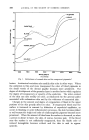
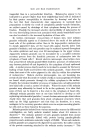
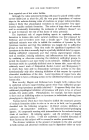
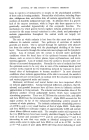
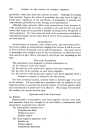
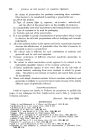
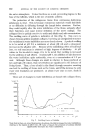
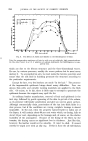
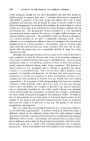
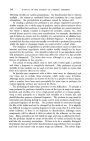
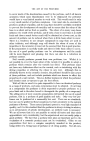
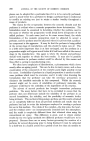
234 JOURNAL OF THE SOCIETY OF COSMETIC CHEMISTS .• i i i i i i ! i i i i I ' i i •..-o ,08 . ß •$C "X Fig. 4. The Effect of Acids and Alkalis on the Birefringence of Hair. Note the comparative resistance of hair to acid even at relatively high concentrations. On the other hand, in a 0.5 N solution of sodium hydroxide the birefringence is com- pletely lost. which are due to the fibrous structure and the three-dimensional weave. He can, by various processes, modify the weave pattern but he must never destroy it. To accomplish his aim, he must make the tannins penetrate and ensure that the oils used in finishing permeate the structure according to the particular requirements. Except for furs, very few leathers are made "in the hair." The presence of the impermeable epidermis brings about many difficulties. Furs are. always thin pelts and suitable tanning materials are applied to the flesh side. Of course, to be fair, there is little urge to attempt to penetrate the, epidermis because the reagents may spoil the fur. In ordinary leather manufacture, removal of hair and epidermis is the- first step, followed by gentle squeezing of the skin to get rid of the sebum, as its presence will hinder penetration and give an uneven grain surface. Although commercially clean, penetration of the tan into thick hides is a slow process, but if the conditions are wrong, complete tannage is almost impossible. In the end, when the properly tanned leather is taken out of the liquor, it will contain about 60 per cent water which, on drying, falls to. about 14 per cent, depending on the tannage and, of course, on the relative humidity of the atmosphere. Because of the fixing of the fibres by the, tannins, the drying causes no significant loss in thickness. Just like this, however, the leather would not be saleable. It must be oiled. It cannot merely be wiped over with an oily rag. If this is done the oil will darken,

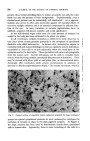
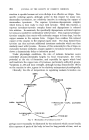
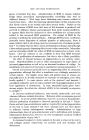
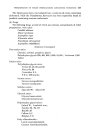
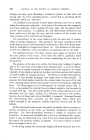
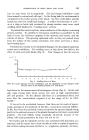
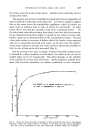
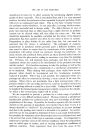
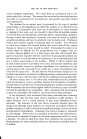
PENETRATION OF SKIN--DEAD AND ALIVE 235 the surface and stay in the surface layers. Leather can be oiled only when it contains free water. The simplest case is when wet leather is coated with oil and evaporation of water is allowed to take place at the other side. It would be simple to suggest that as the water leaves the interfibrillar capillaries--which in leather are much more in evidence than in skin--it draws the oil inwards. To some extent this is true and the viscosity of the oil is a dominant factor. On the other hand, some oils are better than others, but those which are success- ful are characterised by their ability to spread on the surface of water and, further, spread as an attenuated film on the contaminated surface. Because a free water surface is necessary it follows that if the leather, when anointed with oil, is completely saturated with water, no oil will enter the leather. As the water content is lowered, free water surfaces will become available so that the rate of take-up of oil is increased 4 (Fig. 5). But the process is not quite so simple, because if the fully wetted leather is churned in a dilute emulsion of oil-in-water, the whole of the oil can be rapidly taken up by the tanned pelt. This effect depends on the stability of the emulsion in contact with the leather. Stable emulsions, notably those made with non-ionic emulsifiers, are useless--practically no oil is absorbed. 40 tO RATE •, AB$O•"PTIOPl o, COD 011. $0 I I•0 ! .50 200 •0 300 TI I"l E Fig. 5. When the fibre structure of leather is fully saturated with water, oils cannot penetrate. When the water content of leather is less than this, the oil can penetrate but the rate is dependent on the free water-wet surfaces which are available.
Purchased for the exclusive use of nofirst nolast (unknown)
From: SCC Media Library & Resource Center (library.scconline.org)