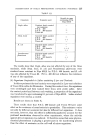
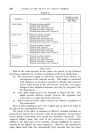
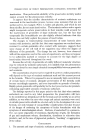
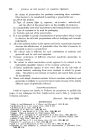
228 JOURNAL OF THE SOCIETY OF COSMETIC CHEMISTS the choice of preservative for products containing these materials. Other factors to be considered in selecting a preservative are: (a) pH of the product. (b) Type of system (that is, aqueous oil-in-water water-in-oil) and the effect of the preservative on the stability of emulsions. (c) Compatibihty with other ingredients in the formula besides nonionics. (d) Type of container to be used for packaging. (e) Toxicity and cost of the preservative. 2. It is not possible to specify concentrations of preservatives which would be effective for all toilet preparations without studying each formula individually. 3. All of the nonionic surface-active agents used in the experiments reported decrease the effectiveness of germicides when the ratio of nonionic to germicide is above a certain level. 4. The critical ratio is different for each combination of nonionic and germicide and for each test organism. 5. Nonionic surfactants of different structure inactivate germicides to varying extents. 6. The extent to which inactivation occurs appears to be related to the hydrophilic-lipophilic balance of the nonionic surfactant. 7. Nonionic surfactants appear to have some effect on the cell walls of certain bacteria, rendering them more resistant to attack by germi- cides. This effect is not constant or marked, and cannot fully account for inactivation. 8. Direct and simple chemical reaction between nonionic surfactants and germicides is unlikely to account for inactivation because of the widely different types of germicides affected. ACKNOWLEDGEMENTS I wish to express my thanks to Unilever for permission to publish this paper, to my colleagues for their helpful advice and to Miss J. Lobjolt for technical assistance. [Received: 14th April 1958] REFERENCES • Bolle, A., and Mirimanoff, A. J. Pharm. and Pharmacol., 1950, I•, 685. •' de Navarre, M. G. J. Soc. cosmet. Che•n., 1956, 7, 427. s de Navarre, M. G. Ibid., 1957, 8, 68. 4 Glassman, I-I. N. Bact. Rev., 1948, lg, 105. 5 Dubos, R. J., and Davies, B. D. J. exp. Med., 1946, 88, 409. 6 Engler. Th6se de Doctorat No. 1149, Geneva, 1950. ? Williams, W. L., Broquist, I-I. P., and Snell, E. E. J. Biol. Chem., 1947, 170, 619. s Wurster, D. E., and Rath, D. W. Amer. pharm. Assoc. Convention, Boston, 1954. • Arkins, F. Mfg. Chem., 1950, gl, 51. xo Barr, M., and Tice, L. F. J. Am. pharm. Assoc. (Sc. Ed.), 1957, 46, 442. n I-Iiguschi, T., and Lach, J. L. Ibid., 1954, 48, 465. x2 Hall, C. S., and de Navarre, M. G. Proc. sci. Sect. TGA, 1957, No. g?, 29. xa Delmotte, N., and Delmotte. A., Antonie van Leeuwenhoek. J. Mic•obiol. Serol., 1956, gg, 218.

PENETRATION OF SKIN--DEAD AND ALIVE 229 PENETRATION OF SKIN--DEAD AND ALIVE R. H. MARRIOTT, D.Sc., F.R.I.C.* A lecture delivered before the Society o• 18th December 1957. The l•enetration of skin by oily materials dellends on the sl•reading of the oil on free water surfaces, bo• with dead skin (tanned) and •he living skin. Examl•les are given of •he effect of various forms of emulsion on the ability of the tol•ically al•lflied material to l•ene•ate into the el•idermis, and also through •he el•idermis into •he blood stream. In the case of water- soluble substances, the ionisa•ion factor has to be considered in resl•ect of mobility of •he ions. In the case of weak acids or bases, the l•ermeability can occur insomuch as un-ionised molecules are free to diffuse through the electro- static barrier of the el•idermis. Various forms of emulsifying agents are also dealt with, including the ionic, non-ionic and aml•holytic surface-active agents and the suitability of the many varieties of emulsions as bases for the inunc•ion of the intact skin. THE PROBLEM or, perhaps better, problems of the permeability of skin are intrinsically bound up in the science of cosmetology since our industry is based on topical application. Often, of course, it is not desirable for penetra- tion to occur, but, in general, some is desirable. A superficial glance through the literature indicates that the subject has attracted a large number of workers, but often their findings appear to be at variance and the enunciation of principles governing the penetration of substances into the skin has been difficult. It is the purpose of this lecture to try to sift out some of the factors which play their part, how they do so, and what use can be made of them. During the preparation of this lecture an outstanding treatise on the science and technology of cosmetics • became available in this country. This tome, which was edited by our esteemed American colleague, Sagarin, with the help of an editorial board of four eminent American cosmetic chemists, covers practically the whole field of our industry--and in no mean fashion. It contains a chapter written by Peck and Michelfelder on the physiology of the skin, and it is easy to understand that this lecture must inevitably impinge on their story. Although all of you are well acquainted with the purpose and structure of skin, it is somewhat necessary to deal with this in a form which will facilitate the story and the method with which the subject will be treated. * County Laboratories Ltd., Stanmore, Middlesex.
Purchased for the exclusive use of nofirst nolast (unknown)
From: SCC Media Library & Resource Center (library.scconline.org)