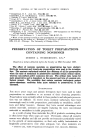
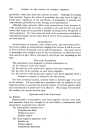
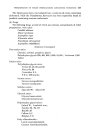
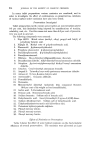
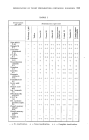
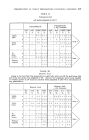
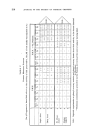
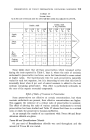
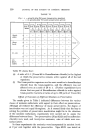
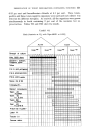
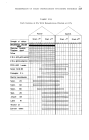
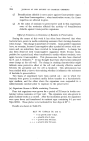
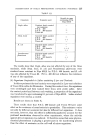
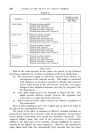
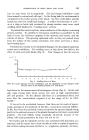
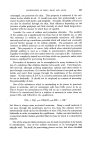
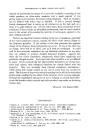
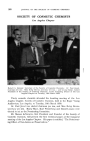
222 JOURNAL OF THE SOCIETY OF COSMETIC CHEMISTS At the ratios tested, the following conclusions can be drawn from Table VII. (a) Nipa 82121 is almost fully active against the range of test organisms in the absence of nonionic surfactants. Its activity at 0.15 per cent is not, however, sufficient to suppress the growth of particu- larly virulent Gram-positive bacteria. (b) Glycerin, sorbitol, propylene glycol and tallow do not inactivate Nipa 82121. Tallow was used as an example of a fatty non- surface-active nonionic. (c) The polyethylene glycols of different molecular weights have little adverse effect except where the molecular weight is very high (2,000 and 10,000) slight inactivation then occurs. (d) The polyethylene glycol esters (PEG 400 laurate Nonex 64 and 99 Cremophor EL and Tweens 20, 40 and 80) and the sorbitan esters (Span 20 and Arlacel 83) considerably inactivated the preserva- tive. Long-chain fatty alcohol ethylene oxide compounds (Lubrol W and Texofor D1) and sucrose esters also inactivated strongly. (e) The hydrophylic-lipophylic balance (HLB) of the nonionic com- pound plays a part in the inactivating process. As the nonionic becomes more lipophylic so its power to inactivate preservatives increases. This may be due to increased solubility of the preserva- tive in the fatty part of certain nonionics observed by Atkins. 9 This process would leave less water-solubilised preservative available. (f) Nipa 82121 is more active against Gram-negative organisms than against Gram-positives. When it is inactivated, its efficiency is progressively lost against Gram-positives, but only those nonionics with the most profound effect cause inactivation against Gram- negatives. Table VIII shows the following: (a) Benzalkonium chloride at 0.1 per cent is fully active against all the test organisms when nonionic surfactants are absent. (b) Glycerin, sorbitol, propylene glycol and tallow did not cause any reduction in activity. (c) Polyethylene glycols of different molecular weights did not affect its activity. (d) The polyethylene glycol esters and other long-chain fatty alcohol ethylene oxide compounds reduce the activity of benzalkonium chloride against Gram-negative organisms. (e) The degree of inactivation increases as the HLB of the nonionic decreases.

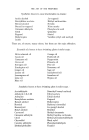
ß PRESE'RVATION OF TOILET PREPARATIONS CONTAINING NONIONICS 223 TABLE VIII Each Nonionic at 2% With Benzalkonium Chloride at 0'1% Active Inactive. Gram _ve Gram +re Gram _re Gram -I -ve Strength of culture. I 2 3 4 56 r 2 3 4 5 6 i 2 3 4 5 6 I 2 3 4 56 Benzalkonium chloride alone, Glycerine Sorbitol Propylene (11ycol Tallow P. E.G. 2OO•4OO & 600 R E,G. 2pOO &10,OOO RE.G. 400 Laurate. _ _ Nonex 64 & 99 _ Cremophor. E.L. Glyceryl monostearate. __ Tween. 20 Tween. 40 Tween, 80 -- Span. 20 Arlacel 83 I_ubrol W Tcxofor D I Sucrose esters ,
Purchased for the exclusive use of nofirst nolast (unknown)
From: SCC Media Library & Resource Center (library.scconline.org)