THE ART OF THE PERFUMER 255 the skin and with it most of the offending aromatics, but in a toilet water, the oil being left on the skin gives rise to a certain amount of irritation, which is very variable. I regret not mentioning this it was certainly an oversight. The terpeneless oil acts in a similar manner, although I consider the effects much milder. • MR. R. T. DOBSON: IS the odour value of a perfume in soap affected when the soap contains titanium dioxide ? TaE LECTURER: The odour of a perfume in soap is affected a little when the addition of titanium dioxide is made. It is difficult to offer a correct explanation, but one can only presume that certain components of a perfume are adsorbed by the titanium dioxide. The differences are very slight and vary from perfume to perfume, and in some instances the difference is for the better and is preferred. MR. F. W. BELLAIRS .' Benzyl alcohol has been mentioned as an irritant, but surely the effect is anaesthetic rather than irritant ? TaE LECTURER: BenZyl alcohol has definite irritant qualities and is sometimes claimed as being a cause of dermatitis. The excessive use of benzyl alcohol in preparations being rubbed into the skin, or inhaled, should be avoided. DR. W. MITCHELL .' When an "optical bleach" is present in a perfumed detergent, does it, because its declared purpose depends on the absorption of incident ultra-violet radiation, have an effect in protecting the perfume from the harmful effects, if any,. of such radiation ? THE LECTURER: I have not studied this action to any extent. On one or two occasions I have had cause to look into this question, each occasion relating to perfume in soap and not detergent, but without any conclusive results. The question is a very interesting one and it is my intention to pursue this matter more fully. MICROCARD EDITIONS OF THE JOURNAL Vols. I to VIII incl. are now available in microcard form. A complete set, a single volume or a single journal may be ordered from Iota Services, Ltd., 38, Farringdon Street, London, E.C.4. The current and future volumes of the Journal will also be available on microcards, in the year following that of publication.

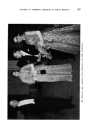
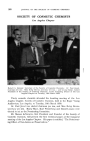
256 JOURNAL OF THE SOCIETY OF COSMETIC CHEMISTS SOCIETY OF COSMETIC CHEMISTS OF GREAT BRITAIN Annual Dinner-Dance THE ANN•JA•. Dinner-Dance of the Society was held at the Caf• Royal on 7th February, and was acclaimed the best ever by over 200 members and guests. The toast of the Society was proposed by Dr. J. H. Skellon, T.D., M.Sc., F.R.I.C., Head of the Department of Chemistry and Biology at the new Brunel College of Technology at Acton. Dr. Skellon, who has played a most important part in •:he development and conduct of the courses in Cosmetic Chemistry sponsored by the Society, spoke of his decision to promote the third year Diploma Course to a position of honour in the new Brunel College, which provides for advanced studies in the sciences. The decision had received the blessing and approval of higher authority and the way was now open to continued progress, perhaps, he hoped, with the endowment of a Research Fellowship in Cosmetic Chemistry. Postgraduate training and research were, in Dr. Skellon's opinion, vital to the prosperity of the industry. The Diploma Course he considered to provide a very high standard of training for those who were desirous of entering or advancing in the industry. The President, Mr. J. Pickthall, F.R.I.C., responding to the toast, thanked Dr. Skellon for the great interest he had always shown in the cosmetic courses sponsored by the Society and said that the evening's programme was shaped to emphasise the Society's appreciation of that interest. The toast of "Our Guests" was proposed by Dr. K. G. Johnson, B.Sc., A.R.I.C., the Hon. Education Officer of the Society. He paid tribute to the ladies, as not only our most important guests but also as the mainspring of the day-to-day business of the cosmetic chemist. Even in the field of cosmetics for men, the influence of the ladies was very strong. It was part of the function of the cosmetic chemist to educate them in the application of his products to achieve the optimum benefit. The response was made by Mrs. D. L. Wedderburn, B.Sc., Lecturer in Bacteriology in the Society's Diploma Course. Mrs. Wedderburn described the improvements in cosmetics in recent times as dramatic and providing women with great joy in their use. Disappointment might follow the build-up provided by rather exaggerated advertisements, but her own attitude was that of an eternal optimist who always hoped that advertised claims were true and that some miraculous change would occur overnight. As one connected closely with the industry, Mrs. Wedderburn recognised the work of the cosmetic chemist to be skilled and imaginative.
Purchased for the exclusive use of nofirst nolast (unknown)
From: SCC Media Library & Resource Center (library.scconline.org)