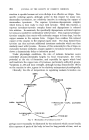
240 JOURNAL OF THE SOCIETY OF COSMETIC CHEMISTS crinkle, and eventually disappear, but to leave behind the remnants of the carapace. If the water is deeply coloured with a water-soluble dye and the emulsion applied to the skin, the dye will not colour the skin although the skin will have absorbed water. Because the dye is not soluble in oil it simply can never arrive at the skin surface. This means that oil-insoluble substances are quite ineffective in an oil base. Arising from this, one can consider the mechanism when the base is an emulsion with water as the continuous medium. It is fairly easy to make a "cold cream" so that it is miscible both with oil and with water. When such a cream is anointed on to the skin it will immediately invert into water- in-oil emulsion and it will then func!ion as a reservoir supplying water as vapour to the epidermis, but practically none of the water-soluble substances will reach the skin. If, however, the emulsion consists of fine droplets of oil dispersed by means of a soap, rubbing on the skin will decrease the stability of the emul- sion, especially if the surface be acid, and bring about a continuous but slow coalescence of the oil droplets near the skin surface. The system formed inverts and takes water from the skin surface, the oil continuing to spread over the damp surface of the skin. This oil film being thin can penetrate and function almost like an oleophilic material, passing by diffusion through the oleophilic portions of the mosaic of cellular membranes. Obverse creams (i.e., oil-in-water) which are stable in contact with skin can be employed for holding water-soluble substances. Because they do not invert, they will allow liquid water to remain in direct contact and, provided the water-soluble substance does not set up an electrical potential at the stratum lucidum, it will diffuse into the skin. If the osmotic pressure is greater than that of the serum some delay in penetration will obviously occur. Many excellent emulsions may be made of this character in which anionic detergents are employed. Because these substances are little affected by acids, breaking of the emulsion is at a minimum so that the chances of penetration of oil-soluble substances are somewhat remote. It is true, of course, that some chemi-sorption of the anion will occur, but in the presence of the relatively high concentration of the sulphated alcohol there will be little or no precipitation of the oil globules. Lately, non-ionic emulsifiers have come much to the front. They have many features which make them useful. If they are used to produce water- in-off emulsions, they have a great value in assisting penetration provided always that there is some free water present in the epidermis. They them- selves should be able to supply the necessary water. On the other hand, if used to produce oil-in-water dispersions, they will be almost useless as vehicles for cosmetic use. A good example of this can be demonstrated by dispersing

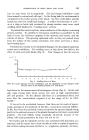
PENETRATION OF SKIN--DEAD AND ALIVE 241 mineral oil and lanolin by means of a non-ionic emulsifier consisting of one which produces an oil-in-water emulsion and a small. amount of one giving water-in-oil systems, the former being dominant. Such an emulsion can be diluted with water--tap or distilled. If this is poured through freshly shampooed hair, it leaves no oil whatsoever on the hair and, as a rinse, it is quite without use. On the other hand, those producing reverse emulsions, if they contain an oil-soluble medicament, may be most valuable even to the extent of increasing the activity of carcinogens applied to the skin of living animals. 8 There is one important feature relating to the use of emulsions, especially of the water-continuous variety, namely, the effect of the electric charge on the dispersed particles. If the surface of the skin possesses the opposite charge to the droplets, then precipitation can occur. If one or the other has no charge, there will be no effect, just as if both are uncharged. It could well be that non-ionic emulsifiers are not desirable substances to use since they are unlikely to produce charged dispersed droplets. Against this there are the newer ampholytic compounds which have negatively and positively charged centres. Just what their effect would be is as yet difficult to assay.. Never overlook the fact that proteins themselves are of this char- acter and, indeed, their biological functions are closely linked with this property. They can obviously form internal complexes--zwitterionsm which break into charge centres as one moves away from the iso-electric point. This is a sort of step-wise process depending on the pK of the individual amino-acids, modified by the effect of the structure of the protein molecule. Perhaps the ampholytes may prove of use in helping to control more effec- tively the benefits which cosmetic and toilet products can confer on the living human skin. [Received: 4th March 1958] REFERENCES Sagarin, E. Cosmetics, 1957. (New York and London: Interscience Publishers.) Jordan-Lloyd, D., and Marriott, R.H. Proc. roy. Sot., 1935, 118B, 439. Jordan-Lloyd, D., and Marriott, R.H. Trans. Faraday Sot., 1934, ll0, 944. Marriott, R. H. J. Int. Soc. Leath. Chem., 1933, 17, 270 Speakman, J. B., and Chamberlain, Iq. H., in Technical Aspects of t•mulsions, 1935, 101. (London: A. Harvey.) Marriott, R. I-I. Chern. & Ind., 1949, 767. Gortner, R.A. Outlines of Biochemistry, 1929, 208-253. (New York: John Wiley & Sons, Inc.) Jordan-Lloyd, D., and Moran, T. Proc. roy. Soc., 1934, 147A, 382. Set/ilii, K. Nature, Lond., 1954, 174, 873.
Purchased for the exclusive use of nofirst nolast (unknown)
From: SCC Media Library & Resource Center (library.scconline.org)