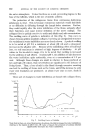
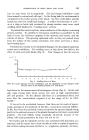
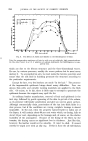
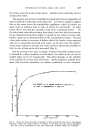
PENETRATION OF SKIN--DEAD AND ALIVE 241 mineral oil and lanolin by means of a non-ionic emulsifier consisting of one which produces an oil-in-water emulsion and a small. amount of one giving water-in-oil systems, the former being dominant. Such an emulsion can be diluted with water--tap or distilled. If this is poured through freshly shampooed hair, it leaves no oil whatsoever on the hair and, as a rinse, it is quite without use. On the other hand, those producing reverse emulsions, if they contain an oil-soluble medicament, may be most valuable even to the extent of increasing the activity of carcinogens applied to the skin of living animals. 8 There is one important feature relating to the use of emulsions, especially of the water-continuous variety, namely, the effect of the electric charge on the dispersed particles. If the surface of the skin possesses the opposite charge to the droplets, then precipitation can occur. If one or the other has no charge, there will be no effect, just as if both are uncharged. It could well be that non-ionic emulsifiers are not desirable substances to use since they are unlikely to produce charged dispersed droplets. Against this there are the newer ampholytic compounds which have negatively and positively charged centres. Just what their effect would be is as yet difficult to assay.. Never overlook the fact that proteins themselves are of this char- acter and, indeed, their biological functions are closely linked with this property. They can obviously form internal complexes--zwitterionsm which break into charge centres as one moves away from the iso-electric point. This is a sort of step-wise process depending on the pK of the individual amino-acids, modified by the effect of the structure of the protein molecule. Perhaps the ampholytes may prove of use in helping to control more effec- tively the benefits which cosmetic and toilet products can confer on the living human skin. [Received: 4th March 1958] REFERENCES Sagarin, E. Cosmetics, 1957. (New York and London: Interscience Publishers.) Jordan-Lloyd, D., and Marriott, R.H. Proc. roy. Sot., 1935, 118B, 439. Jordan-Lloyd, D., and Marriott, R.H. Trans. Faraday Sot., 1934, ll0, 944. Marriott, R. H. J. Int. Soc. Leath. Chem., 1933, 17, 270 Speakman, J. B., and Chamberlain, Iq. H., in Technical Aspects of t•mulsions, 1935, 101. (London: A. Harvey.) Marriott, R. I-I. Chern. & Ind., 1949, 767. Gortner, R.A. Outlines of Biochemistry, 1929, 208-253. (New York: John Wiley & Sons, Inc.) Jordan-Lloyd, D., and Moran, T. Proc. roy. Soc., 1934, 147A, 382. Set/ilii, K. Nature, Lond., 1954, 174, 873.

242 JOURNAL OF THE SOCIETY OF COSMETIC CHEMISTS DISCUSSION MR. J. PICKTHALL' Dr. Marriott has told us something about the amount of water which may be effectively bound in a substance like gelatin. Could he tell us the amount of bound water •vhich is likely to be found in hair ? THE LECTURER: Proteins, as I have said, are associated with water in three forms, (a) loosely held, (b) loosely bound, and (c) firmly bound. In the case of a gelatin gel, if the gel is held in an atmosphere saturated with water vapour, the loosely held water will be expelled thnough the process of synaeresis. In the case of the loosely bound water, this will be retained by the gel but can be expressed under relatively light pressure. On the other hand, the firmly bound water is very difficult to express. In the case of the hair fibre, there is probably little or no loosely held water though there is some bound water, but the exact amount of firmly bound water is not known with accuracy. Recent experiments in our laboratories have indicated that the firmly bound water is not less than about 16 per cent, but the figure may, perhaps, be a little higher than this. It is unlikely, however, to be quite of the same order of magnitude as that of a collagen fibre. MR. R. L. STEI•HENS, in proposing the vote of thanks to the lecturer, stated that the new hght that had been thrown on the r61e of water in provid- ing the means, of absorption helped him to understand several strange examples of absorption through the skin. He stated that he had come across the absorption of an overdose of atropine from a rubber-based belladonna plaster, where the sweating caused by the plaster had provided the means of absorption.
Purchased for the exclusive use of nofirst nolast (unknown)
From: SCC Media Library & Resource Center (library.scconline.org)