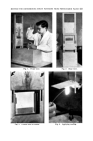
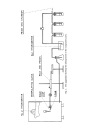
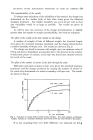
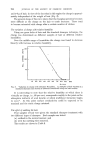
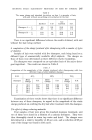
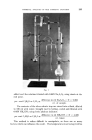
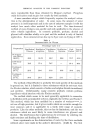
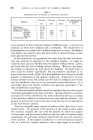
236 JOURNAL OF THE SOCIETY OF COSMETIC CHEMISTS A METHOD FOR STUDYING THE STATIC ELECTRICITY PRODUCED ON HAIR BY COMBING R. G. BARBER and A.M. POSNER, B.Sc., Ph.D.* A detailed descrilffion o5 •e appara•s is given and the accuracy and SCOl•e of the method are illustrated. A NUMBER of methods have been described for studying the magnitude of the static electricity produced by combing tresses of hair and single fibres after treatment with various materials •-5. They all suffer from the disad- vantage of being complex and relatively insensitive to small differences resulting from different treatments. This paper describes a new method for studying the charge produced on hair as a result of combing the hair with a comb made from a material dissimilar to the hair itself. The method is both simple and effective and allows a quick comparison to be made of the effect of various treatments on the magnitude of the static charge, and other things being equal, the effect on "fly-away". The results obtained with this apparatus have been shown to correlate very well with observations made independently in actual practice in the hairdressing salon. The method is based on the fact that the charge produced on the hair is equal though opposite in sign to that produced on the comb. The distance at which a freely suspended strip of gold leaf commences to be attracted towards the comb is measured, and the magnitude of the charge is then a simple function of this distance. The following gives a detailed description of the apparatus together with some of the results, which illustrate the accuracy and scope of the method. iExPERIMENTAL The static electricity produced on hair is primarily dependent on the relative humidity of the ambient atmosphere, and it was therefore necessary to generate and measure the charge in an atmosphere of known and con- trollable humidity. This was done by enclosing the essential parts of the apparatus in a large glass tank, the open side of which was covered with a thin Perspex sheet. * County Laboratories, Ltd., Startmore, Middx.

i I I I ! I
Purchased for the exclusive use of nofirst nolast (unknown)
From: SCC Media Library & Resource Center (library.scconline.org)