CHEMICAL ANALYSIS IN THE COSMETIC INDUSTRY 27I cases it is advisable to give the probable limits of error. Many young assistants (and some who should know better) err in this respect. It is not uncommon to see results given to two or even three places of decimals when the method employed makes it obvious that one can only be confident of the first place. The interpretation of results is an extremely important part of analytical work and a very fascinating one. In some cases, the real work of an analysis only begins after the bench work has been completed. It is not intended to convey the idea that the examination of unknowns is the only way in which the analyst can contribute to the cosmetic industry. This particular part of his work has been chosen because little seems to have been published about it. The importance of quality control analysis has already been referred to, and the analyst can frequently help his colleagues in the research and formulation sections by tracking down the offending material in faulty batches, by identifying and characterizing new materials, and by keeping a check on the efficacy of mixing, or the progress of a reaction when new products are formulated or new raw materials made. IReceived ß 15th April 1959j REFERENCES Smellin, C. F., Hartmann, L., and Stetzler, R. S. J. Am. Oil Chemists' Soc. 35 (1958) 179. Desbusses, J., and Desbaumes, P. J. Soc. Cosmetic Chemists. 8 (1957) 380, Franks, F. Analyst. 81 (1956) 390. Williams, 141. A. Oils, Fats and Fatty Foods--Their Practical Examination. 3rd Edn. (1950) 106. (J. & A. Churchill, London). Ravin, L. J., Meyer, R. J., and Higuchi, T. J. Am. Oil Chemists' Soc. 34 (1957) 261. Quinlan, P., and Weiser, A.J. Ibid. 35 (1958) 325. Newburger, S. H. J. Assoc. Offic. Agr. Chemists. 41 (1958) 664. Green, T., Harker, R. P., and Howeft, F. O. Analyst. 80 (1955) 470. Root, M. J., and Maury, M. J. J. Soc. cosmetic Chemists. 8 (1957) 92. Teitelbaum, C.L. Ibid. 316. Methods of Analysis of Offs and Fats. British Standard 684 (1958) (British Standard Institution, London.) Godbole, N. N., Fette u. Seifen. 43 (1936) 155. Toms, H., Analyst. 53 (1928) 69. Levy, G. B., and Fergus, D. Anal. Chem. 25 (1953) 1408. Seris, G. Ann. fals. etfrauds. 47 (1954) 29. Rosen, M.J. Anal. Chem. 27 (1955) 787. Morgan, P.W. Ind. Eng. Chem., Anal. Ed. 18 (1946) 500. Etienne, H. Ind. chim. beige. 22 (1957) 1175, 1287. Siggia, S. Anal. Chem. 30 (1958) 115. Dean, E. W., and Starke, D. D. Ind. Eng. Chem. 12 (1920) 486. Bidwell, G. L., and Stirling, W. F. J. Assoc. Offic. Agr. Chemists. 8 (1925) 295. Jones, J. M., and McLachlan, T. Analyst. 52 (1927) 383. Tare, F. G. H., and Warren, L. A. Ibid. 61 (1936) 367. Lincoln, P. A., and Chinnick, C. C. T. Ibid. 81 (1956) 100.

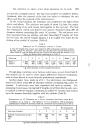
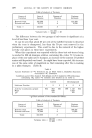
272 JOURNAL OF THE SOCIETY OF COSMETIC CHEMISTS THE SORPTION OF AMINO ACIDS FROM SHAMPOOS ON TO HAIR j. K. HERD, B.Sc., and R. H. MARRIOTT, D.Sc., F.R.I.C.* Methionine anal tyrosine have been shown to be sotbell on to hair from a shampoo solution containing these amino acids. The amino acids so sotbell can be •le-sorbe•l l•rogressively by washing with a shampoo containing no amino acid. The amount of amino acid remaining on the hair depends on the amount originally present on the hair and on the concentration of the amino acid in the shampoo. A radiochemical technique was employed. A•iNO ACIDS in the free state, and bound as polypeptides, have been shown to be present in the skin •,•,•,•,5,6,7, in sweat 8,9, and on the hair•. Their presence seems to be independent of the amount present in the blood, the latter varying with dietary intake and needs '. The specific function of these compounds in these surroundings is not known, though many have considered them to be by-products of cell metabolism. FleschT, however, considered that they were of importance in the water- binding capacity of the skin with particular weight on the water-soluble polypeptides. Removal, from the hair and scalp, of some of the water soluble materials in the form of amino acids and peptides in the process of shampooing the hair, might lead to a temporary deleterious state. With this in mind an investigation was carried out to study the removal of amino acids from human hair by shampoo solutions and the sorption by the hair from shampoo solutions containing amino acids and peptides. A radio- chemical technique was used, this offering the most direct approach to the problem. In the first place it was necessary to.deposit labelled amino acids on to hair and this was done by washing the hair, in a standard manner, in a shampoo solution containing methionine labelled with -'*S. Counts taken on the surface of the hair with a hand monitor, incorporating an MX 108 Geiger Muller tube, showed a significant difference from the background count. Extraction of the hair with hydrochloric acid reduced the counting rate to background level. Further preliminary experiments were carried out, in which labelled methionine was deposited on a tress of hair in the manner described above. A control sub-tress was removed and the remainder of the tress re-washed in a shampoo solution containing no added amino acid. The labelled methionine was removed from the hair tresses by * County Laboratories, Ltd., Stanmore, Middx.
Purchased for the exclusive use of nofirst nolast (unknown)
From: SCC Media Library & Resource Center (library.scconline.org)