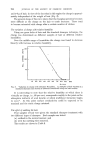
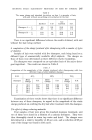
CHEMICAL ANALYSIS IN THE COSMETIC INDUSTR• 269 unnecessary and sometimes unattainable, but if the object is to determine, for example, the amount of a trace metal or element which may have a profound effect on the stability or toxicity of the product, the results should be of a very high degree of accuracy. Certain ingredients of a mixture may be impossible to determine with accuracy due either to the lack of suitably specific methods or to their variable composition. Other ingredients, which may be accurately determined in simple mixtures, may be extremely difficult to estimate with accuracy in more complex mixtures by reason of inter- ference by other components. It is not always easy to predict exactly what is going to happen when a method which has proved satisfactory for a more or less pure compound or simple mixture is applied to a more complex mixture. A convenient method for examining alkyl sulphates or simple shampoo bases, for example, is to hydrolyse under reflux with 2N hydrochloric acid, cool, extract the liberated alcohols with ether, evaporate the solvent at low temperature and weigh the residue. The hydroxyl value, and consequently the average molecular weight of the alcohols, can then be determined. If this plan is applied to shampoos containing alkylolamide additives, however, the matter is not nearly so simple. The acid, as might be expected, splits the alkylolamide also, the products in this case being alkylolamine, which remains in the aqueous layer, and fatty acid which is ether-soluble. The analyst would detect this, even if he did not suspect the presence of an alkylolamide, because he would naturally determine an acid value as well as a hydroxyl value, and the acid value would be high. In most cases, however, the acid value is not very high the hydroxyl value is practically always appreciably low. If the separated fatty matter is saponified with alcoholic potash, it will generally be found to have a saponi- fication value somewhere between 20 and 60. If persistent, the analyst may even succeed in separating this ester material and identifying it, and he may suspect that it is put there for some special purpose connected with the performance of the shampoo. In most cases he will be wrong, because under the conditions of the experiment the fatty alcohol from the alkyl sulphate and the fatty acid from the fatty acid alkylolamide esterify, leaving very little free acid. If it is desired to weigh the total combined alcohols from such a mixture, and to determine their molecular weight, it is first necessary to saponify the extracted fats and to extract the unsaponifiable matter. In point of fact, the possession of an ester value by the separated fats after acid hydrolysis is a reliable indication of the presence of a fatty acid alkylolamide. Alkylolamides are not easy to extract from shampoos by ordinary methods, as more or less alkyl sulphate is extracted at the same time, but a recent method •ø describes their separation on an ion exchange column. The difficulty of dealing with materials xvhich are not chemical entities

270 JOURNAL OF THE SOCIETY OF COSMETIC CHEMISTS is illustrated by the alkyl sulphates. The favoured chain length for the alkyl group in these compounds is C12, and the so-called lauryl sulphates contain dodecyl as the predominant alkyl group. They also contain appreciable amounts of the homologues with 10 and 14 carbon atoms which tend to modify the properties. Solubility is one property which is easily demonstrated. Commercial sodium lauryl sulphate, although initially soluble in water in low concen- tration, will usually throw out a deposit when even a 0.002 molar solution is kept for a few hours, whereas a similar solution of pure sodium dodecyl sulphate will remain clear and bright for weeks, or even months. In deter- mining the lauryl sulphates by titrating with a standard solution of a cationic, the effect of the different species present becomes noticeable. In a commonly used method, an aqueous solution of a cationic dye (usually methylene blue) is added to the anionic solution, followed by chloroform. On shaking the mixture, the alkyl sulphate forms a chloroform-soluble complex with the dye, and the blue colour becomes concentrated in the solvent layer. The addition of the cationic solution decomposes this complex, and the liberated dye mi- grates back to the aqueous layer, the end point usually being regarded as the stage when the depth of colour in the two layers is equal. The stoichiometric end point, however, does not necesssarily correspond with the visual end point. When titrating with pure sodium dodecyl sulphate the end point ob- tained does correspond roughly with the presence of equimolecular propor- tions of the two materials, but with increasing chain length of the anionic com- pound, less and less cationic is required to reach the end point. On the other hand, if we use anionics of chain length C10 or less, no definite end point is ob- tainable. It follows that in a mixture of anionic homologues the exact point of occurrence of the visual end point is a matter of some doubt, and the ques- tion arises how to standardize the cationic solution with which one titrates. A number of methods are in use for the standardization of cationic solutions. The British Pharmacopoeia uses potassium ferricyanide to esti- mate Cetrimide, the Toilet Goods Association of America uses potassium dichromate, and Lincoln and Chinnick 24 recommend the precipitation of the cationic as the phosphotungstate, which is then dried and weighed. The last method gives results which are independent of the chain length of the quaternary compound, but if ce•,l trimethylammoniumbromide is used as the standard cationic to determine alkyl sulphates with 12-14 carbon atoms, then it appears that either the phosphotungstate or dichromate method will give figures which are in reasonable agreement with those determined by methylene-blue titration against a standard anionic of the same chain length. Care should always be taken in the presentation of results that the precision implied is not greater than that actually attained, and in some
Purchased for the exclusive use of nofirst nolast (unknown)
From: SCC Media Library & Resource Center (library.scconline.org)