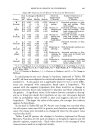
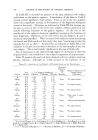
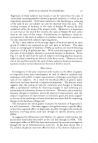
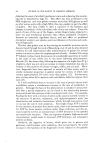
NEW ASPECTS OF THE EFFECTS OF GELATIN ON FINGERNAILS by JosEPH B. McI4^.Lsor, Pi4.D. and D^vm J. Hurxsx4^½, B.S.* ABSTRACT Investigations made on the effects of orally administered gelatin reveal that gelatin increases significantly the hardness of fingernails and apparently improves nail defects in normal subjects. The use of the technique of measuring the hardness of fingernails as a tool for evaluating the effects of gelatin (or other substances) is described. The data is discussed in terms of a "specific" action of gelatin on fingernails possibly occurring through the metabolism of amino acids inherent in gelatin or the specific dynamic action of gelatin. INTRODUCTION In recent years many attempts have been made to determine the effects of gelatin on the condition and structure of fingernails. Tyson (1) reported in 1950 that oral ingestion of 7.0 g. of gelatin per day for three months returned fragile fingernails to practically normal appearance and texture. McGavack (2) obtained a similar finding in three to twelve weeks when gelatin was administered orally at a dosage of 7.5 g. per day. Rosenberg, et al. (3) observed improvement in 43 of 50 subjects with brittle nails after three months of ingestion of 7.0 g. of gelatin per day. In earlier studies Rosenberg and Oster (4) noted improvement after three months in 26 of 36 subjects receiving 7.0 g. of gelatin per day. Schwimmer and Mulinos (5), using a dosage of 7.5 g. of gelatin per day, found improvement in 14 of 17 subjects after three months. Derzavis and Mulinos (6), in a series of experiments, evaluated the improvement of fingernails during oral administration of gelatin at different dosages. These investigators used a dose of 1.8 g. per day in one set of experiments and 7.0 g. per day in another. They reported a 21/2 times improvement in the nails of the test subjects at the lower dosage of gelatin compared to the placebo subjects and 5 times improvement in subjects receiving 7.0 g. of gelatin daily. In all of these investigations no attempts have been made to determine the minimum gelatin requirements necessary to evoke a response measured * Applied Biological Sciences Laboratories, Inc., Glendale 1, Calif. 443

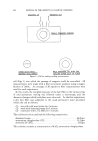
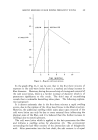
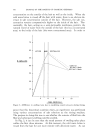
444 JOURNAL OF THE SOCIETY OF COSMETIC CHEMISTS in the form of an improvement in nails or the minimum time required to obtain an improvement. Moreover, no adequate methods have been developed with which to measure the responses of the fingernail to orally administered gelatin. Observations to date for the most part have been based on either the visual observations of the investigator in terms of nail improvements or the result of conclusions drawn through interrogation of the test subjects. In view of these facts we became interested in the possibility of correla- tions which might exist between physical testing procedures and the visual observations noted by many investigators. On a preliminary basis we undertook a study relating hardness of fingernails to intake of gelatin and visually observed changes in the condition of fingernails. This paper presents the methods and results of this investigation in these and related terms. METHOD For this study we selected 15 adults--8 males and 7 females--varying in age from eighteen to fifty years. All test subjects used in these studies were chosen according to the criteria of good physical health, willingness to cooperate, interest, etc. The subjects selected had an array of nail defects including chipping, peeling, lamination and breaking, but care was taken not to choose subjects with obvious nutritional, endocrinal or fungal disturbances. No attempt was made to differentiate the subjects as to age, occupation, dietary requirementsl etc. It was our intent to conduct this investigation utilizing healthy adults in order to evaluate the intake of gelatin in normal individuals under ordinary circumstances rather than as a therapeutic agent or adjunct. In our opinion randomization of the type specified in our selection of individuals reduced variables which would be manifest in pathogenic conditions and allowed for an investigation utilizing a "cross section" type of approach under everyday conditions. The volunteer test subjects were instructed not to change or modify any of their habits or daily routines during the course of this study, and the use of such things •ø d .... • .... •, soaps, nail 4. • .•o po•s•es, etc. was not prohibited. After the test subjects were selected they were divided into two groups. Group A consisted of 2 males and 5 females Group B was comprised of 6 males and 2 females. Group A received gelatin in capsule form and Group B, lactose placebos. Each group was instructed to ingest one capsule (0.67 g.) three times a day. This regimen was followed for a period of five months. The five-month time period for this study was selected because it has been reported that definitive effects of oral ingestion of gelatin could be shown in eight to sixteen weeks (3, 4 and 5). Just prior to the start of these studies the nails of each subject were
Purchased for the exclusive use of nofirst nolast (unknown)
From: SCC Media Library & Resource Center (library.scconline.org)