FRICTIONAL EFFECTS IN HUMAN HAIR By ANTHONY M. SCHWAV, TZ, PH.D., and D.C. KNowt,• s, Jr,., M.Sc.* Presented ?Ipril 9, 1963, Chicago ABSTRACT The static and kinetic frictional coefficients of hair are among the most important factors affecting combability and softness and are good measures of hair condition. Preferred methods are described for measuring the friction of hair against itself and against a variety of hair device materials. They include the static mandrel method for single fibers and the capstan method for multiple fiber tapes and tresses. Hair friction is influenced by many different factors, each of which must be carefully con- trolled in making meaningful measurements. The effects of these various factors are illustrated and discussed. Two of the more important among them are the degree to which the hair keratin has been modified chemically and the burden of adsorbed surfactant which the hair carries as a result of its shampooing history. The relationships among the type and content of adsorbed surfactant, hair condition, hair friction and hair combability are described quan- titatively. INTRODUCTION From the cosmetic point of view, hair friction is of importance in at least three different connections: 1. After shampooing, but before drying, it is a widespread practice to comb out the wet hair. It is recognized that some shampoos make this wet combing operation difficult, whereas others make it easy. The friction of both hair-on-hair and hair-on-comb enters into this effect. To a much lesser extent, the problem of difficult combing is also encountered with dry hair. 2. The softness or "hand," or "condition," of dry hair, as judged by feeling it, depends on the friction encountered as the individual fibers rub over one another. This is a well-recognized effect in textile fabrics, as well as in the hairdressing art. 3. In a less obvious manner, friction influences the over-all manage- ability of hair. It is closely related to the adhesion which exists to varying degrees among individual fibers and also to static electrification. Both of these effects contribute to manageability, although other factors such as the presence of free liquid material on the hair can also have a large influence. * Harris Research Laboratories, Inc., Washington 11, D.C. 455

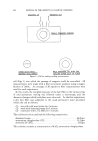
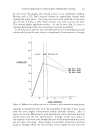
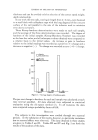
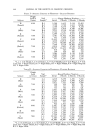
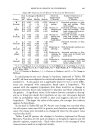
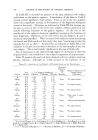
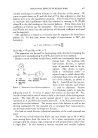
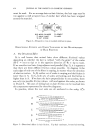
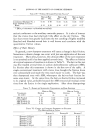
456 JOURNAL OF THE SOCIETY OF COSMETIC CHEMISTS One of the purposes of the work described herein was to develop satisfac- tory methods for measuring the friction of human hair, both against itself and against the various materials used to fabricate hairdressing devices such as combs, rollers, etc. A further purpose was to investigate quantitatively the various factors that determine hair friction and to determine their relative importance. Emphasis was placed on the effect of various sham- pooing treatments and topical applications. MEASUREMENT OF FRICTION The classical law of friction, which is valid within relatively wide limits, states that the force necessary to cause sliding of one smooth solid surface against another (the frictional force) is proportional to the normal force or "load" pressing the two surfaces together and is independent of the area of contact. The proportionality constant is called the coefficient of friction and is frequently designated by the Greek letter u. The force just neces- sary to start sliding determines the static coefficient (us), and the force necessary to maintain sliding after it has started determines the dynamic or kinetic coefficient (Uk). Unless otherwise stated, data in the attached tables are values of Uk measured in the moderate speed range where the variation Of Uk with speed is very slight. Friction is affected by lubricant materials that may be present between the rubbing surfaces. The present work deals primarily with unlubricated or "dry" friction systems. In cases where surface layers of foreign matter were present on the rubbing surfaces, they acted at best as boundary lubricants (which can be treated by the laws of dry friction) rather than as hydrodynamic lubricants. Friction is also closely related to adhesion. In none of the systems described was the adhesion (i.e., the force of attrac- tion across the boundary plane between the two surfaces) sufficiently great to form a typical adherent system, i.e., one in which the surfaces become grossly distorted or damaged during sliding or separation. The friction of textile fibers has been studied by many investigators, and several different instrumental methods of measurements have been de- scribed (1). After preliminary experiments with several methods, it was decided to adapt the ' ' of Roeder meritoct kz• t•t½ measurement of human hair friction. This is essentially a dynamic method for measuring the friction of a single fiber on a bundle of similar fibers. It can be used for static friction measurements, however, and can be modified for use with tresses or tapes of hair and for measurements of hair friction against solid nonfibrous substrates. The apparatus is shown in diagram form in Fig. 1. M is a cylindrical mandrel whose surface is composed of the reference material. H is a single hair fiber, weighted at each end with equal weights, W and W•. T is a torsion balance, the pan of which (P) is set under W•. The mandrel is
Purchased for the exclusive use of nofirst nolast (unknown)
From: SCC Media Library & Resource Center (library.scconline.org)