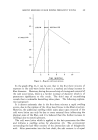
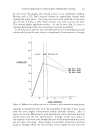
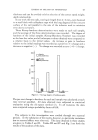
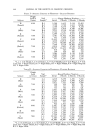
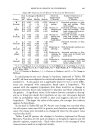
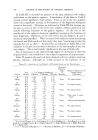
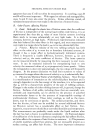
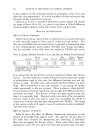
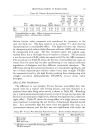
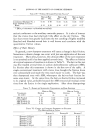
EFFECTS OF GELATIN ON FINGERNAILS 451 fingernails of these subjects was found, it can be noted that the nails of individuals receiving placebos showed a general tendency to soften as the experiment proceeded. Individual variation in the hardening or softening of the nails of any one subject can also be observed from this data. The striking increase of hardness in the nails of Subject R cannot be fully explained within the scope of the present study. However, it is important to note that at the end of five months the nails of Subject R were softer than at the start of this study. Furthermore, no significant visual im- provements in the nails of subjects on placebos were found in contrast to the data obtained with subjects ingesting gelatin. In Fig. 1 data relative to the average degree of hardness gained fo• each group of subjects are expressed as per cent gain in hardness. This data shows an average gain in hardness of 102% as early as one month following ingestion of 2.0 g. of gelatin per day. With continued ingestion of gelatin the nails of test subjects showed a continued increase in hardness. From Fig. 1 it can be seen that the nails of subjects receiving placebos showed a slight increase in hardness at the end of the first month. However, at the end of two and five months the nails of these subjects showed a decrease in hardness relative to that observed at the end of the first month. DISCUSSION Investigators in the past concerned with studies on the ef}kct of gelatin on fingernails have been handicapped by lack of ef}•ctive methods and techniques with which to make measurements of changes occurring in the nails of test subjects. As a result the beneficial ef}•cts of gelatin taken daily have not been observed or explained adequately. The present study suggests that the testing of nails for variations and changes in hardness of}•rs a satisfactory method for observing changes in nails following ad- ministration of substances, dietary or otherwise. Moreover, the correlation between changes in hardness and both observed improvements and the subject's expression of improvement is extremely good and lends support to the use of the technique we have developed and described for measuring changes in the hardness of fingernails. The mechanism by which gelatin increases the hardness of fingernails is not well understood. Our data suggests that gelatin exerts a specific effect rather than a general ef}•ct on fingernails, possibly through both metabolic functions involving amino acids and through its specific dynamic action (SDA). As suggested by Schwimmer and Mulinos (5), gelatin could increase the presumably diminished blood flow at the nail bed through its SDA. The thermogenic effect of SDA has been demonstrated by several investigators through the use of individual amino acids (8). It has been shown that a 5% solution of glycine was more effective than a 5% solution of glucose in

452 JOURNAL OF THE SOCIETY OF COSMETIC CHEMISTS delaying the onset of a lethal hypothermic state and enhancing the fewarm- ing rate in hypothermic dogs (9). This effect has been attributed to the SDA of glycine and since gelatin contains more than 26% glycine as well as other amino acids with a high SDA, this may explain in part the effect of gelatin. Our data (Table 1) show a variation in the hardness-and changes in hardness of the individual nails of any one subject. From the point of view of the use of the fingers, certain fingers being subjected to more use and mechanical pressures than others, peripheral circulation becomes an extremely significant factor, and any effect on peripheral circulatiori would, in our opinion, exert an influence on the state and condi- tion of fingernails. The fact that gelatin may be functioning via metabolic activities can be demonstrated through the work of Rosenberg, etal. (3 and 4), who obtained evidence for nail improvement after administration of gelatin for several weeks, in a time too short for complete growth of nails. Godwin (10), using S •5 labeled cystine, found the presence of considerable quantities of cystine in the claws of rats within one to two hours following administration. Borsook (11) has shown that, following the ingestion of a single dose (87 g.) of gelatin, there was not only an increase in energy metabolism but also an increase in the excretion of urinary nitrogen, sulfur, and uric acid. More- over, fingernails have been reported to contain all their amino acids in similar molecular proportion to gelatin except for cystine, of which nails contain approximately 219 times more than gelatin (12). Furthermore, pure cystine, when fed to patients with nail defects, failed to improve their nails (13). It is well established that an increase in the rate of protein (amino acid) metabolism causes a simultaneous increase in the rate of metabolism in general. Although the basis of this phenomenon is complex it seems prob- able that a partial explanation can be found in the relationship between amino acids and the reactions of the tricarboxylic acid cycle. For example, flooding the liver with a mixture of amino acids causes a marked increase in the amounts of pyruvic, oxaloacetic, and alpha-ketoglutaric acids (via deamination and oxidation mechanisms) which, through mass action, tend to b•crease the rate of cycle oxidations. Since high energy ATP is needed for the synthesis of proteins from amino acids, there is an increased demand for ATP for tissue protein synthesis under these conditions, and this de- mand could be met by an increased rate of ATP formation in the speeded up tricarboxylic reactions. Thus, the ingestion of gelatin (high amino acid concentration) would result in increased ATP formation and subsequent protein synthesis. Similarly, the ingestion of lactose, which gives rise to glucose and galactose, could increase cycle oxidations, thus accounting for the initial increase in the hardness of the fingernails of test subjects on the placebo
Purchased for the exclusive use of nofirst nolast (unknown)
From: SCC Media Library & Resource Center (library.scconline.org)