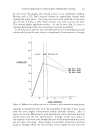
JOURNAL OF THE SOCIETY OF COSMETIC CHEMISTS 465 greater than the large number to which present day publishing laxity has accustomed us. Proofreading did not catch some annoying mis- statements one, for example, causes the reader to wrestle overly long with a text that incorrectly describes the graphic presentation of the relationship of conductivity of a Teepol solution to its content of octyl alcohol. "Surface Chemistry, Theory and Industrial Applications" offers an opportunity to review generally clear and well-written expositions of many facets of the chemistry of surface active agents. The author merits commendation for this achievement. Excellent as it is this in respect, however, the book is not a monograph on surface chemistry (nor the chemistry of surface active agents), nor is it an adequate treat- ment of the title subject for the purposes of the cosmetic chemistry laboratory.--J. M. LONGYELLOW, Colgate-Palmolive Co. ENZYME HISTOCHEMISTRY, by M. S. Burstone. Academic Press, New York, N.Y. 1962. 621 pages, indexed and illustrated price $22.50 The structure and function of skin has become, in recent years, a major preoccupation of the cosmetic chem- ist. It is now generally recognized that genuine improvement of cos- metic products must be based primarily on improved knowledge of the effects of such products on the skin. The enzymes of skin have received considerable recent attention, and future studies of the effectiveness of many cosmetic preparations will undoubtedly include determinations of their effect on various enzyme systems. It is therefore proper that Dr. Burstone's treatise be reviewed in this journal. The author points out that, at the end of the second World War, only two or three histochemical enzyme procedures were available. His book sets forth in highly systematic fashion a truly remarkable array of methods and reagents for detect- ing large numbers of enzymes by production of colored substances in tissue sections treated with fully described special reagents. After this thorough treatment of techniques for fixing and embedding tissues, there is a general description of naphthol derivatives used in histochemistry. The laboratory synthesis of Naphthol AS com- ppunds is described, and a list is g•ven of commercially available Napthol AS derivatives. Diazo- nium salts are similarly treated. The matter of substantivity and histochemical localization also re- ceives adequate explanation. Metal dye complexes and mounting media are also covered. The enzymes recognizable by histochemical procedures are treated according to standard groupings. In each chapter, one appendix de- scribes the synthesis of special sub- strates needed, and another de- scribes in detail the techniques used for detecting individual enzymes. Electron-microscopic methods and electrophoretic procedures for en- zyme detection also receive brief discussion. In an age of specialization, this book is surely unique in being a do- it-yourself treatise on a highly specialized discipline. Both the histology and the synthetic organic chemistry involved in the various procedures are so well described as to seem relatively simple. The book is well printed and is profusely illustrated with very clear photomicrographs. Several color plates are included, giving especially good examples of the contrasts and detailed structure visible by histo-

466 JOURNAL OF THE SOCIETY OF COSMETIC CHEMISTS chemical methods.--PAuL G. I. LAUFFER. RECENT PROORESS IN THE CHEM- ISTRY OF NATURAL AND SYNTHETIC COLOURING MATTERS AND RELATED FIELDS, edited by T. S. Gore, B. S. Joshi, S. V. Sunthankar and B. D. Tilak. Academic Press, London. 1962. Price $24. This commemoration volume is a collection of 49 excellently docu- mented, original papers dedicated to Professor K. Venkataraman on the occasion of his sixtieth birthday. No Jess than 86 workers in the field (former students, collaborators and colleagues of the distinguished In- dian dye chemist) have joined in this unusual tribute. Although most of the papers are concerned with colored compounds, the color aspect is obviously not always of primary interest to some of the investigators. As a result, the collection is both fascinating and bewildering at times, covering many fields apparently unrelated to the main title subject. It is a veritable potpourri, with a number of the papers having direct or peripheral interest to the cosmetic chemist. Nine of these are briefly summarized below: Ommochromes (A. Butenandt and W. Schafer) among the most widely distributed pigments in the animal (insect) kingdom, the ommo- chromes are the final product of tryptophane metabolism. Recent Developments in the Carore- noid Field (O. Islet, R. Ruegg and P. Schudel) isolation and synthesis of intermediates in carotenoid bio- genesis, commercial syntheses and use of carotenoids in food coloring are discussed. Atzulenes from Natural Precursors (S. Dev) the chemistry and sources of about 50 of these non-benzenoid aromatics are discussed. There is no mention of the pharmacologic- dermatologic virtues which have occasionally been ascribed to this class of compound. Naturally Occurring Phloroacylo- phenones (W. Riedl) this section includes some which have been used as anti-helmintics and silk dyes since antiquity. Some Naturally Occurring Black Pigments (R. H. Thomson) these are generally polymeric oxidation products of phenols (catechols, 1,8-dihydroxynaphthalene, etc.) conjugated with protein or carbo- hydrates. A considerable discus- sion of melanins is also included in this paper, as well as the dark glucoside plant pigments. Some Natural Atnthraquinone Colouring Matters (B. S. Joshi) the discussion ranges from the antimi- crobial properties of teak wood and Cape aloe extracts to use of Cassia obtusifolia seeds, to aspergillus mold pigments, to shellac coloring matter. Naturally Occurring Phenylcou- marins (N. R. Krishnaswamy and T. R. Seshadri) an excellent review of the chemical and biological prop- erties of this large group of com- pounds is given. Their activity ranges from antibiotic to estrogenic to insecticidal. Included are dis- cussions of brazilin, haematoxylin, mammeisin, coumestrol and psorali- din. Chemistry of Polyene /lntibiotics /1-% o 1-•1 . \ 1 . o. almost t•. onate) all of the 60 known polyenes have high anti- fungal activity (including rs. yeasts) but little or no activity against bacteria. Most are derived from streptomyces spp. Nystatin (the first polyene antibiotic), Hamycin and Amphotericin B are examples of this group. Dyestuffs Containing Finylsul- phone Groups (J. Heyna) these are among the so-called "fiber reactive"
Purchased for the exclusive use of nofirst nolast (unknown)
From: SCC Media Library & Resource Center (library.scconline.org)