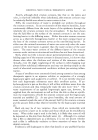
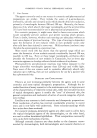
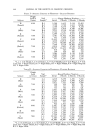
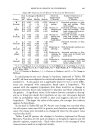
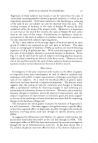
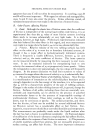
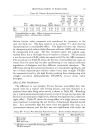
FRICTIONAL EFFECTS IN HUMAN HAIR 461 TAm, E II--TYPICAL DYNAMIC FRICTION VALUES* holt Corn- Corn- Corn- Com- mer- mer- mer- mer- ciais cial$ cial$ cial$ Sham- Sham- Sham- Sham- CFA- poo poo poo poo ABSt TEALSt Soapt DEA$ TEALS$ 1 2 3 4 Dry 0.12 0.15 0.12 0.11 0.24 0.21 0.18 0.20 0.17 0.18 Wet 0.20 0.23 0.19 0.15 0.36 0.27 0.28 0.26 0.24 0.22 * Unmodified hair-on-hair. Effect of shampooing treatment. t Individual fibers--calibrated hair technique. $ Tresses. librium friction value, measured and transferred for treatment to the next test bath, etc. The data columns (1-4, marked "t") show that the shampooing has a considerable effect. The highest friction was obtained by shampooing with sodium dodecylbenzene sulfonate (ABS) and the lowest by shampooing with soap. The first treatment given the original soap- washed fibers was a thorough series of washes in ethanol. This produced a wet friction level of 0.20, which was raised to 0.23 by the ABS tratment. The second part of Table II shows the friction of unmodified hair tapes on tresses from the same hair lot after equilibrating in two typical surfactant ingredients of shampoos and four different commercial shampoos. The differences among the commercial products are statistically significant, and two of these materials give friction values lower than straight TEALS. An unexpected result is the high friction resulting from shampooing with straight coco-fatty diethanolamide, CFA-DEA, (1-to-2 molar ratio) detergent. Effect of Hair Modification The difference in wet dynamic friction between unmodified hair, hair waved twice by a typical cold waving process, and hair bleached to a medium blond after being twice waved, is shown in Table III. Bleaching (by a typical ammonia-peroxide process) on top of strong waving raises the friction on all substrates to high levels, whereas waving alone has a relatively slight effect. Table IV shows the strong effect of a single cationic creme rinse treatment in lowering the wet friction of shampooed bleached-waved hair. It is noteworthy that the creme rinse was applied only once, in a conventional manner, and the hair was not equilibrated with either the TABLE Ill--TYPICAL WET DYNAMIC FRICTION VALUES. EFFECT or HAiR MODIFICATION* Unmodified Waved Bleached-Waved Hair-on-hair 0.25 0.31 0.49 Hair-on-A1 0.20 0.23 0.35 Hair-on-Lucite 0.43 0.50 0.71 * All values at comparable measuring condition. TEALS shampoo.

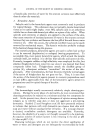
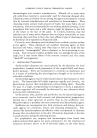
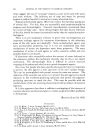
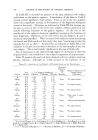
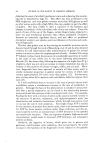
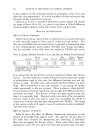
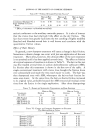
462 JOURNAL OF THE SOCIETY OF COSMETIC CHEMISTS TABLE IV--TYPICAL DYNAMIC FRICTION VALUES* Hair-on-Hair Hair-on-A1 Hair-on-Lucite Dry Wet Dry Wet Dry Wet Commercial Shampoo No. 1 0.14 0.49 0.10 0.26 0.18 0.67 Same followed by Creme Rinse 0.13 0.30 0.10 0.17 0.15 0.27 * Effect_of treatments on bleached-waved hair. cationic surfactant or the auxiliary materials present. It is also of interest that the creme rinse had relatively little effect on the dry friction. The fact that creme rinse greatly facilitates the wet combing of highly modified bleached and bleached-waved hair is well known and correlates with the quantitative friction values. Effect of Hair History In general, a new shampoo treatment will cause a change in hair friction. Sometimes a drastic change can occur with just one application of the new treatment. More often, however, the ultimate effect of the new treatment is not attained until it has been applied several times. The effect on friction of a typical sequence of treatments is shown in Table V. The hair in this test was first washed several times in sodium dodecylbenzene sulfonate (ABS). Its friction after this treatment is shown in the first row of the table. A single conventional treatment with creme rinse brought the friction down very substantially and made the tress much easier to comb. The hair was then shampooed once with ABS, whereupon the hair-on-hair friction be- came even lower. At the same time, the hair-on-Lucite friction increased to its original value, probably because the ABS removed all residual creme rinse from the Lucite in the single application. After three shampooings TABLE v--EFFECT OF SUCCESSIVE TREATMENTS ON HAIR FRICTION Hair-on Hair Hair-on Lucite Treatments Friction Wet Friction Wet (in order) •k m /•k m ABS Washed 0.35 0.30 0.52 0.55 Creme Rinse 0.26 0.20 0.39 0.41 ABS Washed !X 0. !9 0. !6 0 49 0 55 ABS Washed 3X 0.36 0.29 0.51 0.56 TABI.E VI--EFFECT Or CHANGING SHAMPOOS ON FRICTION Wet Hair-on-Hair t•k Values Pattern A Pattern B Pattern C Shampoo X Equil. 0.25 0.25 0.25 Shampoo Y 1X 0.27 0.23 0.36 Shampoo Y 2X 0.30 0.27 0.34 Shampoo Y 3X 0.31 0.30 0.33 Shampoo Y 4X 0.32 0.32 0.32 Shampoo Y Equil. 0.32 0.32 0.32
Purchased for the exclusive use of nofirst nolast (unknown)
From: SCC Media Library & Resource Center (library.scconline.org)